
Introduction: Understanding the Basics
PVC and CPVC are both plastic piping systems used in construction and plumbing.
While they may appear similar, key differences exist in their composition and application.
PVC stands for polyvinyl chloride, and CPVC is chlorinated polyvinyl chloride.
The additional chlorine in CPVC improves its heat and chemical resistance.
CPVC Pipe Fittings, therefore, are suited for different tasks compared to standard PVC ones.
Knowing the differences helps prevent installation errors and performance issues.
This article compares these materials to answer whether they are truly the same.
Material Composition and Temperature Tolerance
PVC is made from standard vinyl chloride polymer, ideal for cold water applications.
CPVC includes a chlorination step, enhancing its thermal stability significantly.
CPVC Pipe Fittings can handle temperatures up to 200°F (93°C).
PVC fittings, by contrast, begin softening around 140°F (60°C).
This makes CPVC the better choice for hot water lines and chemical handling.
For example, CPVC is used in industrial or commercial hot water systems.
PVC remains suitable for drainage or irrigation systems with lower temperatures.
Color Coding and Identification in Practice
PVC fittings are typically white or light gray, depending on the pressure class.
CPVC Pipe Fittings often appear in off-white, light yellow, or beige tones.
Color helps quickly distinguish between the two on job sites.
Misidentifying fittings may lead to mixing incompatible parts during installation.
For instance, using PVC in a hot water line may lead to system failure.
Manufacturers use labels and printing to indicate rating, size, and standards.
Always check markings before assuming compatibility between components.
Joining Methods and Adhesives
Both PVC and CPVC use solvent welding for connection, but their cements differ.
CPVC Pipe Fittings require specially formulated CPVC cement and primer.
Using PVC cement on CPVC may lead to weak joints or leaks.
Conversely, CPVC solvent may not properly bond to PVC surfaces.
Color-coded adhesives make selection easier during installation.
For mixed systems, use approved transition fittings or universal connectors.
Following joining instructions ensures pressure resistance and structural integrity.
Pressure Ratings and Mechanical Strength
CPVC Pipe Fittings maintain higher pressure ratings under elevated temperatures.
For example, they handle 100 psi at 180°F (82°C) in domestic systems.
PVC fittings lose strength quickly at such temperatures and may deform.
At room temperature, both offer good pressure performance, depending on class.
CPVC is often used in pressurized hot water distribution, chemical plants, and labs.
PVC, however, is best suited for cold water systems, vents, or waste lines.
Understanding application-specific ratings prevents system failures and safety hazards.
Compatibility and Cross-Use Limitations
PVC and CPVC parts are not interchangeable in most systems.
Their fittings have different sizing standards: PVC uses IPS, CPVC varies slightly.
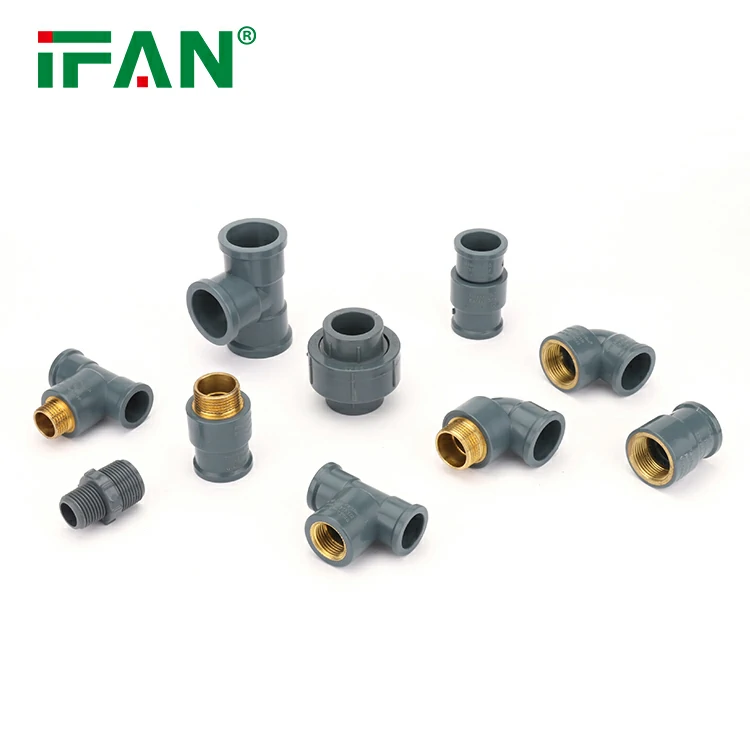
CPVC Pipe Fittings for residential plumbing may not match PVC schedules.
Even if threads or sockets seem to align, chemical and thermal limits differ.
Mixing them may void manufacturer warranties or violate plumbing codes.
In rare cases, transition unions or threaded connectors bridge the two materials.
However, engineers recommend maintaining material consistency for reliability.
Cost and Availability Differences
PVC fittings are generally more affordable and widely available in hardware stores.
CPVC Pipe Fittings cost more due to advanced materials and certifications.
For cold water or drainage-only installations, PVC offers better cost-efficiency.
For hot water, medical, or corrosive chemical applications, CPVC justifies its price.
Project budgets should consider long-term durability, not just upfront cost.
CPVC also requires specific tools and primers, slightly increasing overall cost.
Still, using the right fitting for the job avoids costly system repairs later.
Summary and Best Practices
PVC and CPVC fittings serve different purposes in construction and piping.
CPVC Pipe Fittings are specifically designed for hot and corrosive environments.
They are not the same as standard PVC in performance or application.
Always identify the right material based on temperature, pressure, and fluid type.
Never mix PVC and CPVC without proper transition components and safety checks.
Label fittings clearly and educate workers on proper selection and use.
Choosing the correct fitting improves system life, efficiency, and code compliance.
Conclusion
Although PVC and CPVC look alike, they are not functionally identical.
CPVC Pipe Fittings offer superior heat and chemical resistance for demanding systems.
Understanding these differences ensures proper material use and long-term system safety.
When in doubt, consult manufacturer charts or plumbing standards before installation.