
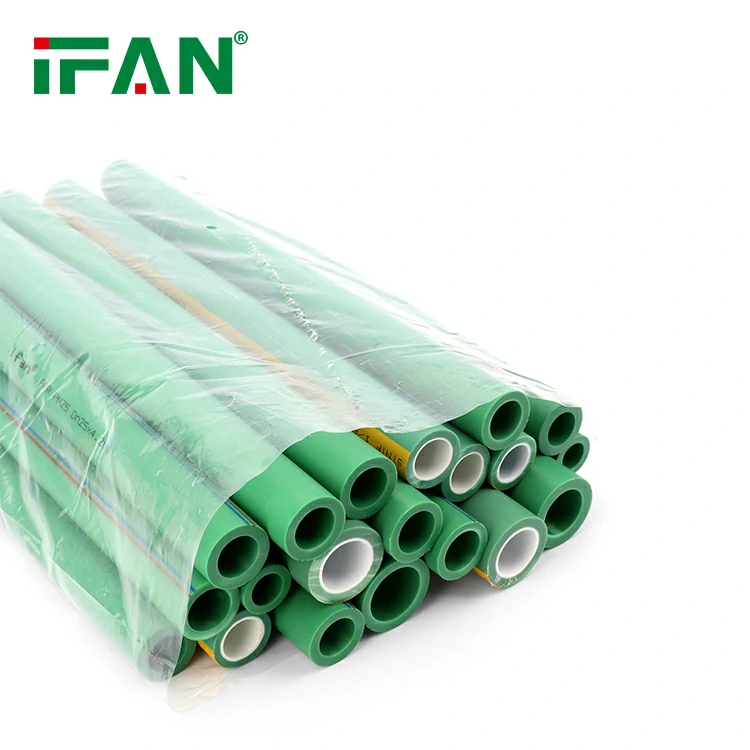
Description
Introduction: The Need for Mixed Material Connections
Plumbing systems often involve different pipe materials due to availability, cost, or functional requirements.
A common question is whether PPR pipe can connect to PVC pipe directly.
PPR and PVC have different properties, joining methods, and temperature tolerances.
Combining them requires thoughtful selection of connectors and understanding each material’s limitations.
Professionals often face this scenario in repair work or system expansions.
Understanding the proper approach avoids future leaks and mechanical failures.
Let’s explore how these two pipes differ and how they can be connected effectively.
Key Differences Between PPR and PVC Pipes
PPR pipe is made from polypropylene random copolymer, which tolerates high temperatures.
PVC, or polyvinyl chloride, is more rigid and suited to cold water applications.
PPR pipe typically uses thermal fusion for joints, creating a single material bond.
PVC, in contrast, uses solvent cement to chemically weld joints.
Their melting points, pressure capacities, and flexibility also vary.
PPR pipe is better for hot water, while PVC is economical and widely used.
These differences make direct fusion between them impossible without adapters.
A reliable connection depends on using the correct transition fittings.
Can They Be Directly Fused Together?
No, PPR pipe and PVC pipe cannot be directly fused or glued together.
PPR requires heating to over 260°C to fuse the material.
PVC softens at lower temperatures and may deform or melt inconsistently.
Moreover, solvent cement used for PVC does not bond with PPR material.
This makes chemical or thermal bonding between them unfeasible.
Attempting to connect them directly leads to weak joints and failure under pressure.
Instead, mechanical fittings or threaded adapters are the safe method.
They provide a tight seal without relying on incompatible fusion techniques.
Mechanical Adapters and Transition Fittings
To connect PPR pipe to PVC pipe, use mechanical transition fittings.
Brass or plastic unions with dual ends—one for each pipe type—are common.
For example, a threaded PPR male adapter can be fused to PPR pipe.
Then it screws into a PVC threaded female adapter secured with PVC cement.
Ensure that thread types match and use thread tape to prevent leaks.
Push-fit connectors are another option but are more common in smaller diameter pipes.
Always verify pressure ratings and material compatibility when selecting a fitting.
This method ensures a secure, long-lasting connection without material bonding.
Step-by-Step Connection Example
Here is a common method to connect PPR pipe to PVC pipe:
- Heat-fuse a PPR male threaded adapter onto the PPR pipe.
- Prepare the PVC pipe end with a female threaded socket.
- Apply solvent cement to the PVC socket and insert the PVC pipe.
- Let the PVC cement cure fully before assembly.
- Wrap Teflon tape on the PPR male thread.
- Carefully screw the PPR fitting into the PVC socket.
- Tighten by hand, then use a wrench to finish securely.
This hybrid connection preserves both pipes’ integrity and ensures water-tight sealing.
Consider Pressure and Temperature Limits
PPR pipe withstands higher temperatures—up to 95°C—and high pressure over time.
PVC is limited to around 60°C and slightly lower pressure ratings.
When connecting them, ensure the system operates within PVC’s more limited range.
Otherwise, the PVC section may warp, leak, or degrade prematurely.
In hot water lines, avoid placing PVC downstream of PPR.
Only use PVC in cold water zones or low-temperature applications.
If thermal cycling occurs, mechanical stress may cause loosening at the threaded joint.
Always select fittings that can tolerate expected pressures and temperatures consistently.
Common Applications and Limitations
Combining PPR pipe and PVC pipe is common in residential retrofits or mixed system repairs.
For example, a PPR hot water supply might connect to a PVC cold water branch.
Another scenario is when municipal PVC piping enters a house with internal PPR plumbing.
In these cases, a secure transition fitting bridges the material difference.
However, combining them is not ideal for long, high-pressure, or buried pipelines.
Thermal expansion differences could strain the joints.
Also, avoid applying this connection in high-flow, industrial, or aggressive chemical systems.
Always consult local codes before joining dissimilar piping materials.
Conclusion: A Safe Connection Is Possible
Yes, PPR pipe can connect to PVC pipe, but only with proper transition fittings.
Direct gluing or heat fusion between the two materials will not work.
Mechanical connectors—especially threaded brass or plastic adapters—offer a safe solution.
Pressure, temperature, and alignment must all be considered during installation.
Always match fitting threads carefully and seal with Teflon tape.
For permanent plumbing systems, professional installation is strongly recommended.
Understanding material behavior helps ensure a leak-free and long-lasting system.
With the right approach, these two pipes can work together safely and efficiently.
相关产品
 Aluminum PPR Pipe
IFAN All Colors PPR Pipe
- Glass Fiber PPR Pipe
PPR Fiber-Glass Composite Pipe
- Glass Fiber PPR Pipe
Fiber Glass PPR Pipe
- Plastic PPR Pipe
Reliable PPR Tube



HAVE ANY QUERIES? SEND TO CONTACTOANTSMACHINE.COM
ONTACT US