
This is a critical engineering question. The answer is not a simple yes or no. It depends entirely on the specific valve’s rating. Most standard PVC check valves are for low to medium pressures. Understanding their limits is essential for system safety.
Defining Pressure Ratings: What Does PN Mean?
Valves have pressure ratings marked as PN. PN stands for Pressure Nominal. This number indicates the maximum allowable working pressure. It is measured in bars or psi. For example, a PN16 valve handles 16 bar (approximately 232 psi). Always check this rating before installation.
The Material Limitation: PVC’s Nature
PVC is a thermoplastic polymer. It offers excellent corrosion resistance. It is also lightweight and cost-effective. However, it has inherent strength limits. Unlike metal, PVC can become brittle over time. It is susceptible to impact damage. Its strength decreases as temperature increases.
Common Pressure Classes for PVC Valves
You will find several common classes. Schedule 40 valves are common for general use. Their pressure rating is often around PN16. Schedule 80 valves have thicker walls. They typically handle higher pressures, like PN20 or PN25. Always confirm the schedule and PN number.
The Critical Role of Temperature
Temperature drastically affects pressure capacity. A PVC check valve rated for 150 psi at 73°F (23°C) is strong. That same valve weakens significantly at 100°F (38°C). The material’s tensile strength reduces. The maximum operating pressure drops accordingly. Never ignore temperature charts.
Types of PVC Check Valves and Pressure
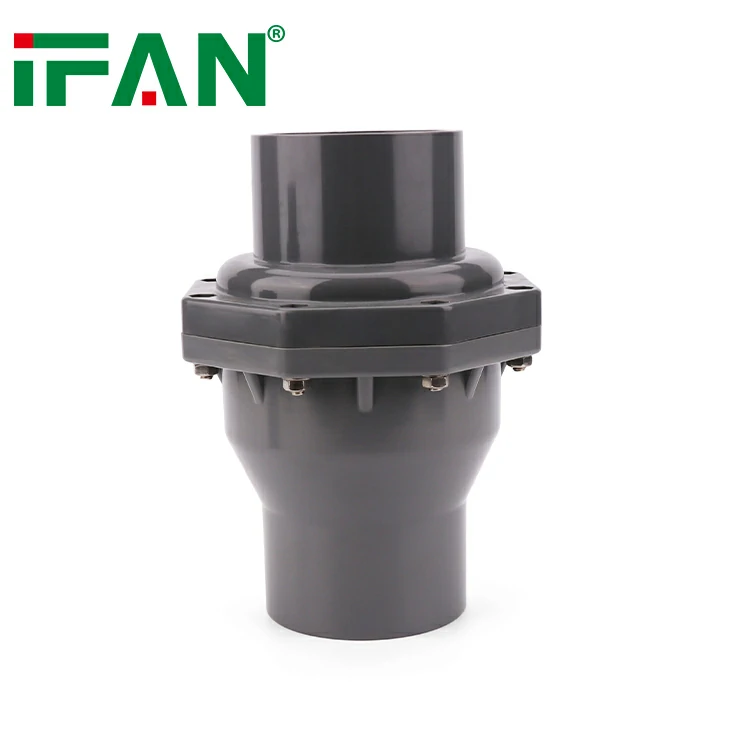
Different designs handle pressure differently. Swing check valves are common. They work well in horizontal flow. Spring-assisted silent check valves perform better. Their spring helps them close quickly. This prevents pressure surge (water hammer). This is vital in higher-pressure systems.
Comparing PVC to Metal Alternatives
Metals like brass or stainless steel are stronger. They can handle much higher pressures. They also resist higher temperatures. But they are more expensive and can corrode. A PVC check valve is a perfect choice for many cold water applications. It is not for high-pressure steam lines.
Real-World Application Examples
Consider a residential irrigation system. Its pressure is often under 80 psi. A standard Schedule 40 PVC check valve is ideal. Now consider a industrial chemical transfer pump. It might operate at 250 psi. Here, a Schedule 80 or metal valve is necessary.
Risks of Exceeding Pressure Limits
Ignoring ratings is extremely dangerous. Over-pressurization can cause catastrophic failure. The valve body can crack or shatter. This causes immediate flooding and water damage. It also creates a serious safety hazard from flying debris.
Proper Installation for Pressure Integrity
Correct installation maintains strength. Ensure the pipe ends are clean and deburred. Use the correct solvent cement for the PVC type. Push the valve fully onto the pipe. Allow the joint to cure completely before pressurizing. Avoid putting stress on the connection.
The Importance of System Design
A valve does not work alone. The entire system’s pressure rating matters. All components must have compatible ratings. This includes pipes, fittings, and other valves. Using a high-pressure PVC check valve with low-pressure pipe is pointless. The system will fail at its weakest point.
Conclusion: Check, Don’t Assume
So, can they handle high pressure? Some specifically rated ones can. Most common types cannot. The key is to always check the manufacturer’s specifications. Know your system’s maximum operating pressure. Include a safety margin in your calculations. Choose the right valve for a safe, long-lasting system.