Introduction to UPVC Fitting Variety
UPVC drainage systems require many components. These components connect and direct pipes. They come in numerous shapes and sizes. Each type serves a distinct purpose. Understanding the main types is crucial. This ensures proper system design and function.
Couplings and Connectors
Couplings are the simplest fitting. They join two straight pipes together. They are used for extending pipe runs. Some couplings have a plain bore. Others have a rubber seal ring. This seal allows for slight movement. They are essential for long drainage lines.
Bends and Elbows
Bends change the direction of flow. Common angles are 45 degrees and 90 degrees. A 45-degree bend creates a gentle turn. A 90-degree elbow creates a sharp corner. Double-socket bends connect at both ends. They are used around building obstructions.
Branch Fittings: Tees and Junctions
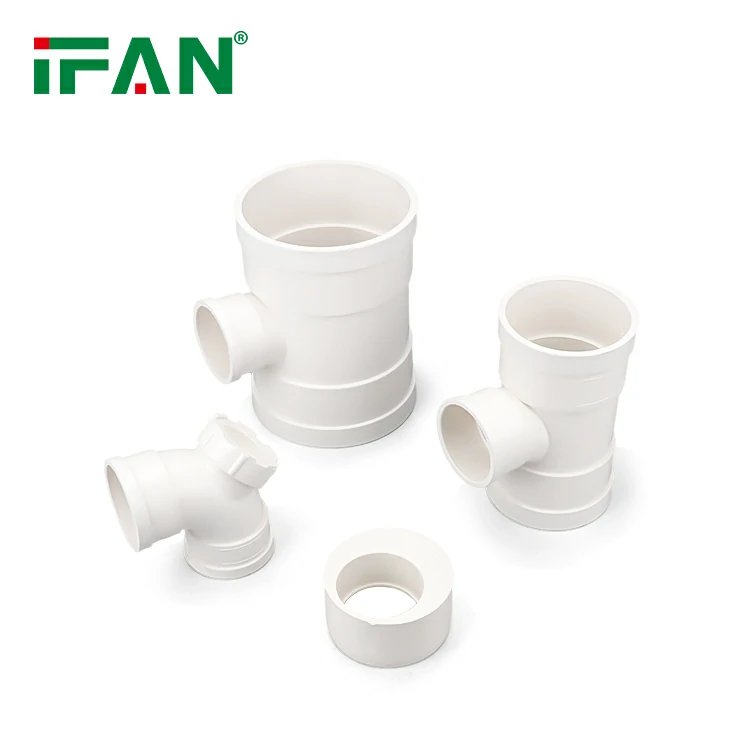
Tee fittings create a branch line. They have one inlet and two outlets. The outlets are at a 90-degree angle. A single-socket tee has one spigot end. A double-socket tee has two. They are used to connect a waste pipe. For example, they link a sink drain to the main stack.
Waste Fittings: P-Traps and Bottle Traps
Traps are vital for hygiene. They hold a water seal. This prevents sewer gases from entering. A P-trap has a distinctive curved shape. A bottle trap is more compact. They connect directly to sinks and basins. Every fixture must have a trap.
Soil Fittings for Toilet Connections
These fittings handle toilet waste. A soil bend connects the toilet pan. It is often a 90-degree bend. A soil branch is like a large tee. It connects the toilet to the soil stack. These fittings have a larger diameter. They are designed for solid waste.
Access Fittings: Rodding Eyes and Access Plugs
Access points are critical for maintenance. A rodding eye has a removable cover. It allows drain rods to clear blockages. An access plug serves a similar purpose. They are installed at key points in the system. For example, at a change of direction.
Pipe Supports and Clips
These are not flow fittings, but are essential. They support the weight of the pipes. UPVC pipe clips hold pipes to walls. They prevent sagging and misalignment. Proper support reduces stress on joints. It ensures the system’s long-term integrity.
Adaptors and Reducers
These fittings connect different systems. An adaptor may join UPVC to cast iron. A reducer connects pipes of different diameters. For example, it joins a 110mm pipe to a 75mm pipe. They allow for system modifications and repairs. They provide great flexibility.
Ventilation Fittings: Air Admittance Valves
These valves allow air into the system. They prevent siphonage of water traps. They are often used instead of a roof vent. An Air Admittance Valve (AAV) is common. It opens with negative pressure. It closes to prevent gas escape.
Gully Fittings and Yard Drains
Gullies collect surface water. A back inlet gully connects a downpipe. A yard gully drains paved areas. They have a grating on top. They trap debris before the drain. They are key for external drainage systems.
Choosing the Right Fittings
Selection depends on the system plan. Consider pipe size, flow direction, and access needs. Always use compatible UPVC drainage fittings. Ensure they have the correct pressure rating. Proper selection guarantees an efficient, leak-free drainage network. This is fundamental for any building project.