
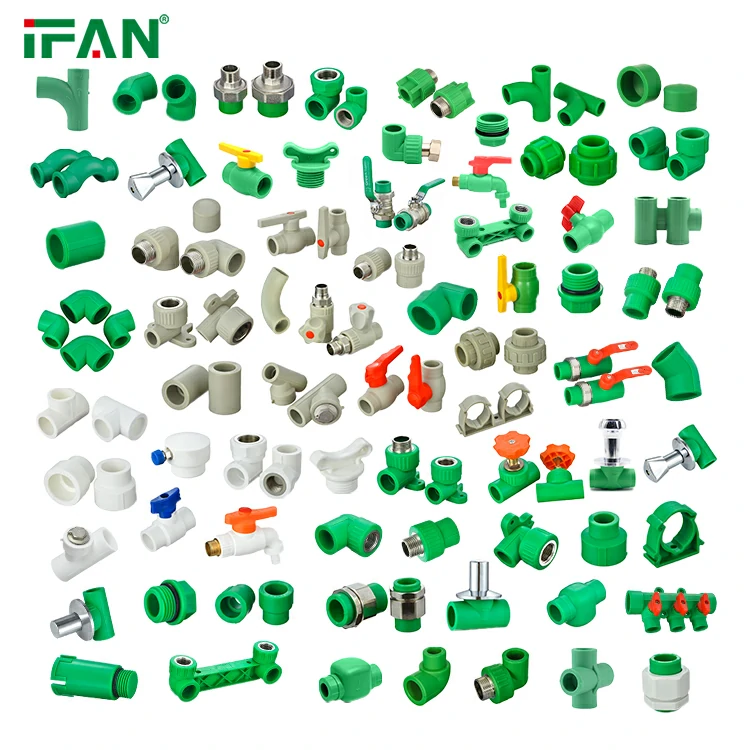
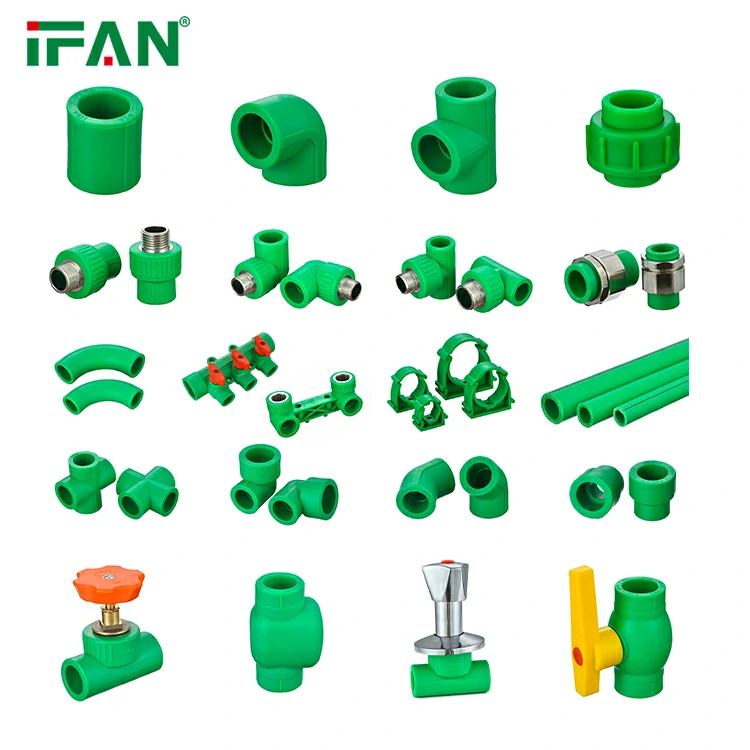
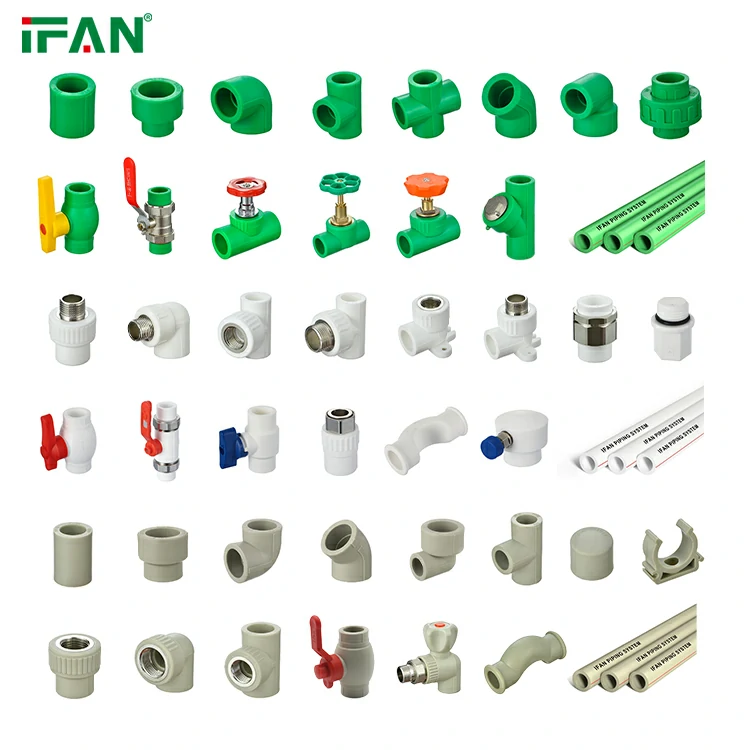
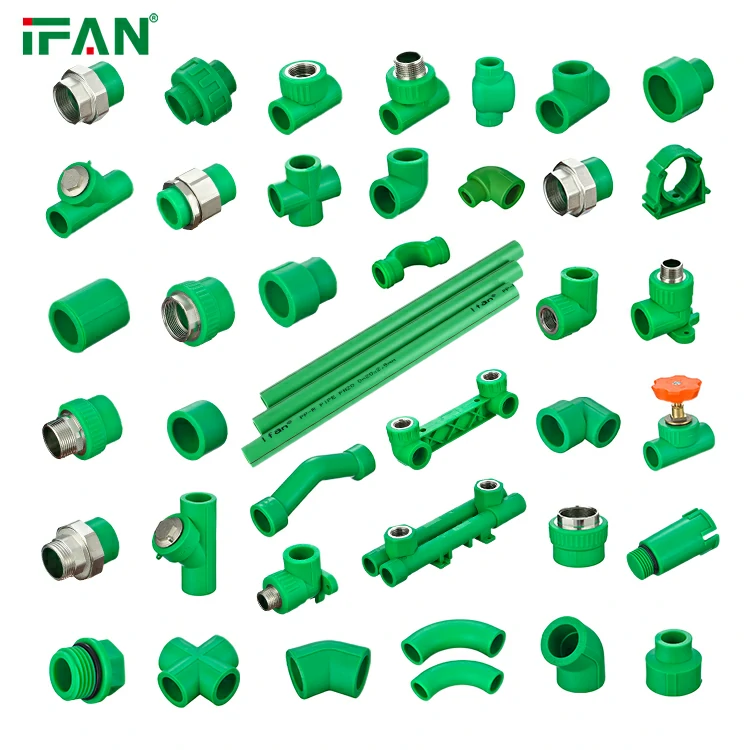
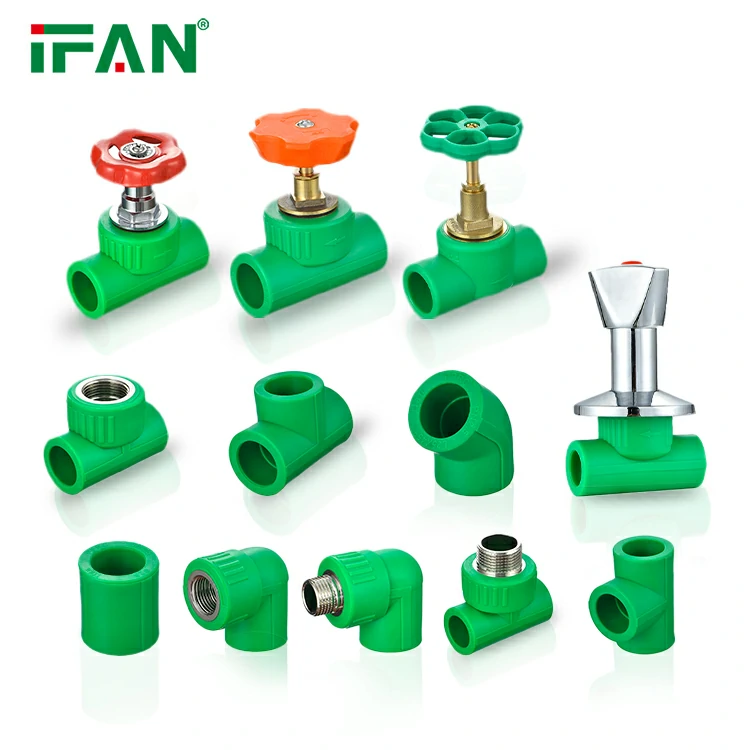
IFAN Factory OEM PPR Pipe Fittings
Category : Click Download
Whatsapp : +86 19884503412
Wechat : 19884503412
Description
Understanding PPR as a Material
PPR stands for Polypropylene Random copolymer. It is a specialized thermoplastic. This material is designed for high-temperature fluids. It has excellent thermal and chemical stability. PPR is different from standard polypropylene. Its random polymer structure improves impact resistance.
Definition of PPR Fittings
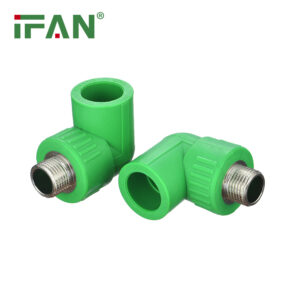
PPR fittings are connection components. They join sections of PPR piping. Their shapes include elbows, tees, and couplings. They are designed for a fusion welding process. This creates a leak-proof, monolithic system. The fittings and pipe are the same material.
Key Properties and Advantages
PPR has several major benefits. It is highly resistant to scaling and corrosion. It does not interact with water chemically. It has very low thermal conductivity. This minimizes heat loss in hot water lines. Its smooth interior ensures excellent flow. It is also a very lightweight material.
Primary Use: Domestic Hot and Cold Water Systems
This is the most common application. PPR pipe fittings are used throughout homes. They supply hot and cold water to fixtures. They are inside walls and under floors. Whole-house repiping often uses PPR. It is a reliable alternative to copper.
Central Heating and Radiator Connections
PPR is ideal for heating systems. It connects boilers to radiators. It handles high-temperature water well. Its low heat loss improves system efficiency. The material withstands constant thermal cycling. It is a standard in many European heating installations.
Use in Compressed Air Lines
Some industrial grades are suitable for air. PPR systems can distribute compressed air. They are corrosion-free, ensuring clean air. They are quieter than metal pipes. Properly rated systems handle typical workshop pressures. They are cost-effective for factory air networks.
Applications in Chemical Transfer
PPR resists many chemicals. It is used in laboratory plumbing. It handles certain acids and alkalis safely. Industrial process lines may use PPR. It transports non-aggressive chemical solutions. Always verify chemical compatibility first.
Solar Thermal Water Heating Systems
Solar loops carry a heated glycol mix. PPR is perfect for these circuits. It withstands the high temperatures involved. Its insulating property conserves thermal energy. It is durable under constant sun exposure. It is a key material in renewable energy systems.
Food and Beverage Processing Industries
PPR is safe for potable water. This extends to food processing lines. It meets relevant health and safety standards. It is used for water supply within plants. It also handles some food-grade liquids. Its smooth surface prevents bacterial buildup.
Comparative Advantages Over Metal Pipes
PPR does not corrode or scale like copper. It is much faster to install than metal. It requires no threading or soldering. It is also significantly less expensive. The installed cost is often lower. It provides a comparable service life.
The Fusion Welding Installation Method
Installation uses a dedicated welding tool. The tool heats the pipe and fitting ends. They are then joined together under pressure. The plastic melts and fuses completely. This creates a joint stronger than the pipe itself. It is a skill-based but reliable technique.
A Versatile Modern Piping Solution
In summary, PPR pipe fittings are essential components. They are used for hot and cold water distribution. They serve heating and industrial systems. Their properties offer durability and efficiency. They represent a modern, reliable piping technology. Their use continues to grow globally.
相关产品
 Green PPR Pipe Fittings
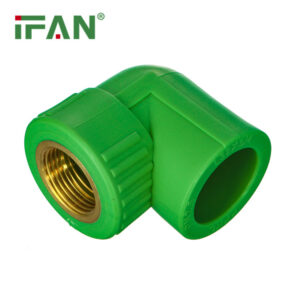
PPR Tail Elbow
- Green PPR Pipe Fittings
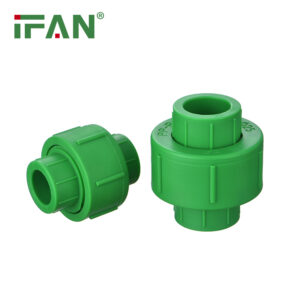
PPR Union Fittings
- Green PPR Pipe Fittings
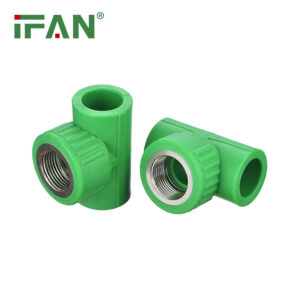
PPR Female Tee
- Green PPR Pipe Fittings
PPR Male Elbow



HAVE ANY QUERIES? SEND TO CONTACTOANTSMACHINE.COM
ONTACT US