
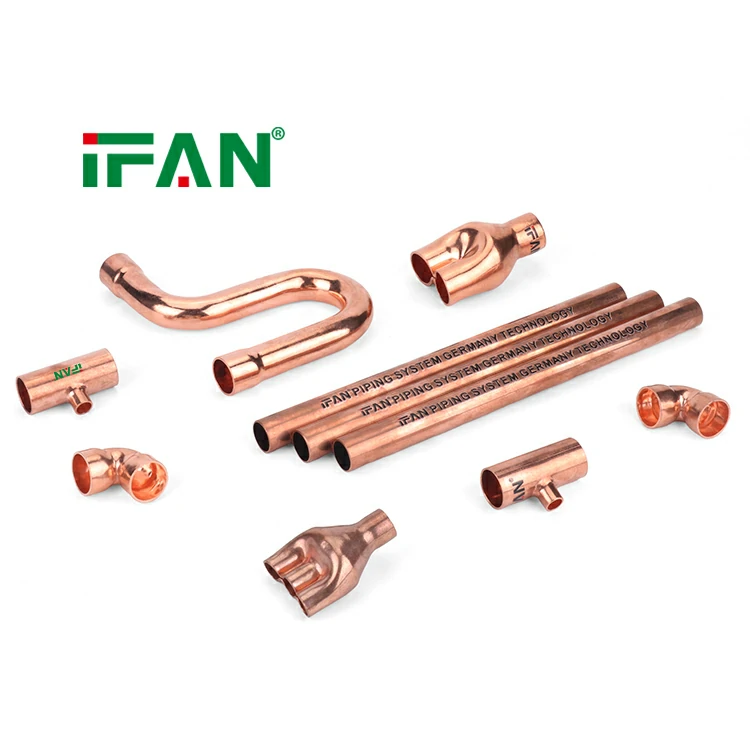
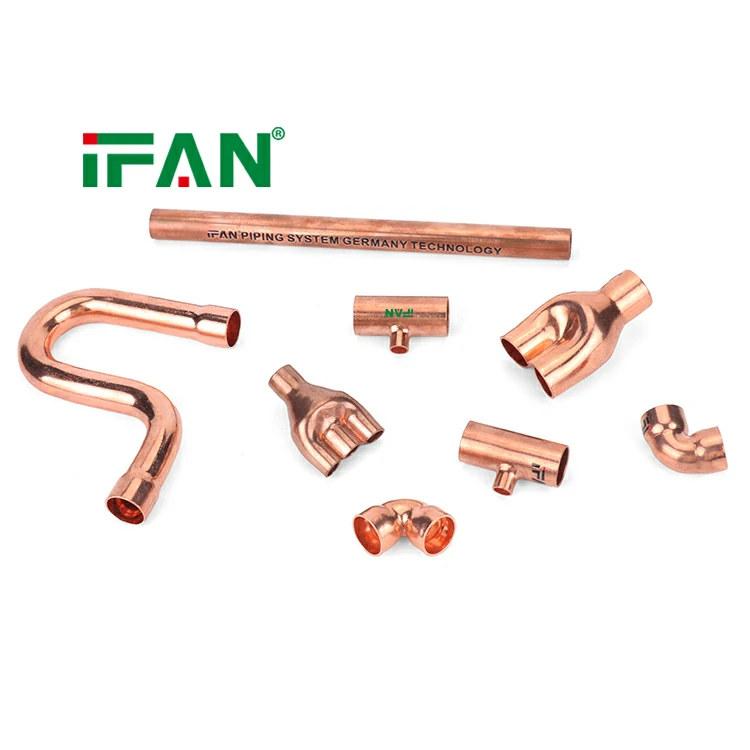
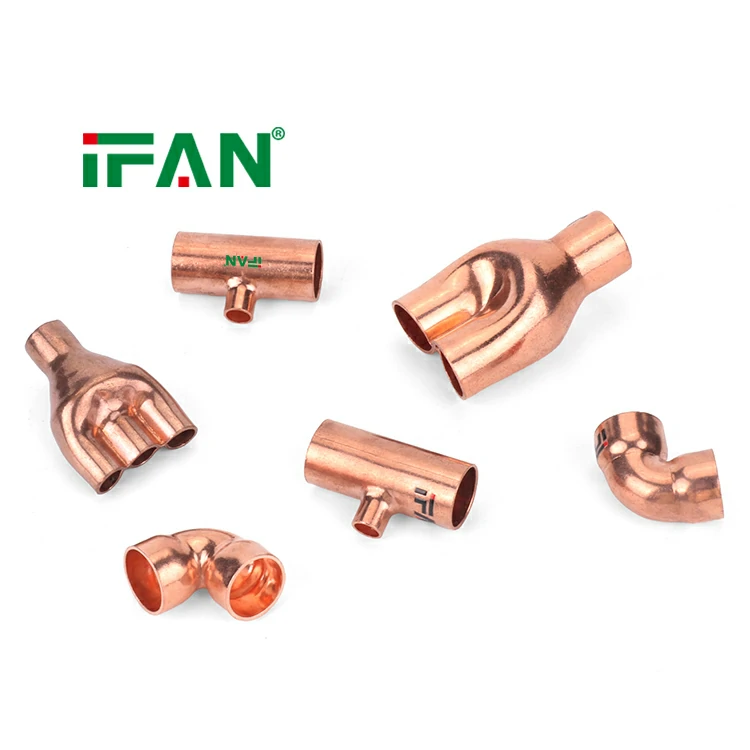
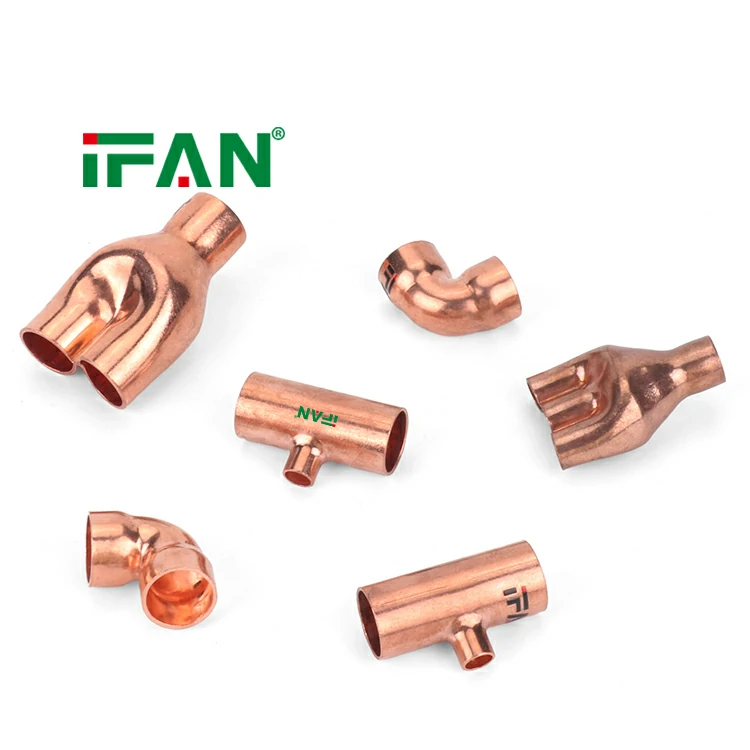
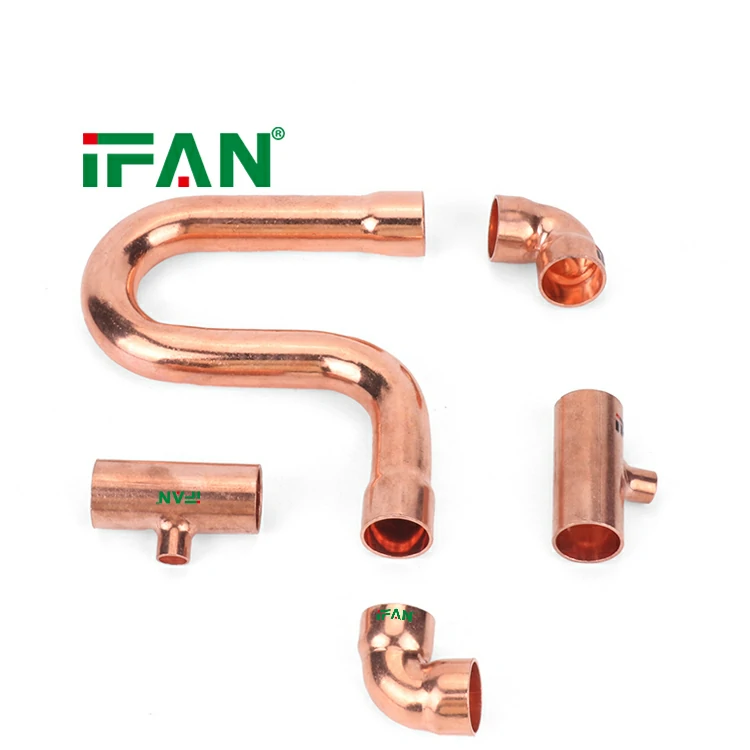
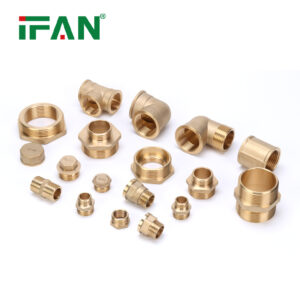
IFAN Customized Copper Pipe Fittings
Name: IFAN Copper Pipe Fittings
Brand: IFAN
Category : Click Download
Whatsapp : +86 19884503412</p>
Category : Click Download
Whatsapp : +86 19884503412
Wechat : 19884503412
Description
Understanding Copper Corrosion Mechanisms
Copper is generally corrosion resistant. However, specific conditions cause damage. Pitting corrosion is one common type. Uniform attack is another form. Galvanic corrosion is also possible. Understanding these is the first step.
Control Water Chemistry and pH Levels
Water pH is critically important. Neutral pH (around 7.0) is ideal for copper. Highly acidic water (low pH) dissolves copper. Alkaline water (high pH) can cause scaling. Test your water supply regularly. Use a neutralizing filter if needed.
Prevent Galvanic Corrosion with Dielectric Unions
Never connect copper directly to steel. Also avoid direct connection to aluminum. These metals create a galvanic cell. Copper is the noble metal in this pair. The less noble metal corrodes rapidly. Always use a dielectric union or fitting.
Use Compatible Solder and Flux
Choose the correct solder type. Lead-free solder is now standard. Use flux specifically for copper. Apply flux sparingly to the joint area. Clean all flux residue after soldering. Leftover flux is acidic and corrosive.
Ensure Proper Electrical Grounding
Faulty electrical grounding is a risk. Stray currents can accelerate corrosion. This is called electrolytic corrosion. Ensure your plumbing is properly grounded. Hire a licensed electrician for checks. This protects both pipes and people.
Install Sediment Filters and Softeners
Hard water causes scale buildup. This scale can hide pitting corrosion. Sediment can also accelerate wear. A whole-house filter removes particulates. A water softener handles hardness. This maintains clean, stable water conditions.
Avoid Excessive Water Velocity
High water speed causes erosion-corrosion. This wears away the protective oxide layer. Design your system with correct pipe sizing. Avoid using undersized pipes. This keeps flow velocity within safe limits. Consult plumbing codes for guidelines.
Protect from External Environmental Factors
External corrosion also occurs. This is from moisture in the air or soil. Insulate pipes in damp crawl spaces. Use protective paint on exposed pipes. Ensure pipes are not in contact with concrete. Concrete can be corrosive over time.
Use Approved Pipe Hangers and Supports
Metal hangers can cause galvanic corrosion. Use plastic-coated or copper-compatible hangers. Ensure supports do not trap moisture. Allow for pipe movement and expansion. Proper support prevents physical and corrosive damage.
Implement Cathodic Protection for Buried Lines
Buried copper lines are at risk. Soil chemistry can be aggressive. Use sacrificial anode bags for protection. These are bags of magnesium or zinc. They corrode instead of the copper. This is standard for underground installations.
Perform Regular System Inspections
Visually inspect exposed pipes annually. Look for green or blue corrosion stains. Check for any pinhole leaks or weeping. Monitor water pressure for unexpected drops. Address any issues immediately. Early intervention prevents major failure.
Conclusion: A Proactive Approach Wins
Preventing corrosion requires multiple strategies. Control water quality and material contacts. Use proper installation techniques. Protect pipes from their environment. A proactive, informed approach is essential. Well-maintained copper pipe fittings can last a century. Their longevity justifies the preventive effort.
相关产品
 01 Series
Brass Equal Elbow
- 01 Series
Brass Plug
- 01 Series
Brass Fittings Elbow
- 03 Series
Brass Plumbing Fittings



HAVE ANY QUERIES? SEND TO CONTACTOANTSMACHINE.COM
ONTACT US