
Understanding Pressure Rating Fundamentals
Pressure rating defines safe operating limits. It is measured in bars or PSI. This rating is crucial for system safety. Exceeding it can cause joint failure. The rating depends on multiple factors. Material, design, and size are all important.
Manufacturer Specifications as Primary Guide
Always consult the manufacturer’s data sheet. This is the most reliable source. Ratings vary significantly between brands. A generic number is not sufficient. The datasheet provides the exact rating. It also includes temperature derating information.
The Role of PE Pipe Pressure Class
The fitting rating must match the pipe. PE pipes have Pressure Nominal (PN) ratings. Common classes are PN6, PN10, and PN16. A fitting rated for PN10 pairs with PN10 pipe. Using a lower-rated fitting is unsafe. The system is only as strong as its weakest part.
Influence of Temperature on Rated Pressure
Pressure capacity decreases with heat. A rating at 20°C is the standard. Operating at 40°C reduces allowable pressure. Manufacturers provide derating tables. For hot water applications, check these carefully. Ambient temperature also affects buried lines.
Standard Rating Ranges for Water Applications
For cold water, common ratings are 10 bar (145 psi). Some heavy-duty fittings reach 16 bar (232 psi). Standard PE compression fittings often fall in this range. This covers most residential and irrigation needs. Always confirm for your specific product.
Ratings for Gas Distribution Applications
Gas fittings have different standards. They often require higher safety margins. Ratings are clearly marked on certified products. Yellow gas PE compression fittings are typical. They must meet specific national gas codes. Never use a water fitting for gas.
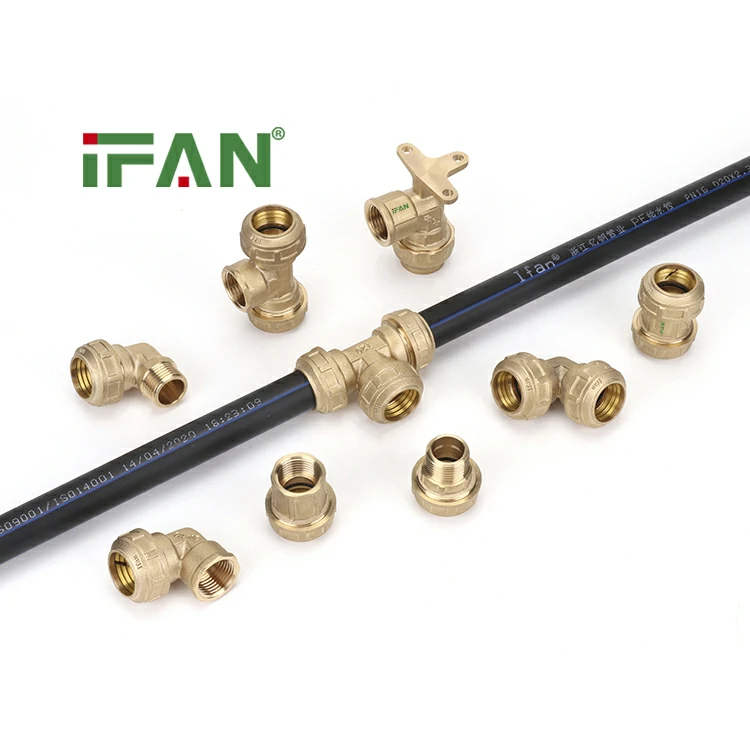
Impact of Fitting Size on Pressure Capacity
Smaller diameters often handle higher pressure. A 20mm fitting may be stronger than a 110mm one. This is due to the physics of the seal. Always check the rating for the exact size you use. Do not assume all sizes share one rating.
Testing and Certification Standards
Reliable fittings undergo hydrostatic testing. They are tested to 1.5 or 2 times their rating. Look for marks like DIN, ISO, or ASTM. These indicate independent testing. Certification ensures the stated rating is valid. Avoid uncertified, unbranded products.
Difference from Fusion Fitting Ratings
Butt fusion joints are usually stronger. They often match the pipe’s pressure rating exactly. PE compression fittings are mechanical joints. Their rating is typically lower than fusion. They are not used for the highest-pressure mains.
Safety Factors and Burst Pressure
The working pressure includes a safety factor. Burst pressure is much higher. A 10 bar fitting may burst at 30-40 bar. This factor protects against surges. However, never operate near the burst limit.
Ensuring System-Wide Pressure Compatibility
All system components must be compatible. This includes pipes, fittings, valves, and pumps. Mismatched ratings create weak points. Design the system for the highest expected pressure. Include a safety margin for water hammer.
Final Guidance on Selection and Use
First, determine your system’s maximum operating pressure. Add a margin for safety. Select a fitting with a higher published rating. Verify its certification and temperature suitability. Correct installation is then critical. Properly selected and installed PE compression fittings provide reliable, long-term service within their rated envelope. Always prioritize safety over cost.