
Understanding Push-Fit Technology for PPR
PPR push fittings are innovative connectors. They allow for tool-free pipe installation. They differ from traditional fusion welding. These fittings are designed for speed. They are also suitable for specific applications. Their mechanism is clever yet simple.
Core Components and Design
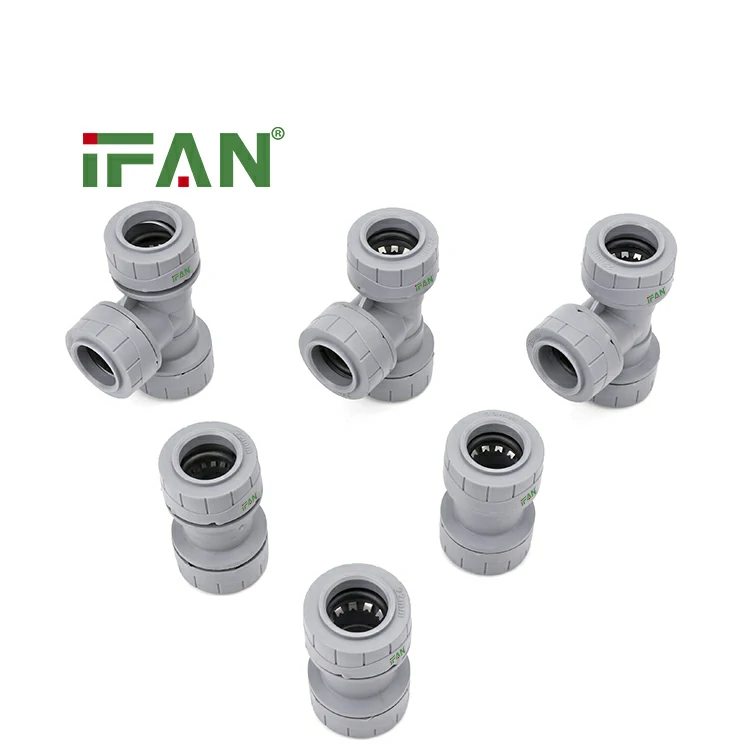
A typical fitting has several parts. The main body is PPR plastic. Inside, a stainless steel gripper ring is key. A high-grade EPDM O-ring provides the seal. A collet or clip holds everything in place. A release collar allows for disassembly.
The Installation Process Step-by-Step
First, cut the PPR pipe squarely. A clean cut is essential. Deburr the pipe end completely. Ensure it is clean and dry. Mark the insertion depth on the pipe. Then, simply push the pipe into the fitting. You will hear or feel a click.
The Sealing Mechanism Explained
The EPDM O-ring creates the seal. It is compressed between the pipe and fitting wall. This compression forms a watertight barrier. The O-ring’s elasticity accommodates minor imperfections. It also handles thermal expansion and contraction. The seal is reliable and long-lasting.
The Gripping and Locking Action
The stainless steel gripper ring is vital. It has sharp, inward-facing teeth. These teeth bite into the PPR pipe’s outer wall. They prevent the pipe from being pulled out. The grip is strong and permanent under normal pressure. It holds the connection securely.
The Audible or Tactile Click
Most PPR push fittings provide feedback. A distinct click confirms full insertion. This sound comes from the gripper ring. It engages completely with the pipe. This feedback is crucial for installer confidence. It indicates a properly made joint.
How Disassembly Works
These fittings are often demountable. Press the release collar on the fitting. This action retracts the gripper ring’s teeth. The pipe can then be pulled straight out. This feature is great for modifications. It allows for system reconfiguration.
Pressure and Temperature Ratings
Check the manufacturer’s specifications carefully. Ratings are typically lower than fused joints. They might be suitable for 10 bar at 20°C. Hot water ratings will be lower. Always use them within their certified limits. Never exceed the stated pressure.
Comparison to Solvent Welding and Fusion
Solvent welding creates a chemical bond. Fusion welding melts materials together. Both methods are permanent and very strong. PPR push fittings are mechanical joints. They are faster but have different strength limits. They offer convenience over permanence.
Ideal Applications and Use Cases
They are perfect for tight spaces. Access for a fusion welder may be impossible. They are excellent for temporary installations. They are ideal for repair and retrofit work. They work well in rented properties. Quick system changes are easy.
Limitations and Important Considerations
They are not for high-pressure mains. They are not for continuous high-temperature lines. They require precise pipe preparation. The pipe must be perfectly round. Ovality from poor storage can cause leaks. Use only with approved pipe types.
Ensuring a Reliable Connection
Always use the correct pipe size. The pipe must be SDR 11 or as specified. Follow the manufacturer’s instructions exactly. Do not twist the pipe during insertion. Support the pipe near the fitting. Test the system thoroughly before concealing.
Conclusion on Function and Utility
In summary, PPR push fittings work mechanically. They use a gripper ring and O-ring seal. They provide fast, tool-free connections. They are demountable for flexibility. They suit specific, moderate-duty applications. They are a valuable tool in the modern plumber’s kit, complementing traditional fusion methods.