
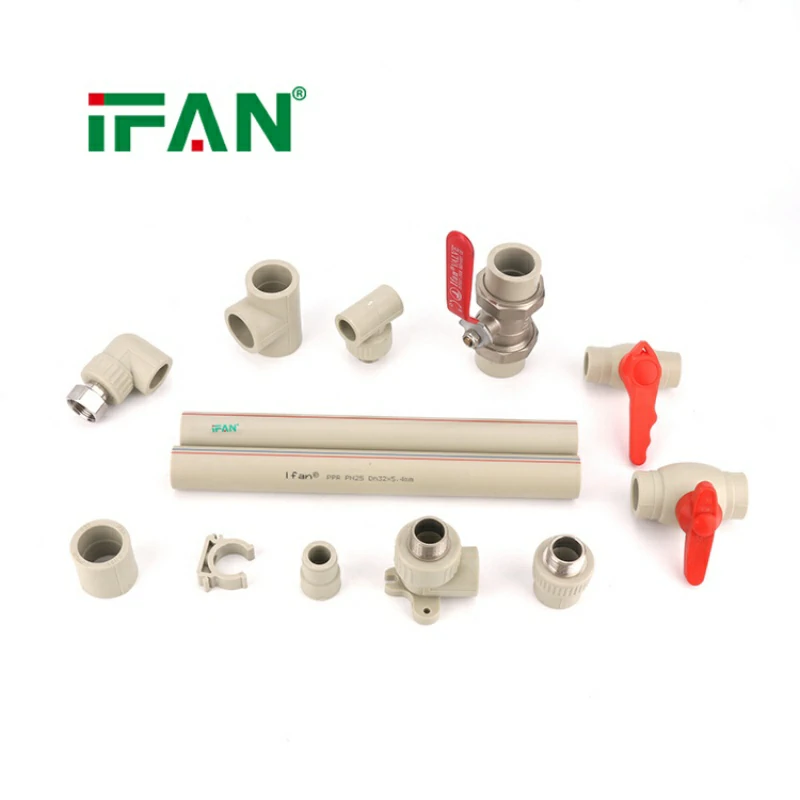
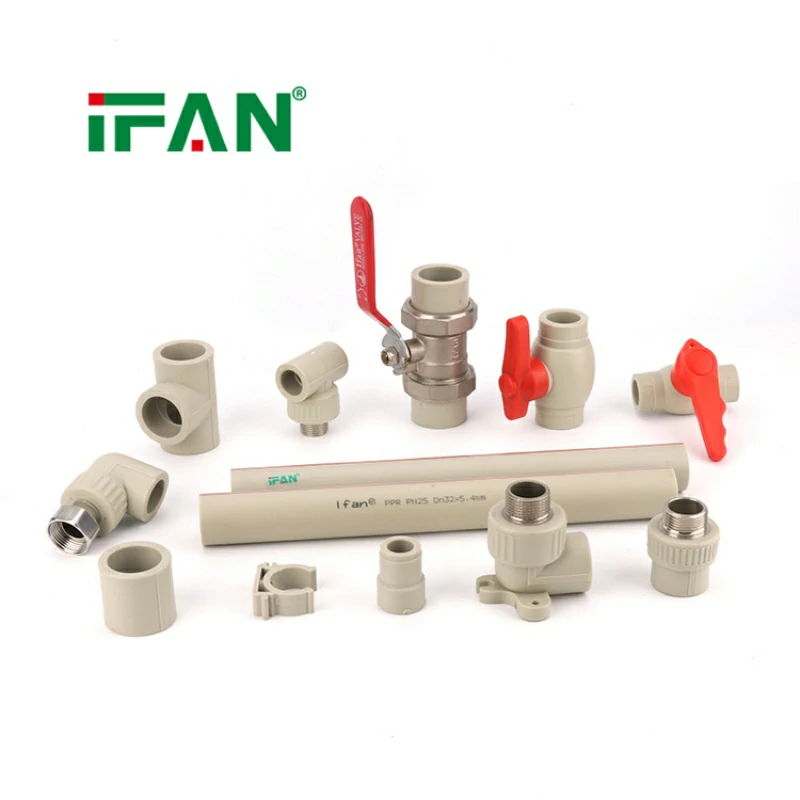
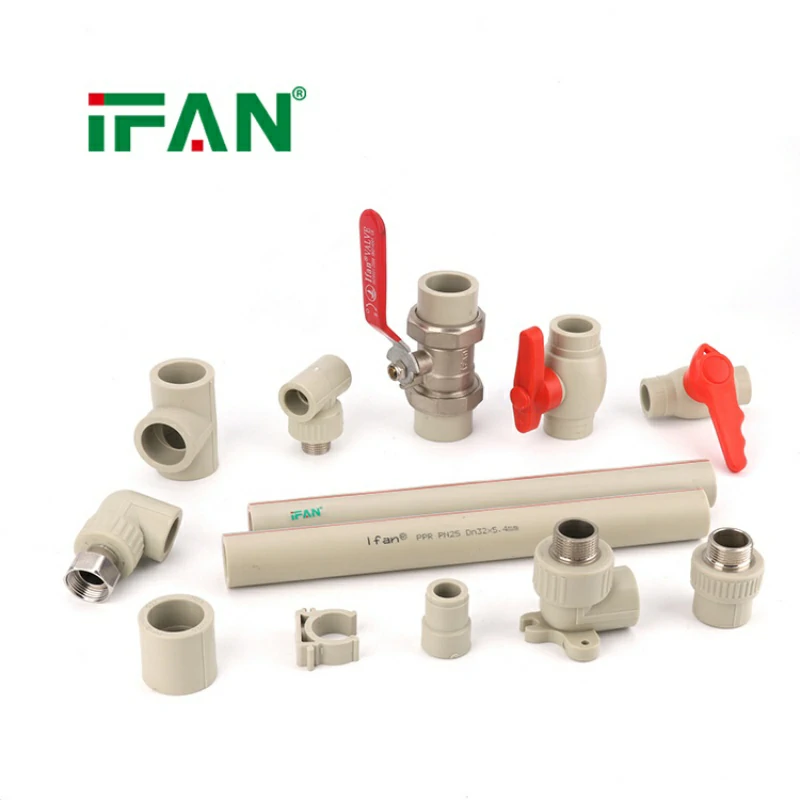
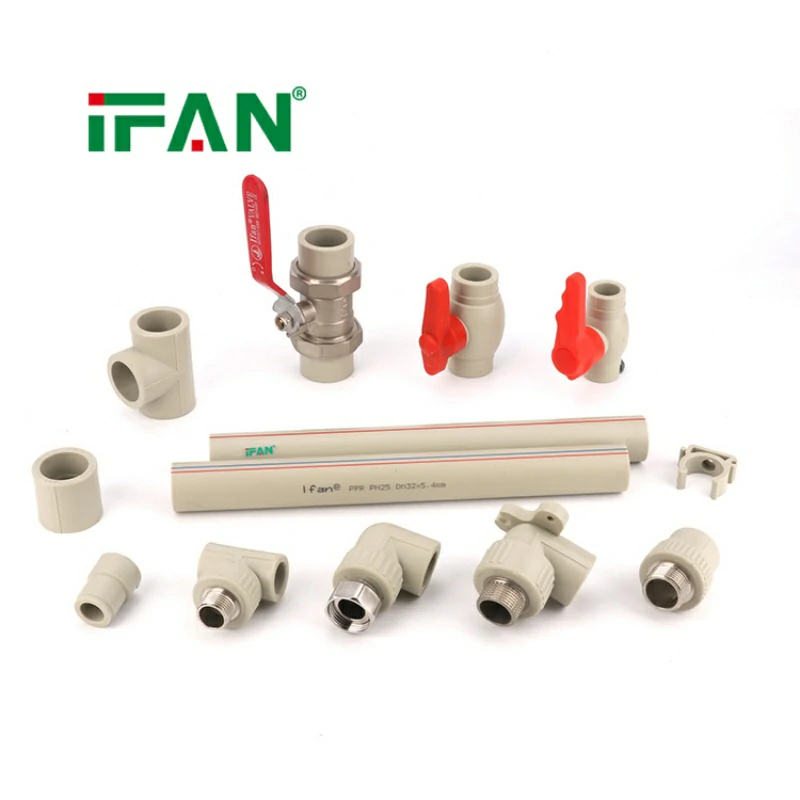
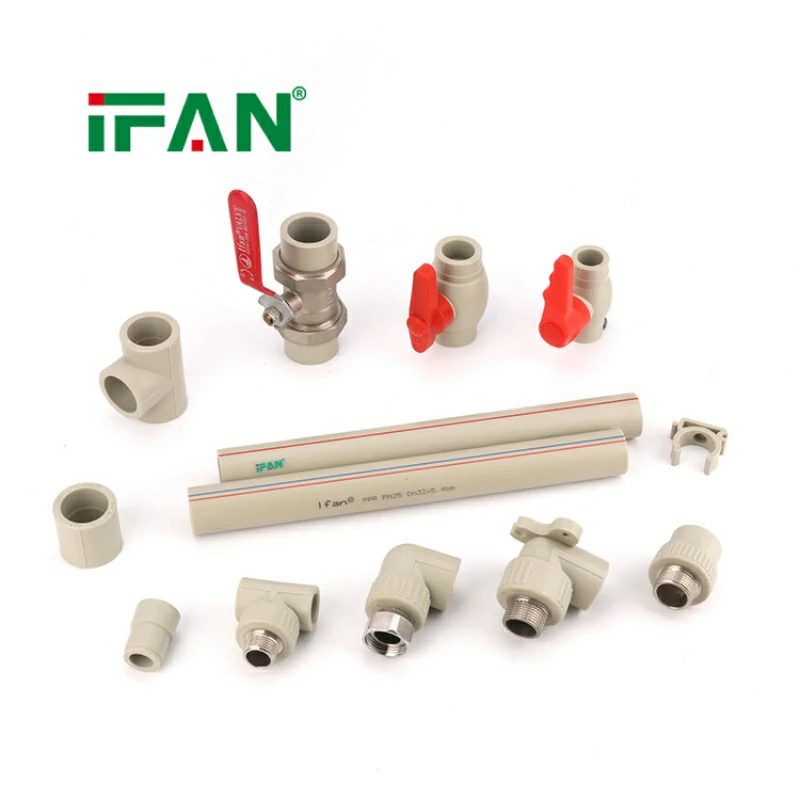
IFAN Proper Price PPR Fittings
Category : Click Download
Whatsapp : +86 19884503412
Wechat : 19884503412
Description
Understanding PPR Material Composition
PPR stands for Polypropylene Random Copolymer. It is a type of thermoplastic. The material is completely non-metallic. It contains no iron, copper, or other metals. This fundamental property determines its corrosion behavior. There is simply nothing to rust or oxidize.
Complete Immunity to Electrochemical Corrosion
Metal pipes suffer from galvanic corrosion. Different metals create a battery effect in water. PPR fittings contain no conductive materials. They cannot participate in this reaction. They are complete electrical insulators. This eliminates a major failure mode of metal systems.
Resistance to Chemical Attack
PPR is highly inert to most substances. It resists acids, bases, and salt solutions. It handles common disinfectants like chlorine. It does not react with water treatment chemicals. This chemical stability ensures long-term integrity. It is a key advantage over metals.
Scale Buildup Explained
Scale is hard mineral deposit. It forms when water contains calcium and magnesium. These minerals precipitate onto pipe walls. Rough surfaces encourage scaling. Smooth surfaces resist it. Temperature and water chemistry also play roles.
Smooth Internal Surface of PPR
PPR fittings have an exceptionally smooth bore. The material is extruded to a glossy finish. There are no microscopic pits or crevices. This smoothness makes mineral adhesion difficult. Water flows without turbulence or friction. Scale has little to grip.
Comparison to Metal Pipe Scaling
Copper and steel pipes develop internal roughness. Corrosion creates pits and uneven surfaces. These act as nucleation sites for scale. PPR fittings do not corrode or pit. Their surface remains smooth indefinitely. This significantly reduces scaling potential.
Effect of Hot Water on Scaling
Hot water accelerates scale formation. The higher temperature causes faster precipitation. PPR’s low thermal conductivity helps. The pipe wall stays cooler than the water. This slightly reduces the scaling rate compared to metal pipes.
Long-Term Performance in Hard Water Areas
In regions with very hard water, scale still forms. No material is completely immune. However, PPR fittings perform better than metals. The scale that does form is less adherent. It can often be flushed away. Flow restriction is minimized over time.
Biological and Microbial Resistance
PPR does not support bacterial growth. The smooth surface resists biofilm formation. There are no nutrients for microbes. This maintains water quality and hygiene. It also prevents biological scale or slime buildup.
Resistance to Chlorine and Disinfectants
Municipal water contains chlorine or chloramines. These protect public health but attack some materials. PPR fittings are highly resistant to these chemicals. They do not degrade or leach harmful substances. This ensures long service life in treated water systems.
UV and Weathering Considerations
Sunlight degrades unprotected PPR. UV radiation causes surface embrittlement. This does not affect internal corrosion or scaling. However, outdoor installations need protection. Use insulation or UV-stabilized products. The internal properties remain unaffected.
Conclusion on Resistance Properties
PPR fittings are highly resistant to corrosion. They cannot rust or undergo galvanic attack. They also resist chemical degradation from water treatment. Their smooth surface minimizes scale buildup. In hard water areas, they outperform metal pipes significantly. For long-lasting, low-maintenance plumbing, PPR is an excellent choice. Its resistance properties are a key reason for its widespread adoption.
相关产品
 Gray PPR Pipe Fittings
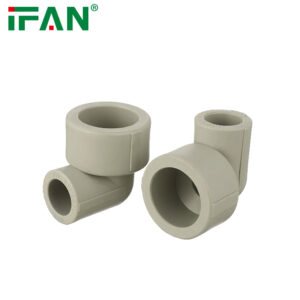
Gray PPR Reduce Elbow
- Gray PPR Pipe Fittings
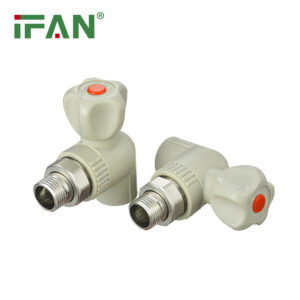
Gray PPR Radiator Valve
- Gray PPR Pipe Fittings
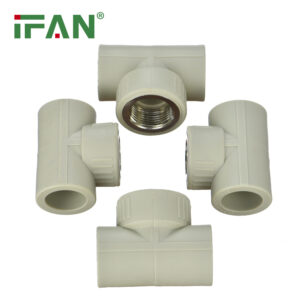
Gray PPR Female Tee
- Gray PPR Pipe Fittings
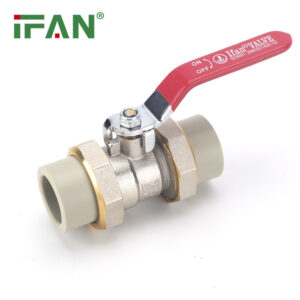
Gray PPR double union copper ball valve



HAVE ANY QUERIES? SEND TO CONTACTOANTSMACHINE.COM
ONTACT US