
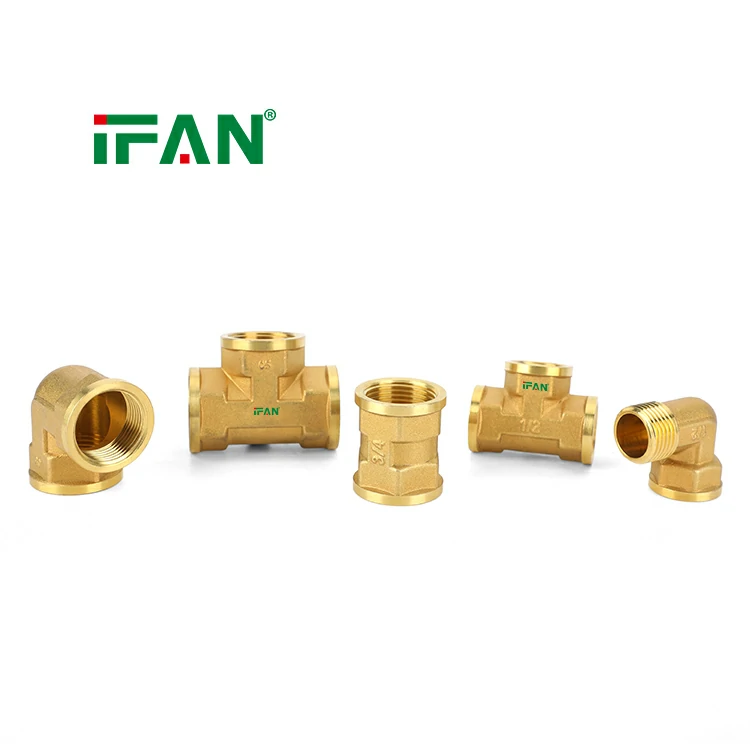
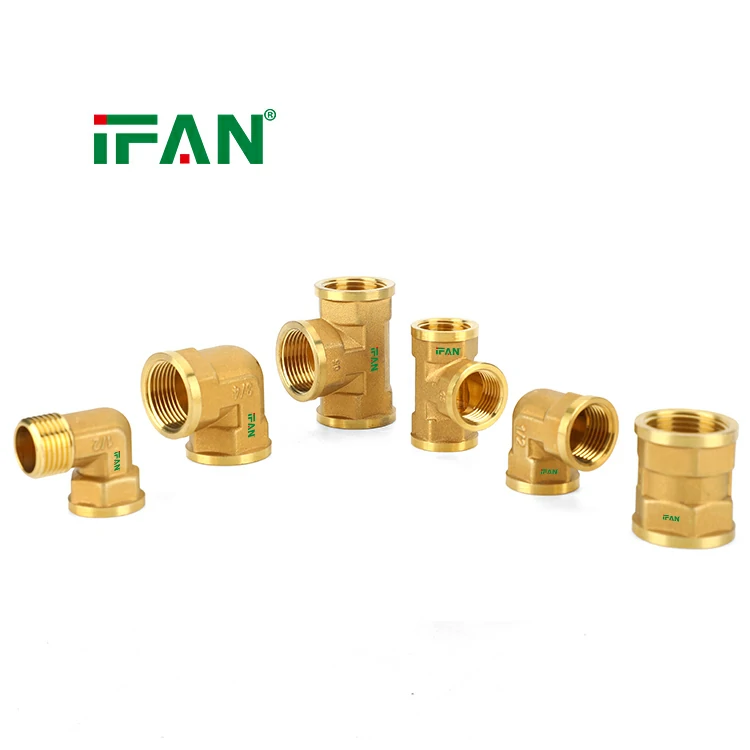
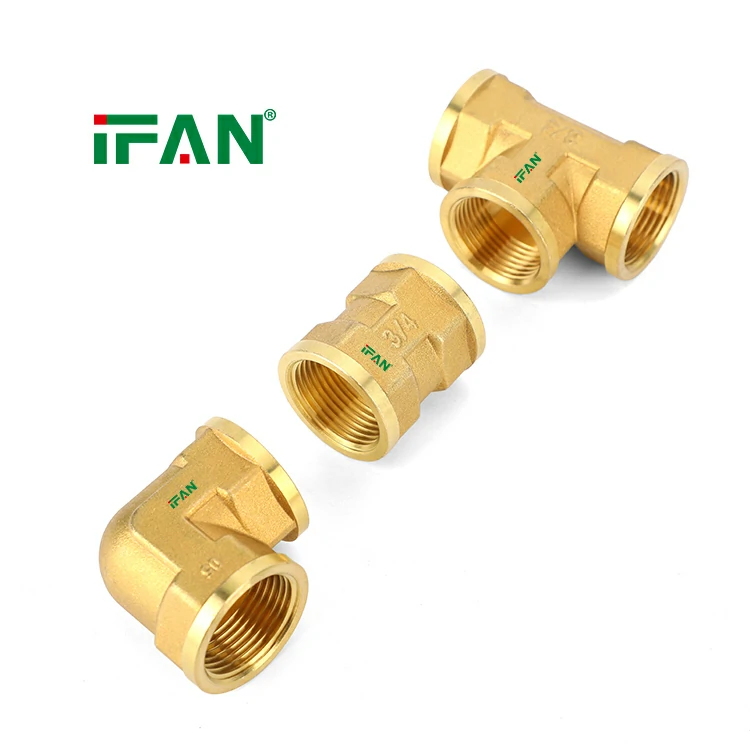
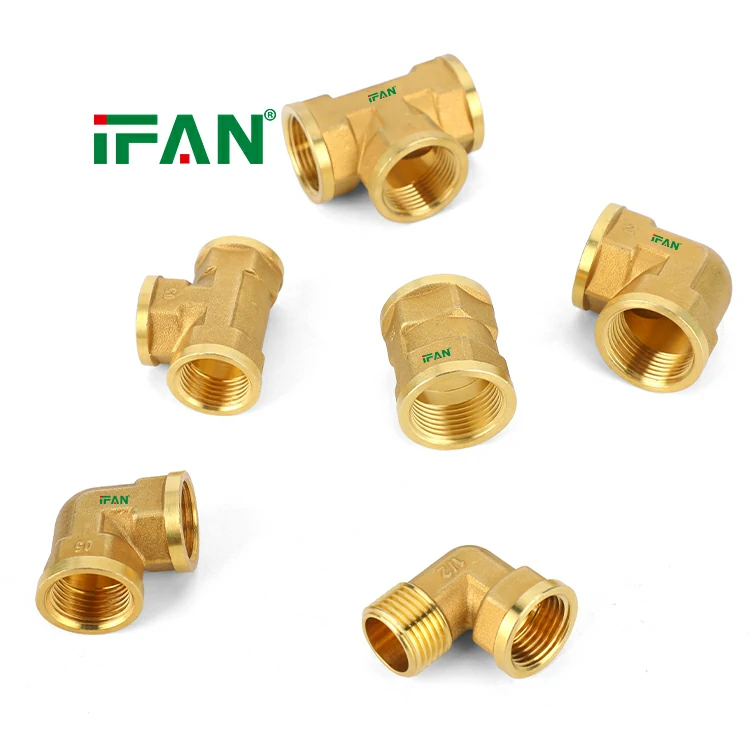
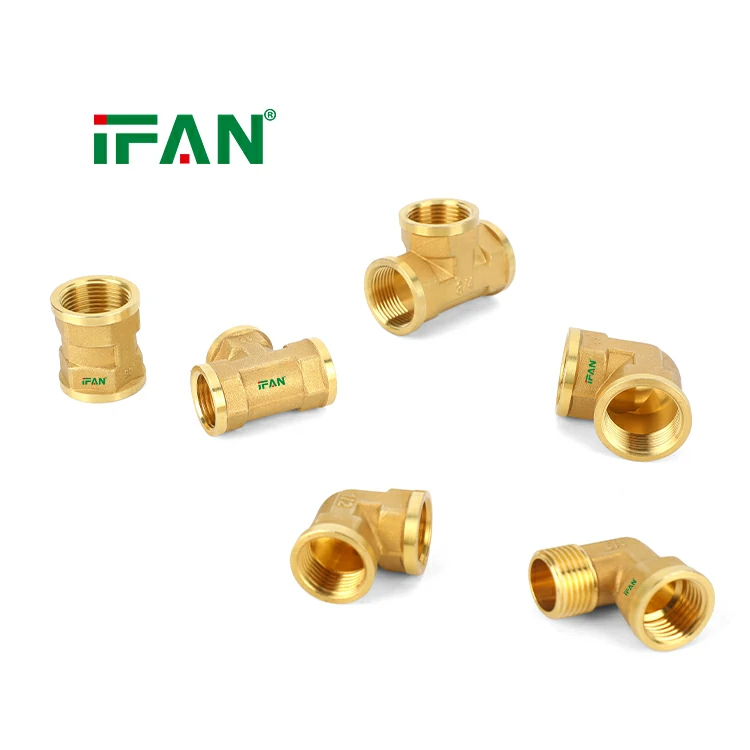
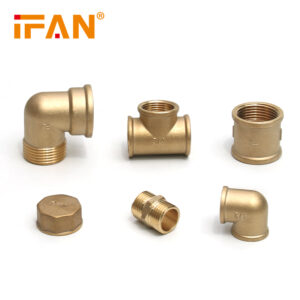
IFAN Cheap Price Brass Pipe Fittings
Category : Click Download
Whatsapp : +86 19884503412
Wechat : 19884503412
Description
Yes, Thread Sealant is Mandatory
Brass pipe fittings with tapered threads require a sealant for a watertight joint. The metal threads themselves cannot create a perfect seal. If you join them dry, the joint will leak immediately or fail under pressure. A sealant fills the microscopic spiral gap between the mating threads.
The Difference Between Lubrication and Sealing
Tapered brass threads (NPT) seal by creating high metal-on-metal friction. The interference fit can cause the threads to gall or seize. Teflon tape lubricates the threads, allowing them to turn further and tighter. This deeper engagement creates the mechanical seal. However, the tape also occupies the voids.
How Teflon Tape Functions as a Sealant
Teflon tape is a soft, semi-rigid polymer film. When you tighten the brass nut or fitting, the tape compresses. It flows into the small helical leak paths between the thread crests and roots. It is not an adhesive. It is a gap filler. Without this filler, water molecules will follow the spiral path out of the joint. Brass pipe fittings rely on this filler.
Type of Tape: White vs. Yellow
Standard white PTFE tape and yellow gas-rated tape both seal water. Yellow tape is thicker and denser. It is intended for gas lines. However, you can use yellow tape on brass pipe fittings for water with no issue. For water lines containing aggressive chemicals, use tape made of a compatible material like PTFE is standard.
Which Sealant Works For Brass Threads?
Both tape and pipe joint compound (pipe dope) work excellently. For brass pipe fittings used indoors, white PTFE tape is the most common DIY choice. For high-vibration environments like a pump discharge, paste joint compound is superior. The paste remains flexible and does not stress crack like tape might.
The Clockwise Wrapping Rule
Tape must be applied in the direction of the threads. If you hold the fitting nipple pointing right, you wrap the tape towards the right (clockwise). When you screw the nut over the tape, the friction pulls the tape tight. Wrapping counter-clockwise will cause the nut to push the tape off the threads. This typically unrolls all the tape into a string.
How Many Wraps to Use
Too little tape results in a leak. Too much tape hydraulically cracks the brass female fitting. For 1/2″ to 3/4″ diameter brass pipe fittings, use 3 to 5 wraps. For 1-1/4″ and larger, use 5 to 7 wraps. The tape should completely cover the threaded area but stay clear of the pipe opening.
Avoiding Hydraulic Cracking
If you use too much tape, it acts as a solid wedge. As you tighten the nut, the fitting expands from the inside. Brass is softer than steel and will crack. This crack often appears days or weeks after installation. The result is a slow, pinhole leak inside a wall. Always be conservative with tape wraps.
Sealant on Flare Fittings
Brass flare fittings are a different system. They do not require tape or paste. The seal is made by the metal-on-metal contact of the flared cone. If you put tape on a flare fitting, it prevents the copper flare from seating correctly. The lubricating effect also allows you to over-torque the brass flare nut, which will snap the nut before it seals.
Union Fittings Are Mechanical Joints
Brass ground joint unions do not require thread sealant. The union uses a brass-to-brass machined seat. The seal is physical, not thread-based. Never put tape on the ground joint surfaces. However, the large locknut that holds the union together does need a tiny drop of oil to prevent galling, but not tape for sealing.
Fittings That Absolutely Need Sealant
Any brass pipe fitting using NPT (National Pipe Taper) threads needs sealant. This includes caps, plugs, couplings, elbows, and tees. It includes adapters connecting to pumps or boilers. The rule of thumb: if the brass has tapered threads, you need tape or dope. If the brass has a rubber gasket or flare cone, you do not.
A Visual Check For Installation Quality
When you tighten a taped brass fitting, a small amount of tape should extrude out of the joint. This is a good sign. It proves the tape was forced into the threads. If no tape is visible, you may not have tightened enough. If the brass body cracks, you used too much tape or too much torque.
Summary on Sealant Requirement
Brass pipe fittings absolutely require thread sealant, except for flare fittings and union joints. Teflon tape is the standard choice for hot and cold water. Paste is best for high-vibration lines. Wrap clockwise, use 3-5 wraps, and do not let tape cover the pipe opening. Using no sealant guarantees a leak. Proper application ensures a pressure-tight joint for decades.
相关产品
 01 Series
Brass Reduce Tee
- 01 Series
Brass Reduce Nipple
- 02 Series
Brass Fitting Socket
- 02 Series
Brass Pipe Fittings



HAVE ANY QUERIES? SEND TO CONTACTOANTSMACHINE.COM
ONTACT US