
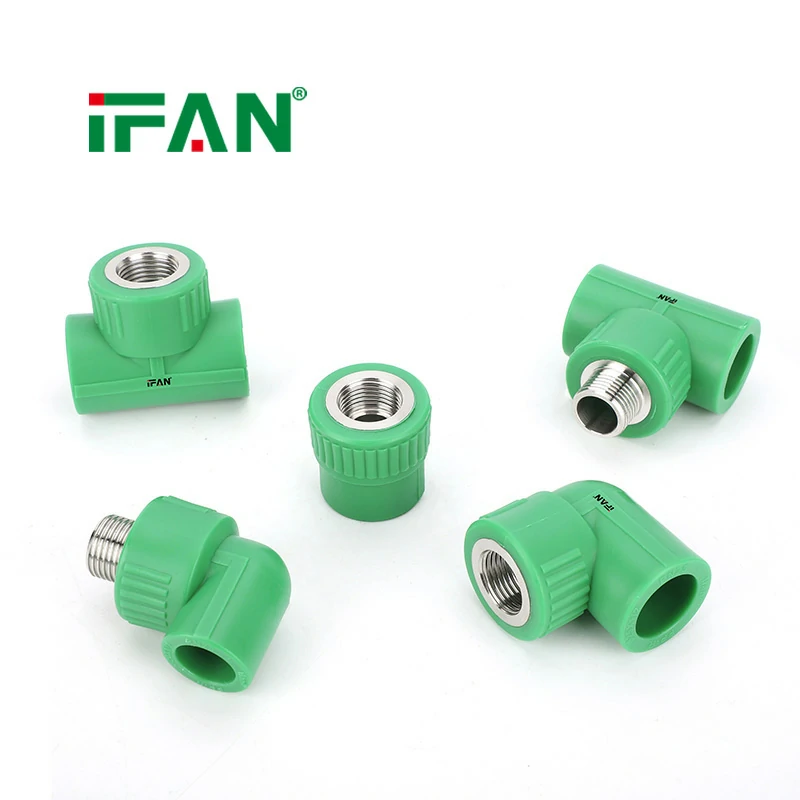
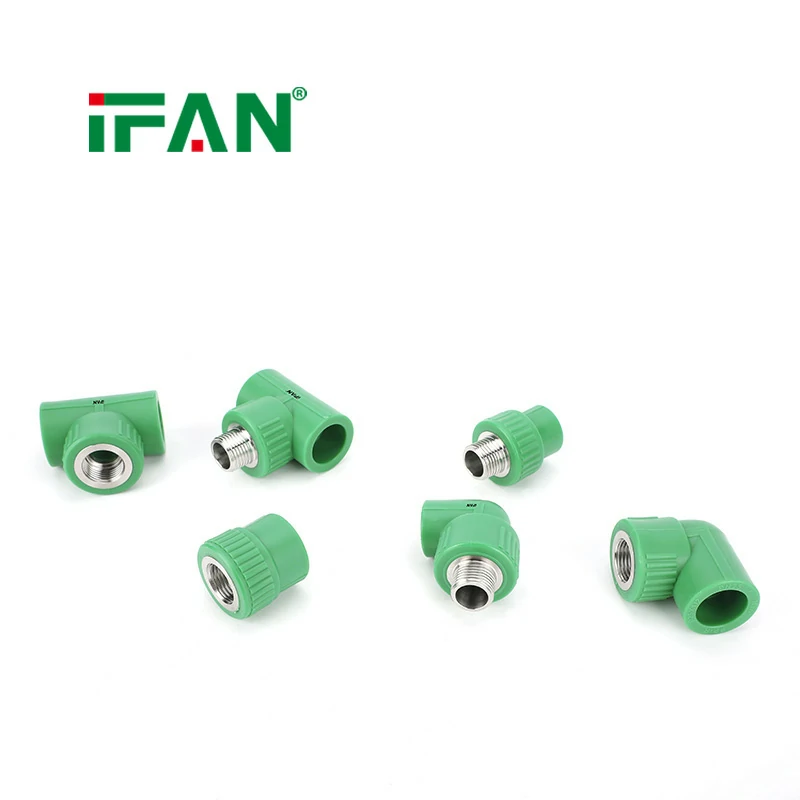
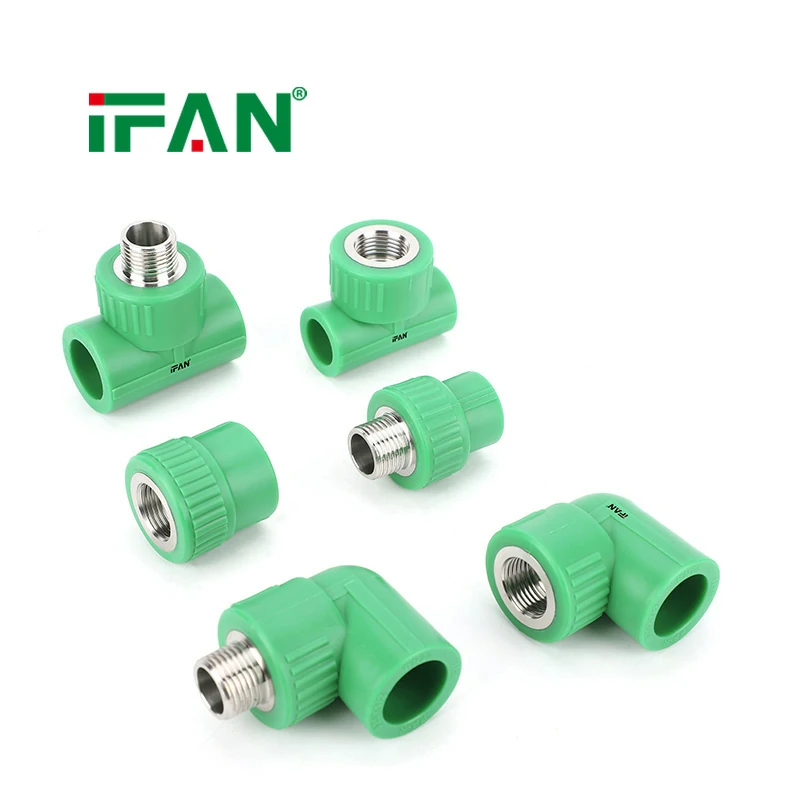
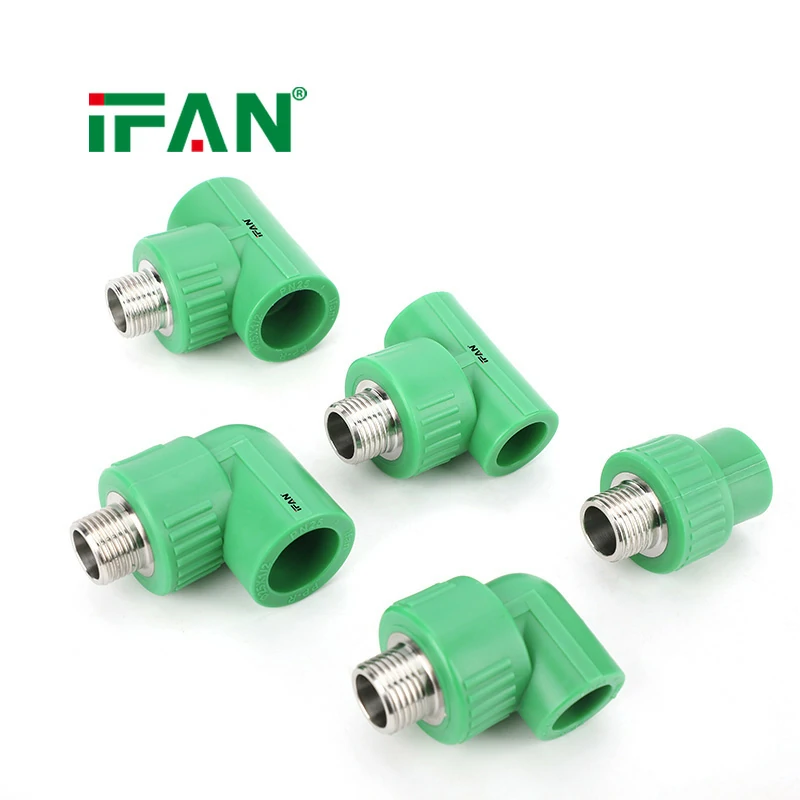
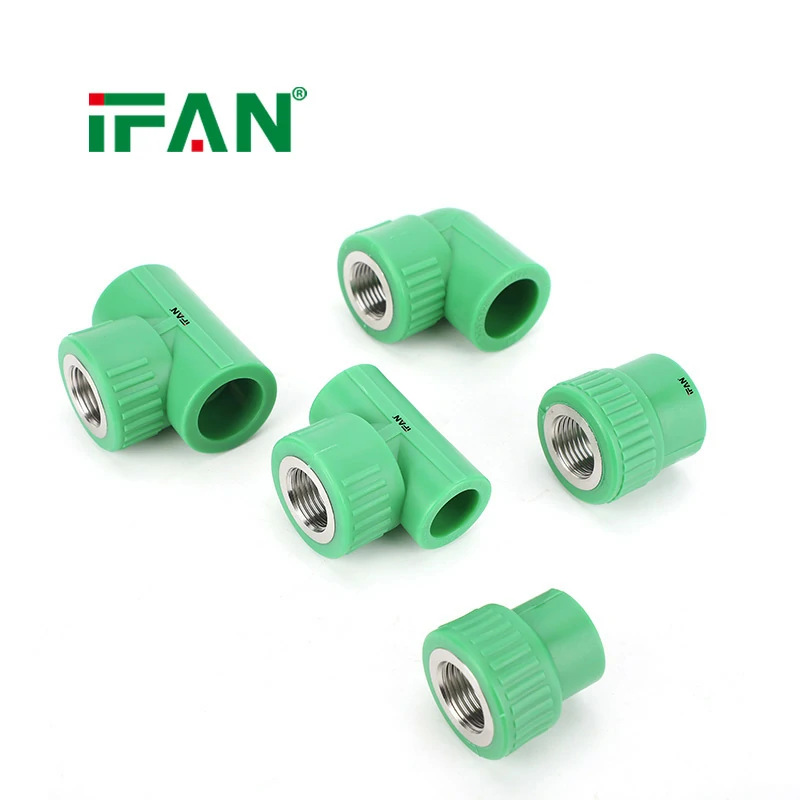
IFAN All Types Stainless Steel PPR Fittings
Name: IFAN Stainless Steel PPR Fittings
Brand: IFAN
Category : Click Download
Whatsapp : +86 19884503412</p>
Category : Click Download
Whatsapp : +86 19884503412
Wechat : 19884503412
Description
Understanding Stainless Steel PPR Fittings
Stainless steel PPR fittings are hybrid components. They combine a PPR (polypropylene random copolymer) body with a stainless steel threaded insert. The stainless steel part provides a strong, corrosion-resistant thread. The PPR part is fused directly to the plastic pipe. This design solves the problem of connecting plastic piping to metal valves, pumps, and radiators.
Standard Brass PPR Fittings: The Traditional Choice
Traditional brass pipe fittings have been the industry standard for decades. They offer good strength, moderate corrosion resistance, and are easy to machine. Brass PPR transition fittings use the same hybrid design but with a brass insert instead of stainless steel. They are widely available and less expensive than stainless steel alternatives.
Plastic PPR Fittings: All-Polymer Construction
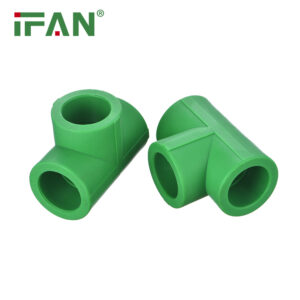
Plastic PPR fittings have no metal components whatsoever. They are fused directly to PPR pipes using heat welding. These fittings are entirely immune to electrochemical corrosion. They are the most economical option for standard residential plumbing. However, they cannot connect directly to metal components without a transition fitting.
Corrosion Resistance Comparison
Stainless steel PPR fittings (especially 316 grade) offer the highest corrosion resistance. The chromium in stainless steel forms a self-healing protective oxide layer. This makes them ideal for aggressive water, coastal areas, and chemical environments.
Brass fittings have good corrosion resistance in freshwater but are vulnerable to dezincification. This is a specific process where zinc leaches out of the brass alloy in aggressive hot water. Over time, dezincification leaves a weak, porous copper structure. For standard residential water, brass performs well; for aggressive water, stainless steel is superior.
Plastic PPR fittings are completely immune to all types of electrochemical corrosion. They cannot rust, dezincify, or suffer from galvanic corrosion. This is their greatest advantage.
| Material | Corrosion Resistance | Dezincification Risk | Best Environment |
|---|---|---|---|
| Stainless Steel | Excellent | None | Aggressive water, coastal, chemical |
| Brass | Good | Yes (in hot/aggressive water) | Standard residential water |
| Plastic PPR | Excellent (immune) | None | All water types, corrosion-critical applications |
Pressure and Temperature Ratings
Stainless steel PPR fittings typically have higher pressure ratings than brass or plastic alternatives. High-quality stainless steel PPR fittings can handle pressures up to 25 bar (363 psi) and temperatures from -20°C to 110°C.
Standard brass pipe fittings handle 150-300 PSI depending on the specific alloy and design. They maintain strength up to moderate temperatures. However, brass pressure ratings must be derated (reduced) at higher temperatures. Brass is not suitable for steam applications.
Plastic PPR fittings have the lowest pressure ratings among the three. Standard PPR handles 80-160 PSI. Pressure capacity decreases significantly as temperature rises. At 70°C continuous operation, PPR maintains good performance; at higher temperatures, it must be derated.
| Material | Pressure Rating | Temperature Range (Continuous) | Derating Required |
|---|---|---|---|
| Stainless Steel | Up to 25 bar (363 psi) | -20°C to 110°C | Minimal |
| Brass | 150-300 PSI | Up to 200°F (93°C) | Yes, at high temperatures |
| Plastic PPR | 80-160 PSI | Up to 70°C (158°F) | Yes, significant |
Installation and Connection Methods
Stainless steel PPR fittings are installed using two methods. The PPR side is fused to the plastic pipe using heat fusion (socket welding). The stainless steel threaded side is screwed onto the metal component using a wrench. Standard thread sealant (PTFE tape or pipe dope) is required on the metal threads.
Brass pipe fittings are installed the same way. The brass side uses standard tapered threads (NPT or BSP) with thread sealant. The plastic side uses heat fusion. Brass is softer than stainless steel, so care is needed to avoid overtightening.
Plastic PPR fittings are installed only by heat fusion. No threading, soldering, or sealant is required. The fusion process creates a monolithic, leak-proof joint that is stronger than the pipe itself. This is the simplest and fastest installation method, requiring only the fusion tool.
Cost and Value Comparison
Stainless steel PPR fittings have the highest initial cost. The material is more expensive, and manufacturing requires precision. However, they offer the longest service life in demanding environments. For aggressive water, coastal installations, or chemical applications, the higher cost is justified.
Brass pipe fittings have moderate initial cost. They are widely available and offer good value for standard residential applications. For typical hot and cold water systems, brass provides decades of reliable service at a reasonable price.
Plastic PPR fittings have the lowest initial cost. Material is inexpensive, and installation labor is minimal. They are the most economical choice for corrosion-critical applications where metal is unnecessary. However, they cannot directly connect to metal components.
Application Suitability
Stainless steel PPR fittings are preferred for demanding applications. These include:
- Industrial plants with aggressive water chemistry
- Coastal installations with saltwater exposure
- High-temperature heating systems (up to 110°C)
- Chemical processing environments
- Applications requiring high strength and vibration resistance
Brass pipe fittings are suitable for:
- Standard residential and commercial plumbing
- Hot and cold water distribution
- Heating systems with treated water
- General-purpose connections where cost is a factor
Plastic PPR fittings excel in:
- Standard water supply lines
- Corrosive water environments
- Economical residential installations
- Systems with no metal transition requirements
Summary Table
| Feature | Stainless Steel PPR | Brass PPR | Plastic PPR |
|---|---|---|---|
| Corrosion Resistance | Excellent | Good (vulnerable to dezincification) | Excellent (immune) |
| Pressure Rating | Highest (up to 25 bar) | Medium (150-300 PSI) | Lowest (80-160 PSI) |
| Temperature Limit | Up to 110°C | Up to 93°C | Up to 70°C (continuous) |
| Installation | Heat fusion + threading | Heat fusion + threading | Heat fusion only |
| Cost | Highest | Moderate | Lowest |
| Best Application | Aggressive water, industrial, coastal | General residential plumbing | Standard water, corrosion-critical |
Conclusion
Stainless steel PPR fittings offer superior corrosion resistance and higher pressure ratings than brass or plastic alternatives. They are the best choice for aggressive water, coastal environments, and demanding industrial applications. Brass pipe fittings provide a proven, cost-effective solution for standard residential and commercial plumbing. Plastic PPR fittings are ideal for corrosion-critical systems where no metal connection is required. The selection depends on water chemistry, temperature, pressure requirements, and budget. For long-term reliability in harsh conditions, stainless steel PPR fittings justify their higher initial cost.
相关产品
 Green PPR Pipe Fittings
PPR Cross Tee
- Green PPR Pipe Fittings
PPR Male Elbow
- Green PPR Pipe Fittings
PPR End Cap
- Green PPR Pipe Fittings
PPR Tee Fittings



HAVE ANY QUERIES? SEND TO CONTACTOANTSMACHINE.COM
ONTACT US