
Primary purpose: reduce thermal expansion
The aluminum layer is the key to stability. It dramatically reduces thermal expansion compared to plain PPR. A PPR-AL Stabi pipe expands 5 times less than standard PPR. Example: 10 meters of pipe expands only 3mm instead of 15mm at 60°C.
How the aluminum limits expansion
Aluminum has a much lower coefficient of thermal expansion. PPR expands at 0.15 mm/m°C. Aluminum expands at only 0.024 mm/m°C . A PPR-AL Stabi pipe relies on the metal to control movement.
Oxygen barrier function
Aluminum blocks oxygen diffusion through the pipe. Oxygen cannot pass through the metal layer. This prevents corrosion of metal system components . A PPR-AL Stabi pipe protects boilers, pumps, and valves.
Structural reinforcement
The aluminum core adds mechanical strength. The pipe can handle higher internal pressure. It resists damage from external loads. A PPR-AL Stabi pipe is more robust than pure PPR.
Pressure rating improvement
The aluminum layer allows a higher pressure rating. PN20 (20 bar) is common for Stabi pipes. Standard PPR is often PN10 or PN16 . A PPR-AL Stabi pipe handles more demanding systems.
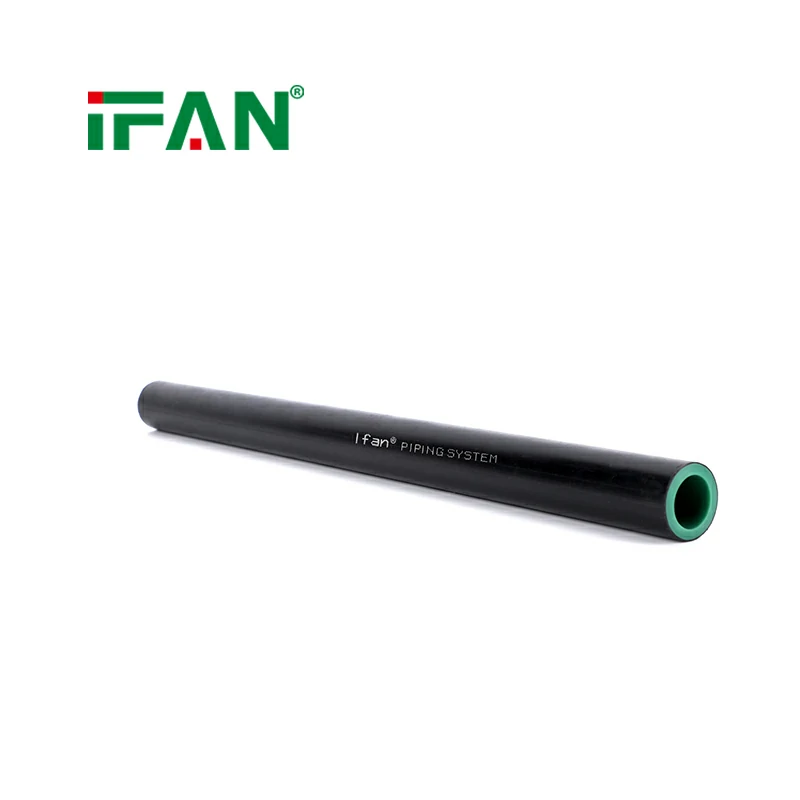
Shape retention and sag prevention
The metal layer prevents sagging over long spans. Standard PPR droops under its own weight with hot water. Stabi pipes remain straight and true. A PPR-AL Stabi pipe is ideal for exposed installations.
Light and UV blocking
Aluminum blocks light from passing through the pipe. This prevents algae growth inside. The pipe remains clean and hygienic. A PPR-AL Stabi pipe is safe for transparent water systems.
Example: underfloor heating loops
Pipes are buried in concrete slabs. Thermal expansion could crack the concrete. PPR-AL Stabi pipes minimize expansion stress. Example: a 100-meter loop stays stable.
Example: exposed ceiling pipework
Industrial buildings have visible pipe runs. Sagging pipes look unprofessional. PPR-AL Stabi pipes maintain a straight line. Example: a factory with long, neat overhead piping.
Example: hot water recirculation systems
Hotels have continuous hot water loops. Pipe expansion is a major design concern. PPR-AL Stabi pipes reduce expansion loop needs. Example: fewer compensators and supports are required.
Reduced installation complexity
Fewer expansion loops and supports are needed. Installation is faster and cheaper. The pipe’s stability simplifies system design. A PPR-AL Stabi pipe reduces labor costs.
Final purpose summary
The aluminum layer in a PPR-AL Stabi pipe serves four main purposes. First, it reduces thermal expansion by 75%. Second, it acts as an oxygen barrier to prevent corrosion. Third, it reinforces the pipe for higher pressure ratings. Fourth, it prevents sagging in exposed installations. The aluminum layer makes Stabi pipes ideal for hot water, heating, and visible systems. Example: a single layer provides multiple critical benefits.