
Thermal expansion difference
PPR-AL Stabi pipes expand 5 times less than standard PPR. Standard PPR expands 0.15 mm/m°C. Stabi pipe expands only 0.03 mm/m°C. Example: a 10-meter pipe at 60°C expands 15mm vs 3mm.
Structure difference
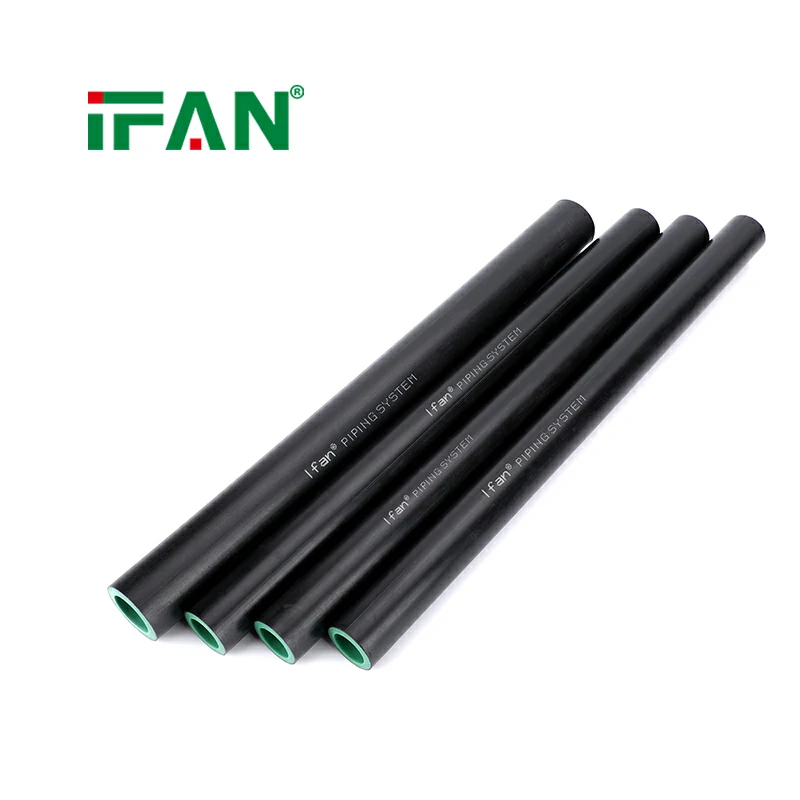
Standard PPR has a single homogeneous layer. PPR-AL Stabi pipes have five distinct layers. These include two PPR layers, two adhesives, and an aluminum core. Example: a composite pipe vs a solid plastic pipe.
Oxygen barrier difference
Standard PPR allows oxygen diffusion through the wall. Stabi pipe blocks oxygen completely with aluminum. This prevents corrosion in heating systems. PPR-AL Stabi pipe is ideal for closed loops.
Pressure rating difference
Standard PPR pipes are rated PN10 or PN16. PPR-AL Stabi pipe carries a PN20 rating. This means higher working pressure capability. Example: 20 bar (290 psi) vs 16 bar (232 psi).
Sag resistance difference
Standard PPR sags when carrying hot water. The pipe droops between supports over time. Stabi pipe maintains its straight shape. PPR-AL Stabi pipe is better for exposed installations.
Installation complexity
Standard PPR is simple to install. Only a fusion welding tool is needed. PPR-AL Stabi pipe requires similar tools. However, the aluminum layer needs careful stripping at joints. Example: slightly more complex but still manageable.
Cost comparison
Standard PPR is less expensive per meter. PPR-AL Stabi pipe costs more due to the aluminum layer. The price difference is 30-50% typically. Example: Stabi pipe is a premium product for demanding applications.
Example: underfloor heating
Standard PPR expands and contracts in concrete. This can cause stress cracks over time. PPR-AL Stabi pipe stays dimensionally stable. Example: a safer choice for embedded installations.
Example: exposed pipework
Standard PPR sags visibly with hot water. It requires frequent supports and loops. PPR-AL Stabi pipe remains straight and professional. Example: factory ceilings with neat, straight pipe runs.
Example: hot water recirculation
Standard PPR needs expansion loops every 10 meters. Stabi pipe needs far fewer loops. PPR-AL Stabi pipe saves space in mechanical rooms. Example: more compact and tidy installations.
Long-term durability
Standard PPR degrades from oxygen and UV exposure. Stabi pipe resists both with aluminum. PPR-AL Stabi pipe lasts longer in harsh conditions. Example: a 50-year lifespan for Stabi vs 25-30 years for standard.
Final comparison summary
PPR-AL Stabi pipe outperforms standard PPR in thermal expansion (5x less), oxygen barrier, pressure rating (PN20 vs PN10/16), sag resistance, and durability. Standard PPR is cheaper and simpler to install. Choose standard PPR for cold water and budget projects. Choose PPR-AL Stabi pipe for hot water, heating systems, exposed pipework, and high-pressure applications. Example: the right choice depends on your specific project requirements.