
Higher mechanical strength
PPR stainless steel pipes have much higher mechanical strength. The stainless steel core adds significant structural integrity. The pipe resists external impacts and bending. Example: a pipe that withstands heavy loads.
Improved pressure rating
The stainless steel layer allows higher pressure ratings. Standard PPR is rated PN10 or PN16. PPR stainless steel pipes can reach PN20 or higher . PPR SS pipes handle higher system pressures.
Thermal expansion reduction
Stainless steel reduces thermal expansion significantly. Standard PPR expands 0.15 mm/m°C. PPR stainless steel expands only 0.04 mm/m°C . PPR stainless steel pipes expand much less with heat.
Oxygen barrier protection
Stainless steel acts as an oxygen diffusion barrier . This prevents oxygen from entering the water . Standard PPR allows oxygen permeation . PPR SS pipes provide oxygen barrier protection.
Corrosion resistance
The PPR layers protect the steel from corrosion . The steel itself is also corrosion-resistant . Standard PPR has no metallic protection . PPR SS pipes are fully corrosion-resistant.
Sag resistance
The pipe maintains its shape under heat . Standard PPR sags when carrying hot water . The stainless steel prevents sagging . PPR stainless steel pipes are ideal for exposed installations.
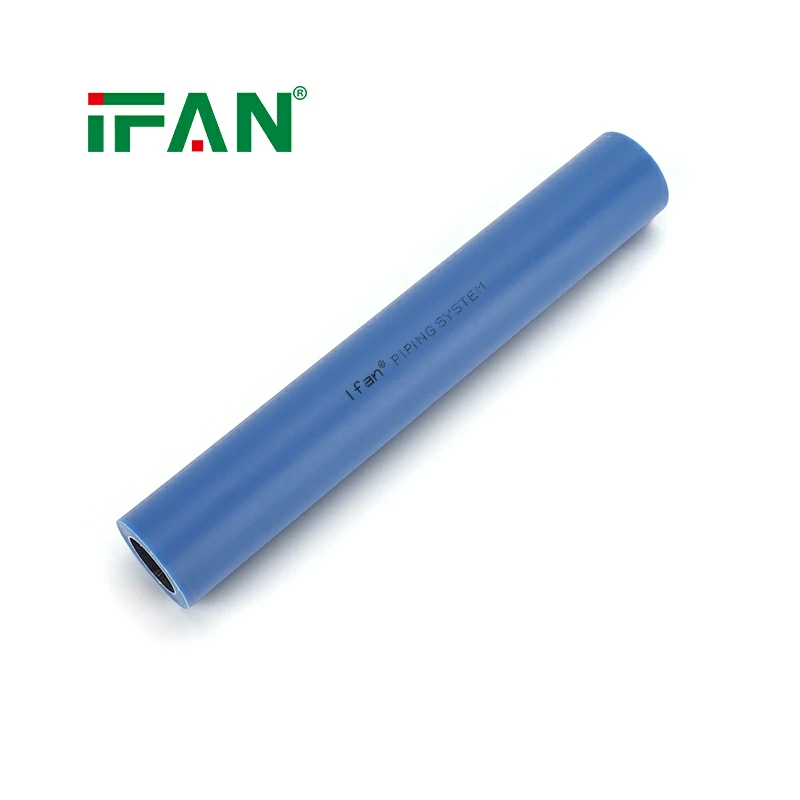
Example: hot water distribution
A building needs hot water at 70°C and 6 bar . PPR SS pipes handle these conditions easily . Standard PPR would need thicker walls . Example: a reliable, high-pressure system.
Example: exposed pipework
A factory has visible pipe runs on the ceiling . Standard PPR sags and droops over time . PPR SS pipes remain straight and neat . Example: a professional, long-lasting installation.
Example: underfloor heating
Underfloor heating pipes are embedded in concrete . Thermal expansion can crack the slab . PPR SS pipes minimize expansion stress . Example: a safe, crack-free concrete slab.
Chemical resistance
The inner PPR layer resists aggressive chemicals . The steel layer adds extra protection . Standard PPR has limited chemical resistance . PPR SS pipes are more versatile.
Reduced expansion loops
Fewer expansion loops and compensators are needed . Installation is simpler and faster . Support requirements are reduced . PPR stainless steel pipes lower installation costs.
Final advantages summary
PPR stainless steel pipes offer significant advantages over standard PPR . They have higher mechanical strength and pressure ratings . Thermal expansion is 3-4 times less . Oxygen barrier protection is provided . They resist sagging and deformation . They are corrosion-resistant and chemically resistant . They require fewer expansion loops . PPR SS pipes are a superior choice for demanding applications . Example: a high-performance pipe for industrial and commercial use.