
This is a common question in system design. The answer depends on the application. Stainless steel manifolds offer distinct advantages. They are not always the best choice. Understanding their pros and cons is key.
Defining a Manifold’s Purpose
A manifold distributes fluid from one source. It sends it to multiple branch lines. It can also collect fluid from many lines. This happens in heating or plumbing systems. Stainless steel manifolds perform this task reliably.
Superior Corrosion Resistance
This is their primary advantage. Stainless steel resists rust and oxidation. It handles water and many chemicals well. This ensures a long service life. Brass or plastic cannot match this in harsh environments.
Exceptional Strength and Durability
Stainless steel is very strong. It can withstand high system pressures. It is resistant to impact and physical damage. Stainless steel manifolds do not crack easily. They are ideal for demanding industrial settings.
Performance in High-Temperature Applications
Stainless steel retains strength at high heat. It is suitable for steam and hot water systems. Plastic manifolds would soften or fail. This makes stainless steel manifolds a safe choice for HVAC.
Hygienic Properties for Critical Industries
The surface is non-porous and smooth. It is easy to clean and sterilize. This is vital in food, beverage, and pharmaceutical plants. Stainless steel manifolds meet strict sanitary standards.
Comparison to Brass Manifolds
Brass is also a common material. But brass can dezincify in certain water conditions. This weakens the manifold over time. Stainless steel does not suffer from this issue. It offers more consistent long-term performance.
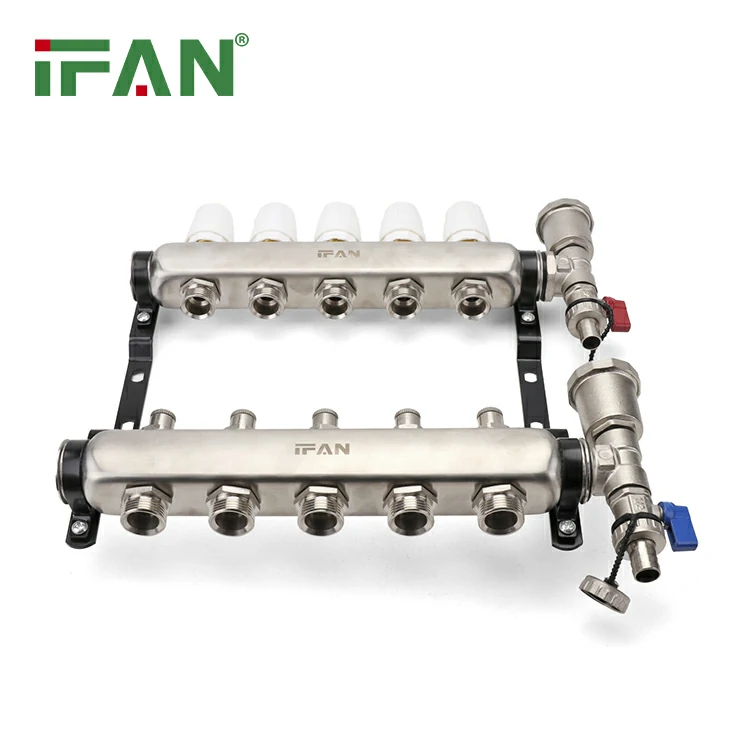
Comparison to Plastic Manifolds
Plastic manifolds are lightweight and cheap. But they are not for high pressure or temperature. They can degrade with UV exposure. Stainless steel manifolds are far more robust. They are a permanent installation.
Cost Considerations: Initial and Lifetime
The initial cost is higher than plastic or brass. However, their longevity justifies the investment. You will likely not need to replace them. This lower lifetime cost is a major benefit.
Potential Drawbacks and Limitations
Stainless steel is not a perfect choice. It is more expensive upfront. It is heavier, making installation harder. It can be susceptible to chloride-induced corrosion. This requires selecting the correct grade.
Ideal Applications for Stainless Steel
Use them in radiant floor heating systems. They are perfect for industrial process lines. They excel in marine and coastal environments. They are the standard for potable water in many regions. Choose them where durability is critical.
Conclusion: A Premium, Long-Term Solution
Stainless steel manifolds are often better. Their strength, durability, and corrosion resistance are superior. They are a wise investment for critical systems. For standard residential plumbing, plastic may suffice. But for performance and longevity, stainless steel is an excellent choice.