
Understanding the Material Properties
Brass is a metal alloy. It combines copper and zinc. This blend provides unique strengths. It offers excellent thermal conductivity. It also expands predictably with heat. These traits are crucial for hot water. Most brass alloys handle heat well.
Temperature Tolerance of Brass
Standard brass fittings tolerate high heat. Their typical rating is 200°F (93°C) or more. This exceeds normal domestic hot water temperatures. Home water heaters often set at 120-140°F. So, brass operates safely within this range. It is a standard choice for hot lines.
Comparison to Plastic Fittings
Plastic fittings have lower limits. PVC softens around 140°F. CPVC handles up to 180°F. PEX tolerates similar temperatures. Brass Plumbing Fittings surpass these ratings. They are inherently more heat-resistant. This provides a significant safety margin.
Effects of Thermal Expansion
All materials expand with heat. Brass expands less than plastic. It also contracts uniformly upon cooling. This reduces stress on pipe joints. Repeated cycling causes less fatigue. This leads to greater long-term system reliability.
Pressure Rating at High Temperature
A fitting’s pressure rating decreases with heat. Brass maintains its strength well. A fitting rated for 150 psi cold may handle 100 psi hot. This is still far above household pressure. Standard home pressure is 40-80 psi. Brass provides ample strength.
Potential for Dezincification
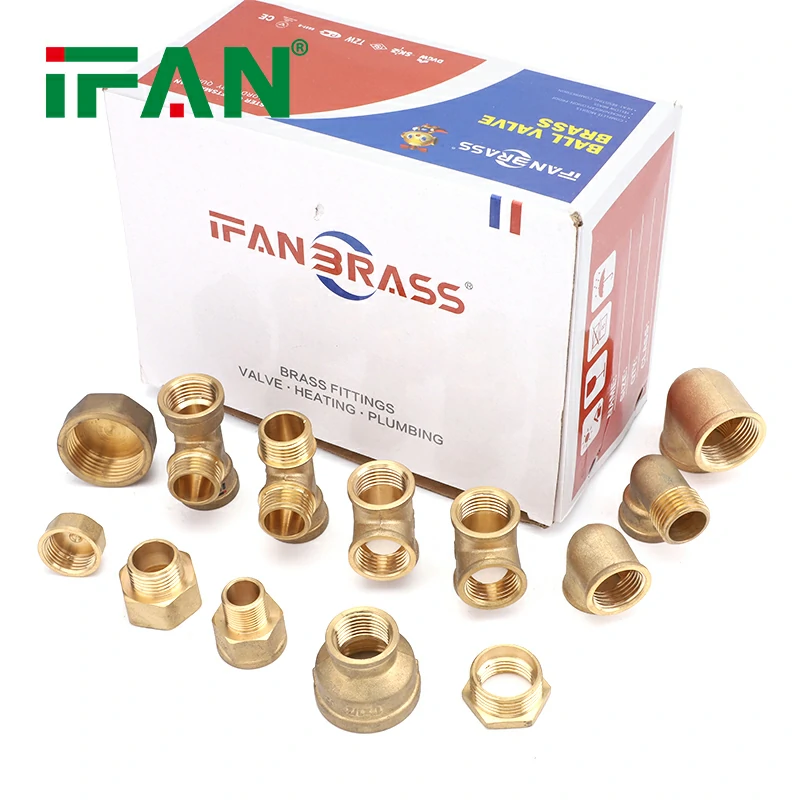
This is a specific corrosion risk. Aggressive water can leach zinc from brass. Hot water accelerates this chemical process. Using dezincification-resistant (DZR) brass prevents it. Modern Brass Plumbing Fittings are often DZR grade. This ensures longevity with hot water.
Installation with Solder and Heat
Soldering requires direct flame. Brass withstands this localized heat beautifully. It does not melt or distort easily. This makes installation with solder straightforward. The fitting survives the installation process intact. Plastic fittings cannot be soldered.
Compatibility with Different Pipe Types
Brass connects to many hot water pipes. It works with copper, CPVC, and PEX. Special transition fittings are available. For example, a brass coupling can join copper to CPVC. This versatility is highly valuable. It simplifies system design and repair.
Long-Term Durability in Hot Service
Properly installed brass lasts decades. Heat alone does not degrade the metal. It does not become brittle over time. Internal scaling is minimal compared to steel. Its performance remains stable for years. This justifies its higher initial cost.
Use in Commercial Hot Water Systems
Commercial systems demand durability. They often use recirculating hot water lines. Temperatures and pressures can be higher. Brass Plumbing Fittings are standard here. Their reliability is proven in demanding applications. They are trusted by engineers.
Maintenance and Inspection Tips
Inspect fittings periodically for leaks. Look for green or white corrosion deposits. These may indicate minor leaks or water chemistry issues. Tighten threaded connections if they weep. Ensure solder joints remain bright and clean. Proactive checks prevent major failures.
Final Assessment and Recommendation
Yes, brass fittings handle hot water excellently. They are a superior choice for hot water lines. Their heat and pressure tolerance is high. They are durable and corrosion-resistant when specified correctly. For reliable, long-lasting hot water plumbing, Brass Plumbing Fittings are an excellent and professional-grade solution.