
This is a common question for installers. The answer is yes, but not in the traditional sense. Standard PPR Fittings are not made with threads. However, specialized threaded adapters are available. These adapters connect PPR systems to threaded equipment.
Understanding Standard PPR Connections
The standard joining method is heat fusion. This creates a seamless, monolithic joint. The pipe and fitting melt together. This joint is incredibly strong and leak-proof. It is the primary advantage of PPR systems.
The Role of Threaded Adapter Fittings
You cannot cut threads into plain PPR. The material is too soft to hold threads reliably. Instead, you use a special PPR Fittings with a metal insert. One end has a PPR socket for fusion. The other end has female or male metal threads.
Common Types of Threaded Adapters
Several types are widely used. The PPR/Metal Female Thread adapter is common. The PPR/Male Thread adapter is also popular. You can also find adapters with union connections. The metal part is usually brass or stainless steel.
Why Direct Threading is Not Recommended
You should never tap threads into a PPR fitting. The plastic threads would be weak and prone to stripping. They would not seal properly against a metal thread. This would inevitably lead to leaks and joint failure.
Installation Process for Threaded Adapters
The installation is a two-step process. First, you heat-fuse the PPR end to the PPR pipe. This is done with a standard fusion welder. Second, you screw the metal end onto the threaded component. Use thread seal tape for a watertight connection.
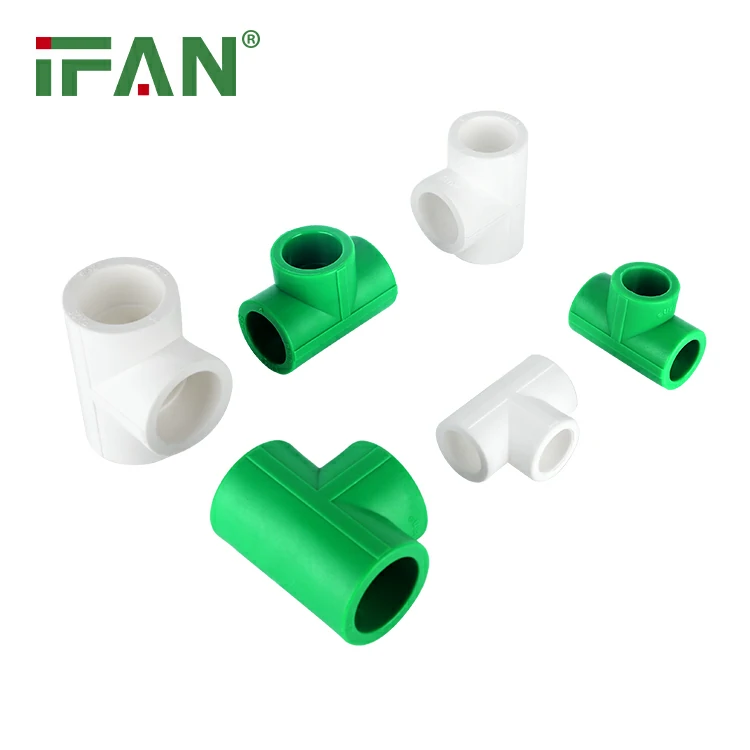
Applications for Threaded PPR Connections
They are essential for hybrid systems. They connect PPR pipes to boilers and water heaters. They link to pumps, valves, and water meters. They are used to connect to existing metal plumbing. They provide a crucial transition point.
Advantages of Using Adapters
They offer the best of both worlds. You get the benefits of a fused PPR joint. You also get a reliable metal-to-metal threaded connection. This ensures system integrity at the transition. It is a professional and code-compliant solution.
Potential Weak Points to Consider
The adapter itself is very strong. The potential weak point is the threaded joint. Threads can leak if not properly sealed. They can also corrode over time in harsh water conditions. Regular inspection is a good practice.
Comparing to Alternative Transition Methods
Another method is a flanged adapter. This is better for large diameters. A union connection is another option. But for standard small-diameter plumbing, threaded PPR Fittings are the most practical and common solution.
Selecting the Correct Adapter
Ensure the thread type and size are correct. Common standards are NPT (National Pipe Taper) and BSP (British Standard Pipe). Do not mix them; they are not compatible. Verify the pressure rating of the adapter. It should match the PPR system’s rating.
Conclusion: A Specialized Solution for Integration
PPR Fittings can be part of a threaded connection. This is achieved through dedicated adapter fittings. These adapters are reliable and safe. They are indispensable for integrating PPR into diverse systems. Always use the proper adapter instead of attempting to thread the plastic itself. This ensures a long-lasting, leak-free installation.