
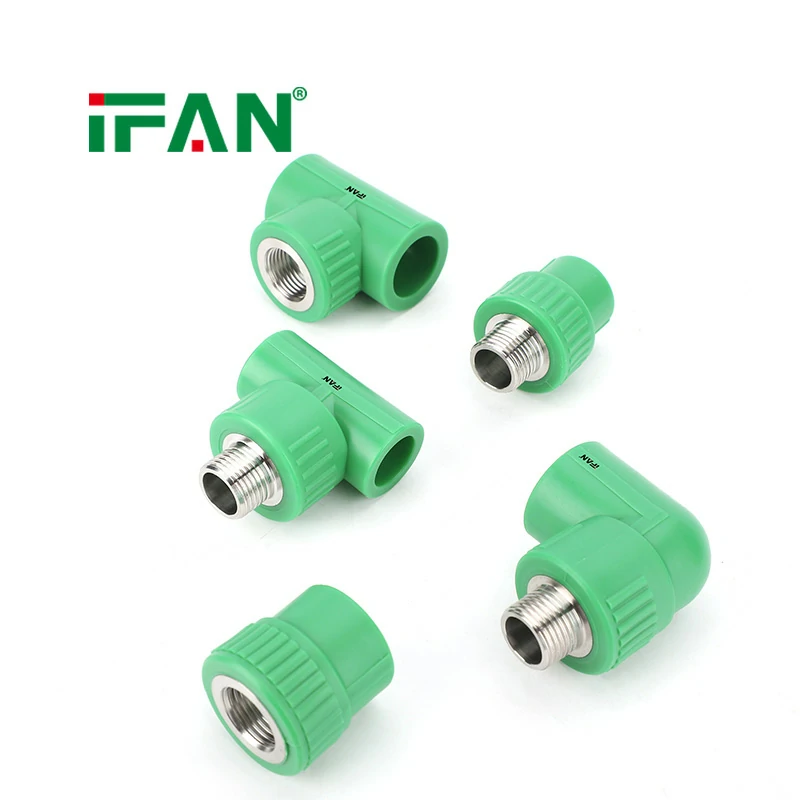
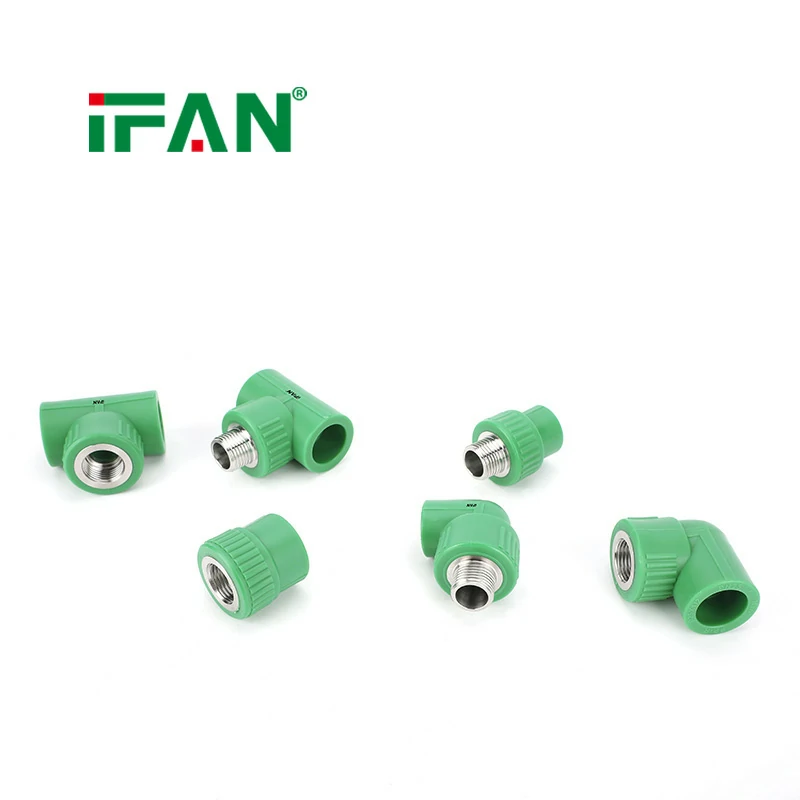
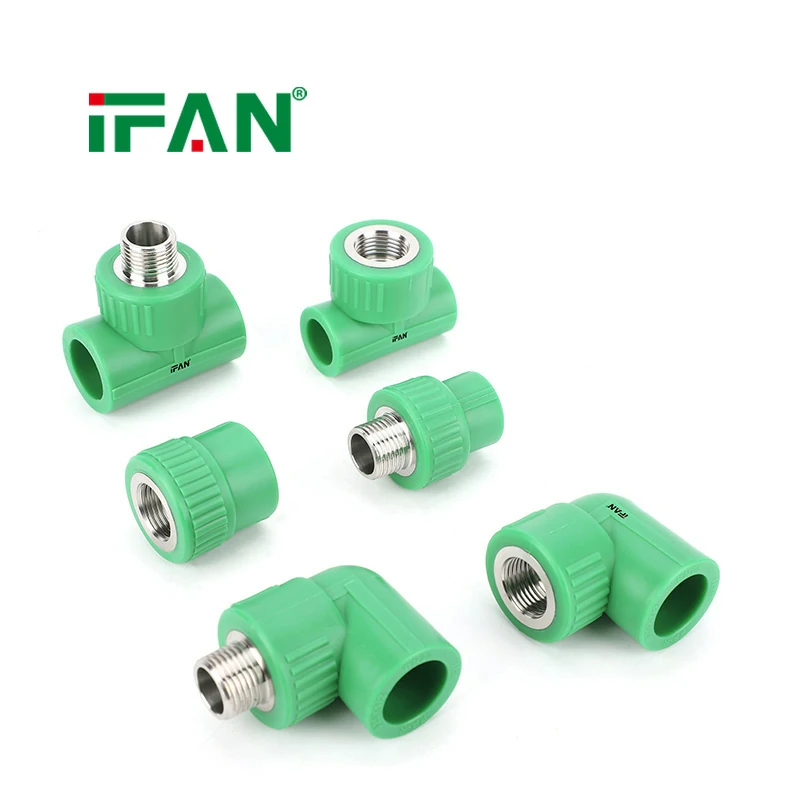
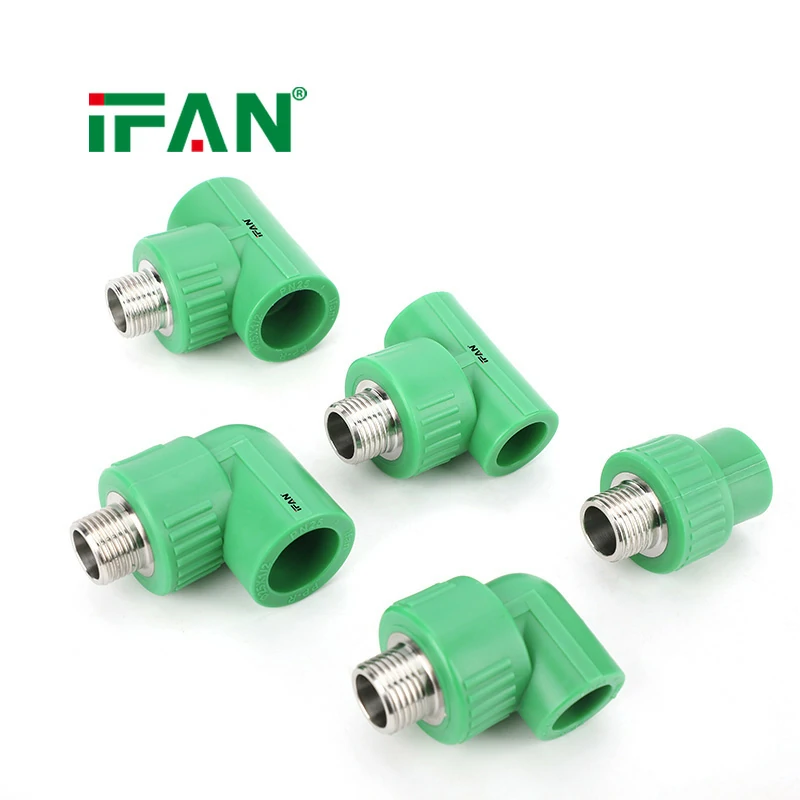
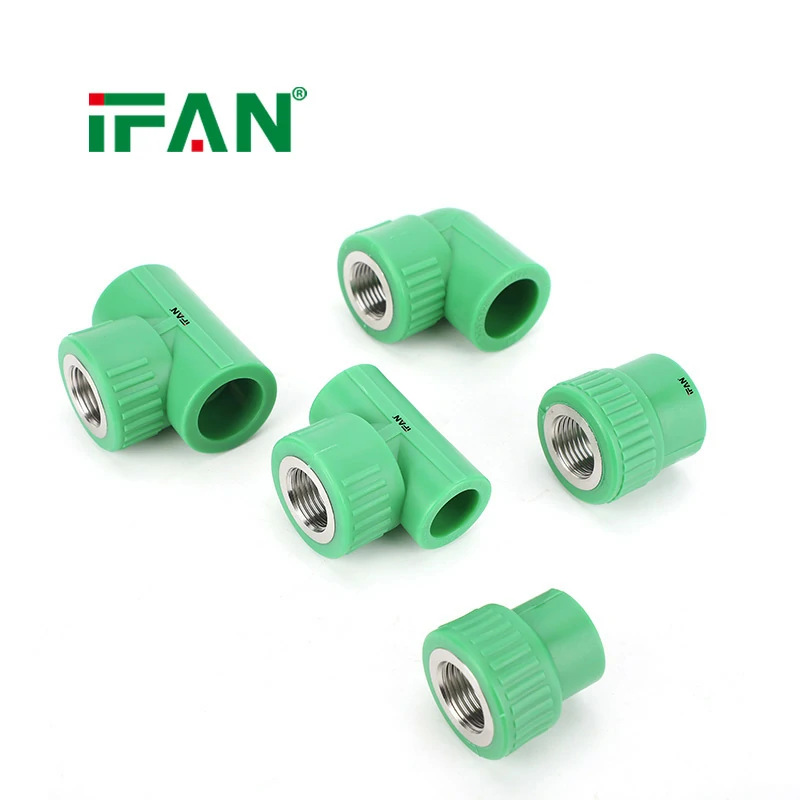
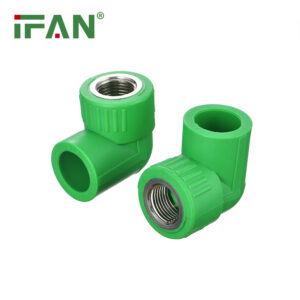
IFAN Custom Stainless Steel PPR Fittings
Name: IFAN Stainless Steel PPR Fittings
Brand: IFAN
Category : Click Download
Whatsapp : +86 19884503412</p>
Category : Click Download
Whatsapp : +86 19884503412
Wechat : 19884503412
Description
Yes, Stainless Steel PPR Fittings Are Highly Corrosion-Resistant
Stainless steel PPR fittings are specifically engineered to provide superior corrosion resistance compared to traditional metal alternatives. Their design combines two corrosion-resistant materials—PPR plastic and stainless steel—creating a component that excels in demanding environments where standard brass pipe fittings may fail prematurely.
This guide explains the science behind their corrosion resistance, compares them to other materials, and identifies the best applications for these high-performance fittings.
The Science Behind Stainless Steel’s Corrosion Resistance
The Chromium Oxide Passive Layer
The corrosion resistance of stainless steel comes from its chromium content. Stainless steel contains at least 10.5% chromium, which reacts with oxygen to form a thin, invisible chromium oxide layer on the metal’s surface .
This passive layer is only a few atoms thick but provides complete protection. If the surface is scratched, the layer instantly reforms in the presence of oxygen. This “self-healing” property is unique to stainless steel and is not found in brass or other copper alloys .
Why This Matters for PPR Fittings
Stainless steel PPR fittings use this self-protecting property for the threaded connection portion. The stainless steel threads maintain their integrity even when scratched during installation. This ensures long-term leak-proof connections in applications where brass threads might corrode .
PPR Plastic: Immunity to Electrochemical Corrosion
Complete Rust Protection
The PPR body of stainless steel PPR fittings contains no metal whatsoever. Polypropylene is a thermoplastic polymer that cannot rust or undergo galvanic corrosion .
This means the plastic portion of the fitting is immune to:
- Rust (iron oxide formation)
- Galvanic corrosion (electrochemical reaction between dissimilar metals)
- Electrolysis
The PPR material is also highly resistant to chemicals, including chlorine commonly found in municipal water supplies .
Comparison: Stainless Steel vs. Brass PPR Fittings
Both stainless steel and brass pipe fittings are used as inserts in PPR transition fittings. However, their corrosion resistance differs significantly.
| Feature | Stainless Steel PPR Fittings | Brass Pipe Fittings |
|---|---|---|
| Corrosion Mechanism | Passive chromium oxide layer; self-healing | Vulnerable to dezincification |
| Dezincification Risk | None (contains no zinc) | Yes – zinc leaches in aggressive water |
| Chloride Resistance | Excellent (especially grade 316) | Poor; chlorides accelerate dezincification |
| Saltwater Suitability | Excellent for grade 316 | Not recommended |
| Self-Healing Property | Yes – scratches reform oxide layer | No – scratches remain vulnerable |
| Coastal Environment | Recommended | Not recommended |
| Lifespan in Aggressive Water | 50% longer than brass | Standard |
Understanding Dezincification: The Brass Vulnerability
Brass pipe fittings are made from a copper-zinc alloy. Under certain water conditions, the zinc selectively leaches out of the alloy, leaving behind a weak, porous copper structure. This process is called dezincification .
Factors that accelerate dezincification include:
- Hot water temperatures
- High chloride levels
- Low-flow or stagnant conditions
- Aggressive water chemistry
Stainless steel PPR fittings contain no zinc and are therefore completely immune to dezincification . This makes them the preferred choice for hot water systems and aggressive water conditions.
Grade Selection: 304 vs. 316 Stainless Steel
Not all stainless steel offers the same level of corrosion resistance. Two common grades are used in stainless steel PPR fittings:
| Grade | Chromium | Nickel | Molybdenum | Best Applications |
|---|---|---|---|---|
| 304 | 18% | 8% | None | Standard potable water, general plumbing |
| 316 | 16% | 10% | 2-3% | Coastal areas, chemical plants, aggressive environments |
Grade 316 contains molybdenum, which provides exceptional resistance to chlorides and saltwater. For coastal installations or industrial applications with aggressive chemicals, the Pro Model with 316 stainless steel is recommended .
Chemical Resistance of Stainless Steel PPR Fittings
Water and Common Fluids
Stainless steel PPR fittings resist corrosion from:
- Potable water (hot and cold)
- Chlorinated municipal water
- Hard water and soft water
- Most aqueous solutions
The PPR body provides additional protection, as polypropylene is highly resistant to chemical attack from acids, bases, and salts .
Aggressive Chemicals
The chemical resistance table shows that 304 stainless steel is rated “1” (Recommended) for over 150 common chemicals, including:
- Acetic acid
- Acetone
- Aluminum chloride and sulfate
- Ammonium hydroxide
- Boric acid
- Calcium chloride
- Citric acid
- Ethylene glycol
- Formaldehyde
- Glycerol
- Hydrochloric acid (dilute – moderate resistance)
- Lactic acid
Some chemicals are “not recommended” for 304 stainless steel, including aqua regia, chlorine gas (dry), and hydrobromic acid .
Performance in Specific Environments
Coastal and Saltwater Applications
Standard brass pipe fittings are not recommended for coastal areas due to chloride-induced dezincification. Stainless steel PPR fittings, particularly grade 316, are specifically designed for these environments .
The molybdenum in 316 stainless steel provides exceptional resistance to pitting corrosion caused by chlorides in sea air and salt spray.
Hot Water Systems
Hot water accelerates dezincification in brass pipe fittings. Stainless steel PPR fittings are immune to this failure mode. The Advanced Model’s enhanced PPR material expands usability to industrial systems with higher thermal demands .
Chemical and Industrial Applications
For chemical plants and environments with aggressive fluids, the Pro Model with 316 stainless steel threads is recommended. It safely handles corrosive fluids and provides triple corrosion resistance compared to industry benchmarks .
Longevity and Maintenance Benefits
Extended Lifespan
Stainless steel PPR fittings provide significantly longer service life than traditional metal fittings in corrosive environments. Manufacturers claim a 50% longer lifespan than traditional metal fittings .
For home plumbing systems, stainless steel fittings offer:
- 50+ years lifespan vs. 20-25 years for copper
- 50+ years vs. 10-15 years for plastic
Reduced Maintenance
The superior corrosion resistance of stainless steel PPR fittings translates to lower maintenance requirements. The self-healing passive layer prevents the development of corrosion points, eliminating the need for regular inspections and replacements required with brass fittings in aggressive environments .
Summary: Are Stainless Steel PPR Fittings Corrosion-Resistant?
| Application Environment | Corrosion Resistance | Recommendation |
|---|---|---|
| Standard potable water (cold) | Excellent | Grade 304 suitable |
| Hot water systems | Excellent | Grade 304 suitable; superior to brass |
| Aggressive water (low pH/high chloride) | Excellent | Grade 316 recommended |
| Coastal/saltwater exposure | Excellent | Grade 316 required |
| Chemical plants | Excellent | Grade 316 with Pro Model |
| Marine environments | Excellent | Grade 316 specifically |
Conclusion
Stainless steel PPR fittings are highly corrosion-resistant and offer significant advantages over traditional brass pipe fittings in demanding environments. The combination of PPR plastic (immune to electrochemical corrosion) and stainless steel threads (self-healing passive layer) creates a component that excels in:
- Hot water systems where brass is vulnerable to dezincification
- Coastal areas with chloride exposure
- Aggressive water conditions
- Chemical and industrial applications
For standard residential plumbing with treated water, brass fittings remain a cost-effective choice. However, for long-term reliability in aggressive environments, stainless steel PPR fittings justify their higher initial cost through extended lifespan and reduced maintenance .
Do you need guidance on selecting the correct stainless steel grade (304 vs. 316) for your specific water conditions?
相关产品
 Green PPR Pipe Fittings
PPR Tee Fitting
- Green PPR Pipe Fittings
PPR Reduce Socket
- Green PPR Pipe Fittings
PPR Union Fittings
- Green PPR Pipe Fittings
PPR Female Elbow



HAVE ANY QUERIES? SEND TO CONTACTOANTSMACHINE.COM
ONTACT US