
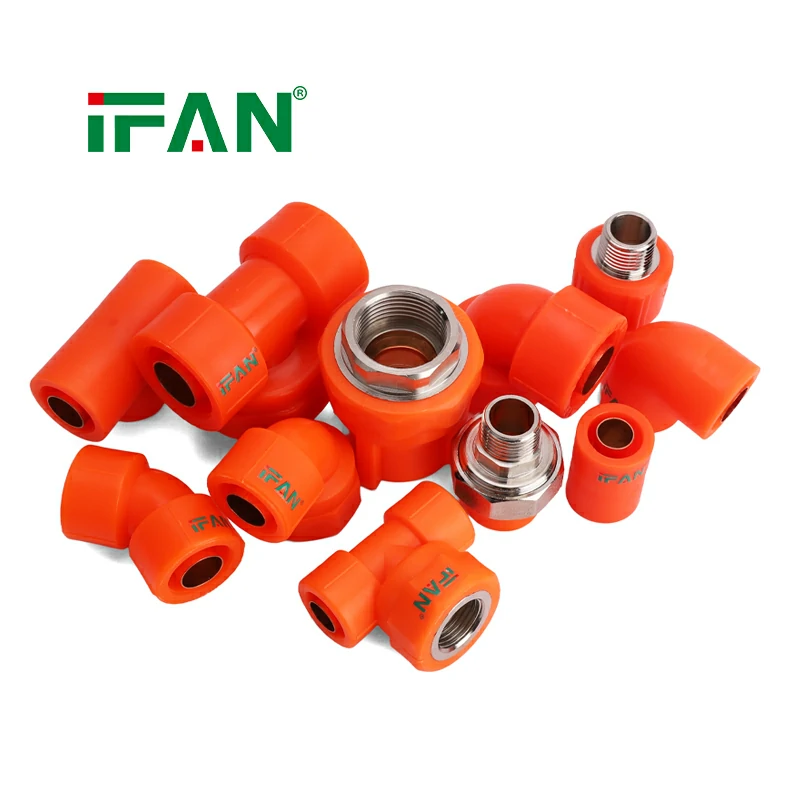
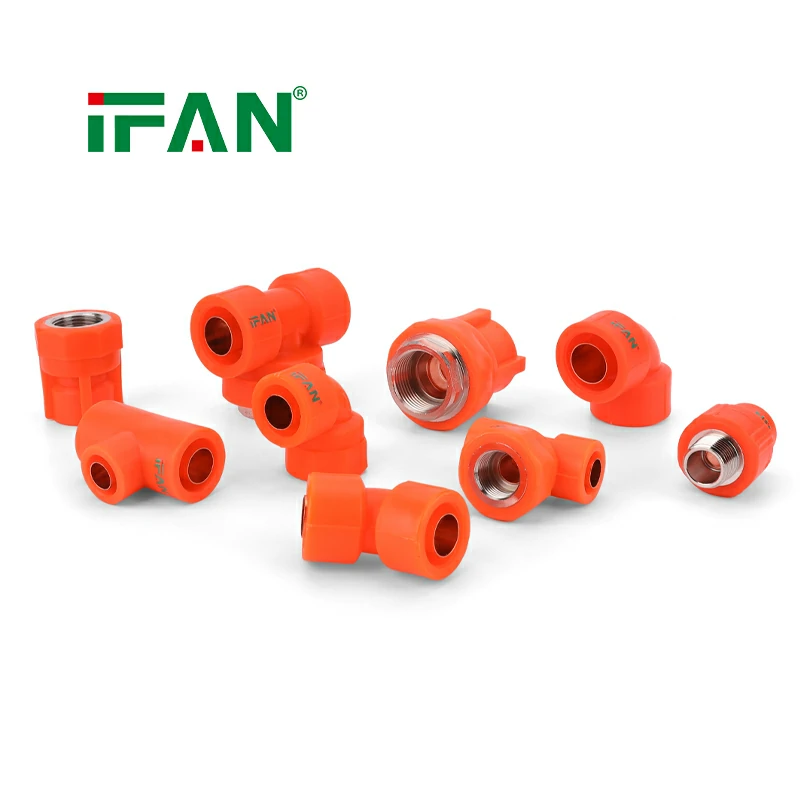
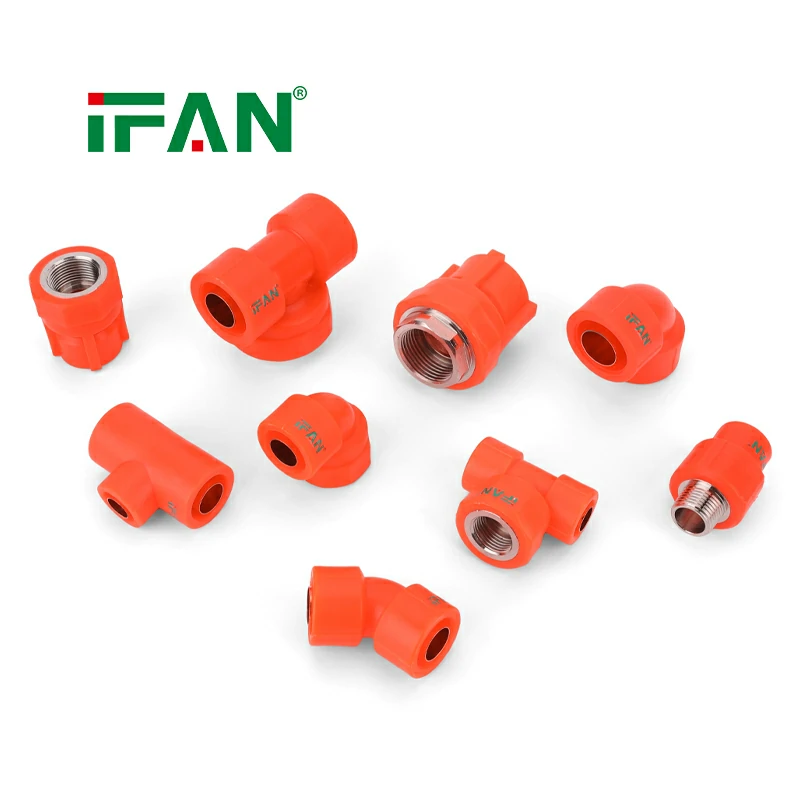
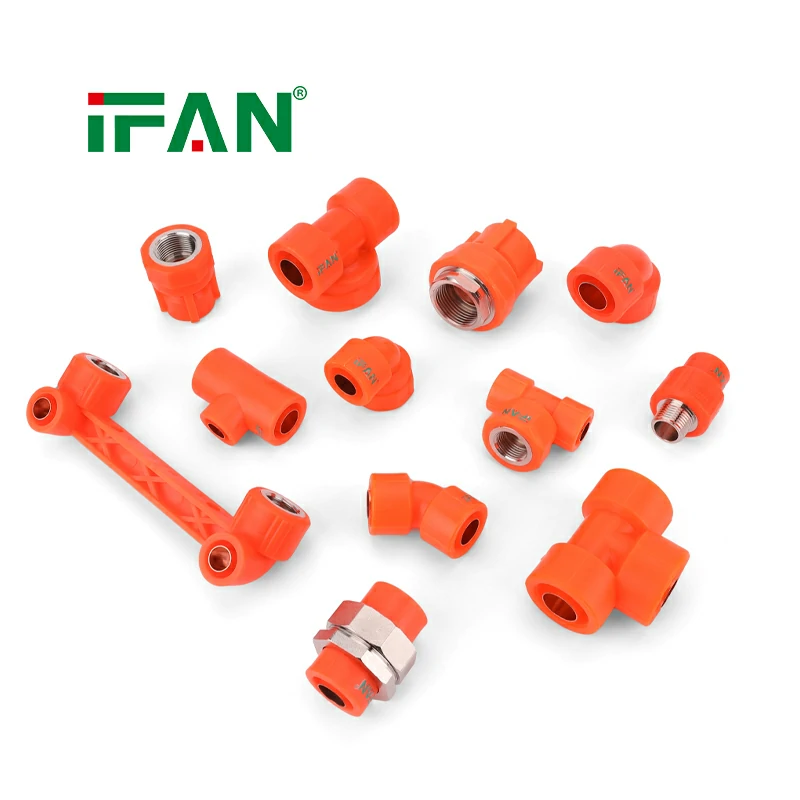
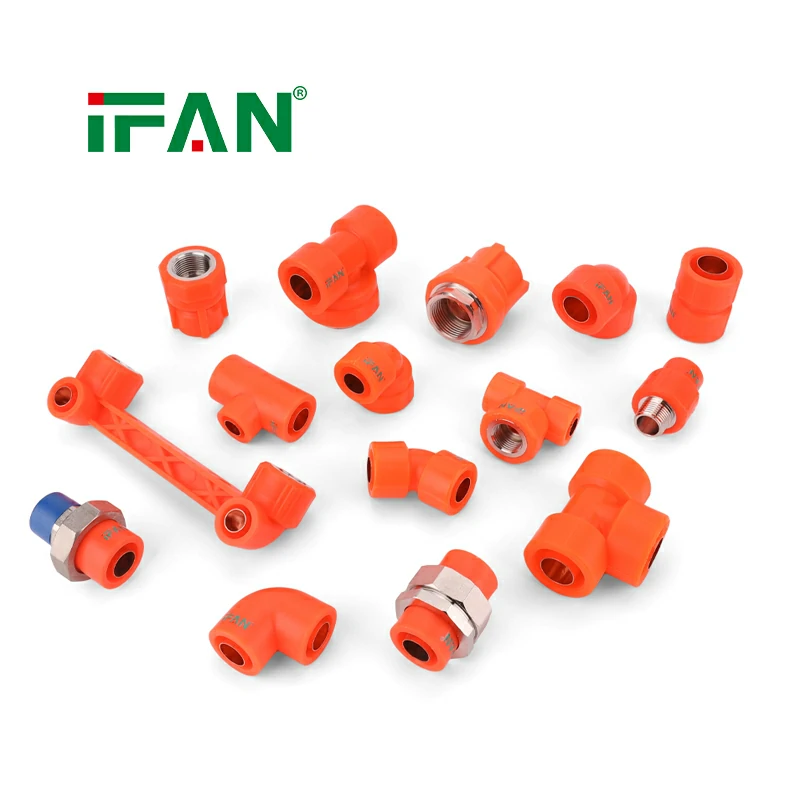
IFAN High Pressure PPR Copper Fittings
Name: IFAN PPR Copper Fittings
Brand: IFAN
Category : Click Download
Whatsapp : +86 19884503412</p>
Category : Click Download
Whatsapp : +86 19884503412
Wechat : 19884503412
Description
Short answer: limited suitability
PPR copper fittings are not recommended for gas applications. They are primarily designed for water systems. Gas requires specialized fittings with specific certifications. Example: natural gas lines need CSA or UL-listed components.
Gas compatibility issues
PPR plastic can permeate certain gases over time. Gas molecules are much smaller than water molecules. Leakage can occur through the plastic wall. PPR copper fittings are not gas-tight for long-term use.
Fire safety concerns
PPR plastic melts at approximately 160°C (320°F). Gas leaks can create fire hazards. The plastic side would fail in a fire event. PPR copper fittings are not rated for gas safety standards.
Industrial application considerations
PPR copper fittings may work for some industrial water systems. Temperature limits of 95°C apply. Pressure limits of 100 psi at high temperatures. PPR copper fittings are suitable for industrial water only.
Chemical compatibility in industry
PPR resists many chemicals but not all. Strong acids or solvents can attack the plastic. Copper corrodes in certain chemical environments. PPR copper fittings require chemical compatibility verification.
Example: industrial cooling water
A factory uses PPR for cooling water lines. PPR copper fittings connect to copper heat exchangers. The system operates below 60°C and 50 psi. This is a suitable industrial application.
Example: compressed air systems
PPR copper fittings are not recommended for compressed air. Air carries oil and moisture that degrade PPR. The plastic can become brittle over time. PPR copper fittings are not reliable for compressed air.
Example: natural gas piping
A home uses PPR for water but copper for gas. Polypropylene-Random copper fittings are never used on gas lines. Gas-specific brass or steel fittings are required. Example: gas codes prohibit plastic fittings in many areas.
Gas-specific fitting requirements
Gas fittings must be metal-to-metal sealed. No plastic components are allowed in gas lines. Threaded or welded steel connections are standard. Polypropylene-Random copper fittings do not meet these requirements.
Industrial chemical resistance testing
PPR has excellent resistance to many acids and bases. It is resistant to most salt solutions. It is not resistant to strong oxidizing acids. Polypropylene-Random copper fittings need compatibility testing for each chemical.
Pressure limitations in industry
Industrial systems may exceed 100 psi pressure. PPR copper fittings are limited to 100 psi at 95°C. Higher pressures require metal fittings. Polypropylene-Random copper fittings are for low- to medium-pressure systems only.
Final suitability summary
Polypropylene-Random copper fittings are not suitable for gas applications. Gas lines require specialized metal fittings with approvals. PPR is not gas-tight and can permeate over time. For industrial applications, use them only for water systems. Check chemical compatibility before installation. Do not exceed 95°C or 100 psi. Compressed air systems are not recommended. Always check local codes and manufacturer approvals. PPR copper fittings are best for residential and commercial water systems. Example: follow the manufacturer’s specified applications for safety and reliability.
相关产品
 PPR Fitting
whtie ppr fitting 90° Elbow
- Green PPR Pipe Fittings
PPR Male Elbow
- Green PPR Pipe Fittings
PPR Female Socket
- Green PPR Pipe Fittings
PPR Elbow Fittings



HAVE ANY QUERIES? SEND TO CONTACTOANTSMACHINE.COM
ONTACT US