
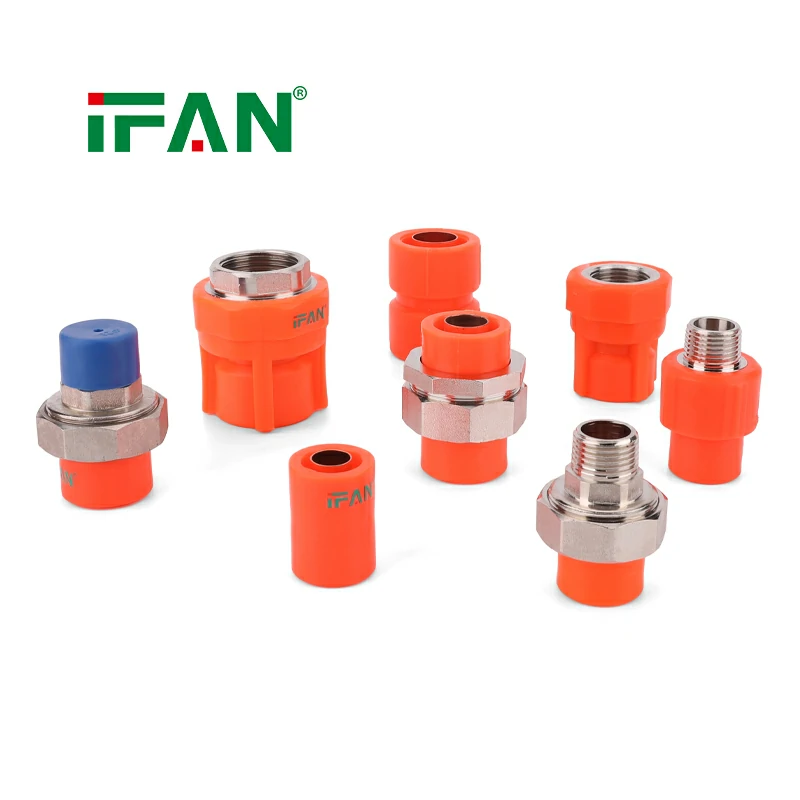
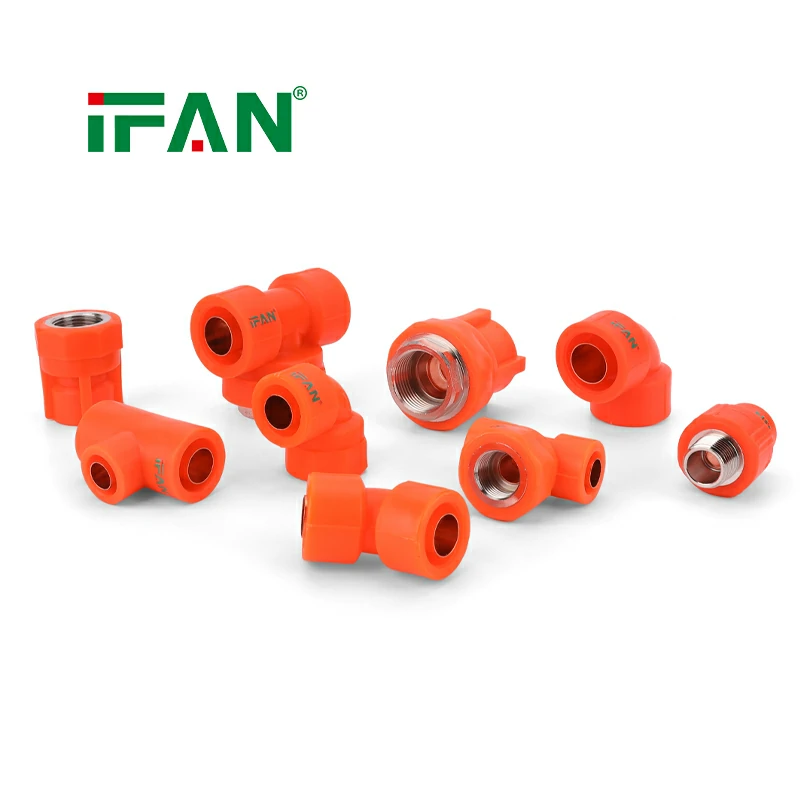
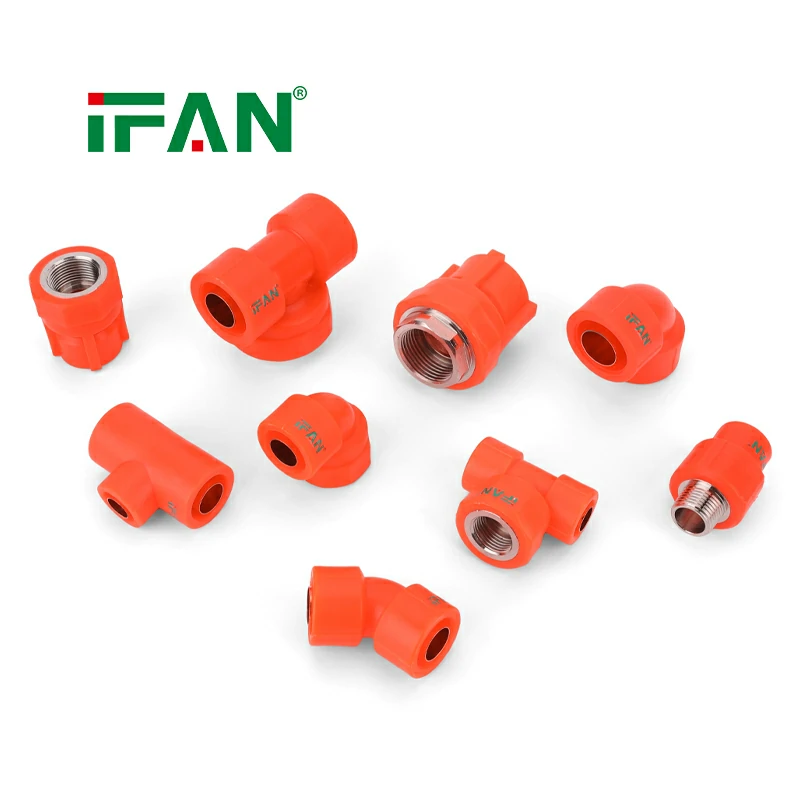
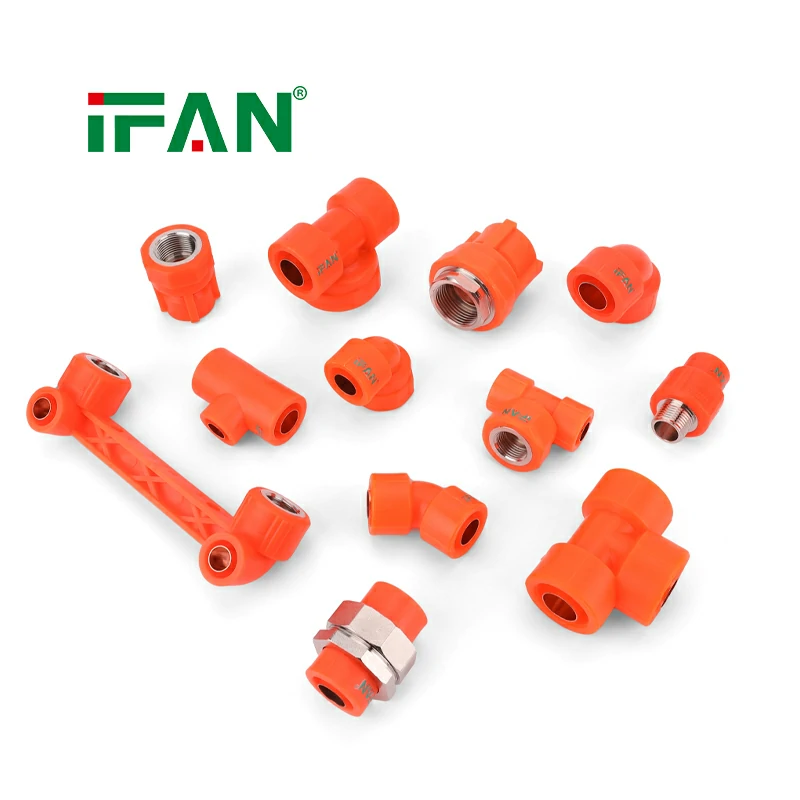
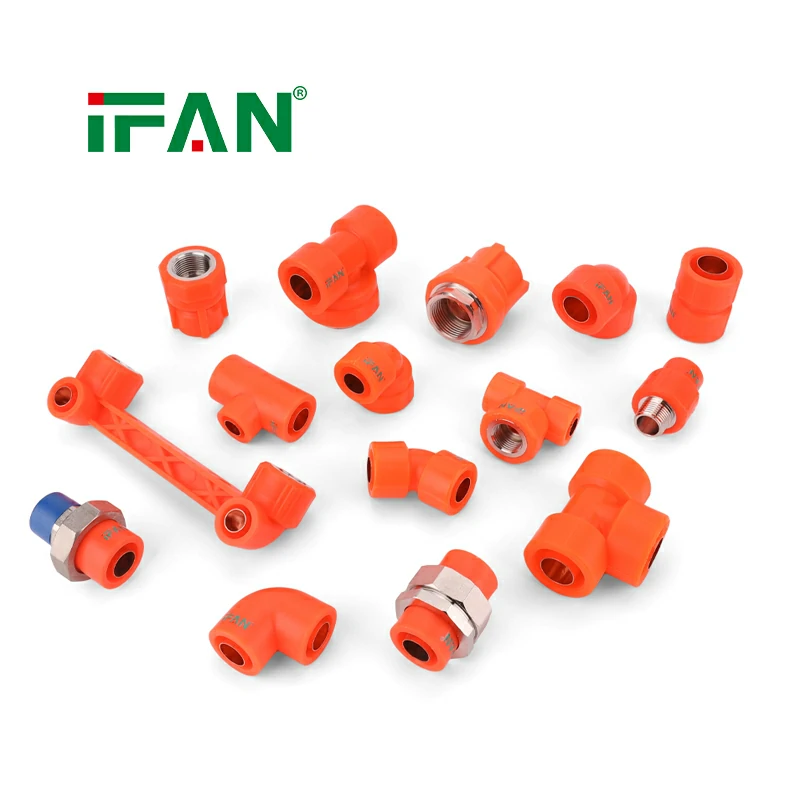
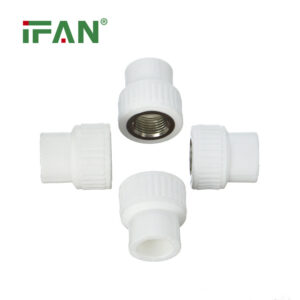
IFAN High Pressure PPR Copper Fittings
Name: IFAN PPR Copper Fittings
Brand: IFAN
Category : Click Download
Whatsapp : +86 19884503412</p>
Category : Click Download
Whatsapp : +86 19884503412
Wechat : 19884503412
Description
Definition of a hybrid fitting
PPR copper fittings are transitional connectors. They join PPR (polypropylene random) pipes to copper pipes. One end is plastic for PPR welding. The other end is metal for copper soldering. Example: connecting a new PPR system to an old copper line.
Two materials in one fitting
The fitting has a PPR socket on one side. This side welds to PPR pipe using heat fusion. The other side is a copper stub. This side solders to copper pipe with a torch. PPR copper fittings combine both joining methods.
Common sizes available
These fittings come in metric and imperial sizes. Common sizes are 20mm, 25mm, and 32mm PPR. Copper sides match 1/2-inch, 3/4-inch, and 1-inch. PPR copper fittings bridge the metric-imperial gap easily.
Why they are needed
PPR and copper cannot be joined directly. They have different diameters and materials. A specialized fitting is required for this transition. PPR copper fittings solve this compatibility problem.
Construction of the fitting
The PPR end is injection-molded plastic. The copper end is seamless drawn tubing. The two are permanently fused during manufacturing. PPR copper fittings have a robust, leak-proof joint between materials.
Example: renovation of an old house
A 1970s house has copper plumbing everywhere. The owner wants to add a new bathroom. PPR copper fittings connect the new PPR pipes to the old copper. The transition is clean and reliable.
Example: repairing a mixed system
A building has copper mains but PPR branches. A leak occurs at a transition point. PPR copper fittings replace the failed adapter. The repair restores the system to full function.
Temperature and pressure ratings
The PPR side limits the fitting to 180°F (82°C). The copper side alone handles much higher temperatures. Pressure rating follows the PPR at 100 psi (6.9 bar). PPR copper fittings share the lower rating of the plastic side.
Installation methods
The PPR side is welded with a fusion tool at 500°F. The copper side is soldered with a torch and flux. Both ends require different techniques. PPR copper fittings need installers skilled in both methods.
Available configurations
Straight couplings are the most common type. Elbows (90° and 45°) handle direction changes. Tees split flow to multiple branches. PPR copper fittings come in many shapes for various layouts.
Durability and longevity
Both PPR and copper are long-lasting materials. The bonded joint between them is permanent. No gaskets or threads to fail over time. PPR copper fittings can last 50+ years in normal service.
Final summary
PPR copper fittings are hybrid connectors for PPR-to-copper transitions. They have a plastic end for heat fusion and a metal end for soldering. They bridge metric and imperial pipe sizes. Common shapes include couplings, elbows, and tees. Temperature limits follow the PPR side at 180°F. Pressure rating is 100 psi at that temperature. Installation requires both welding and soldering skills. They are ideal for renovations and mixed-material systems. With proper installation, they provide a permanent, leak-free connection that lasts decades. Example: a reliable solution for modernizing old plumbing systems.
相关产品
 PPR Fitting
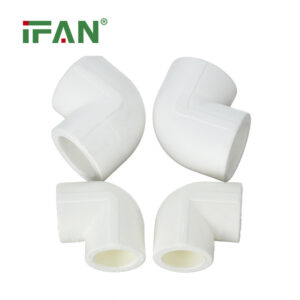
whtie ppr fitting 90° Elbow
- PPR Fitting
white PPR 45°Elbow
- PPR Fitting
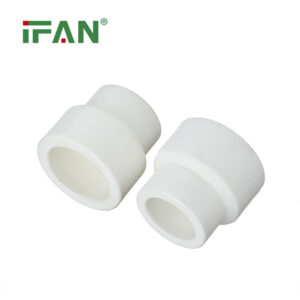
Whtie PPR reduce socket
- PPR Fitting
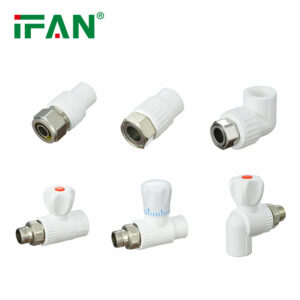
White PPR Female Socket



HAVE ANY QUERIES? SEND TO CONTACTOANTSMACHINE.COM
ONTACT US