
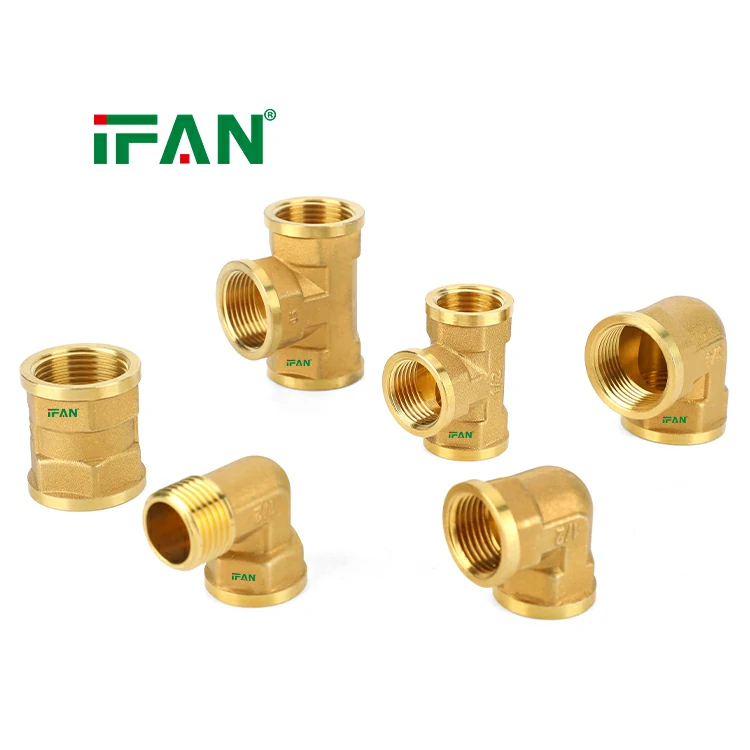
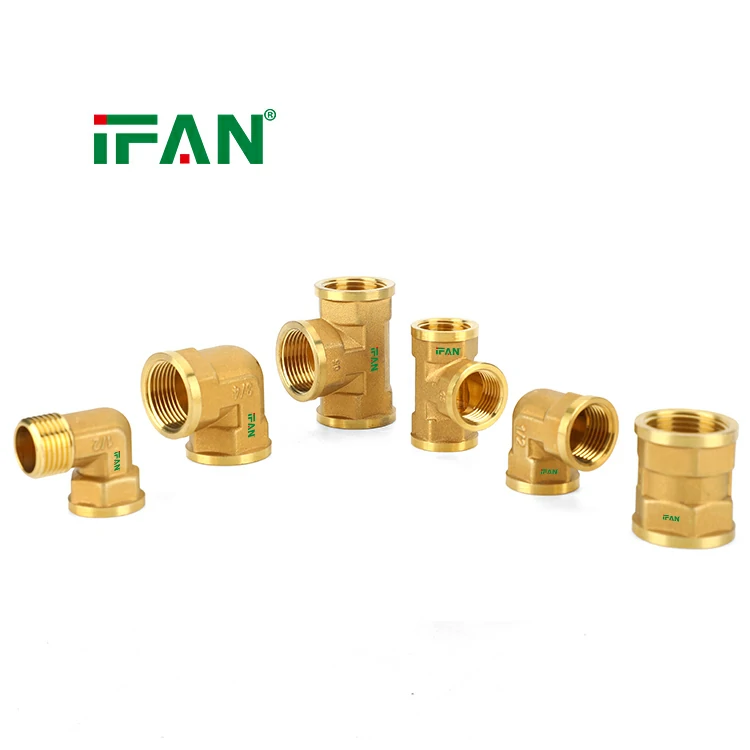
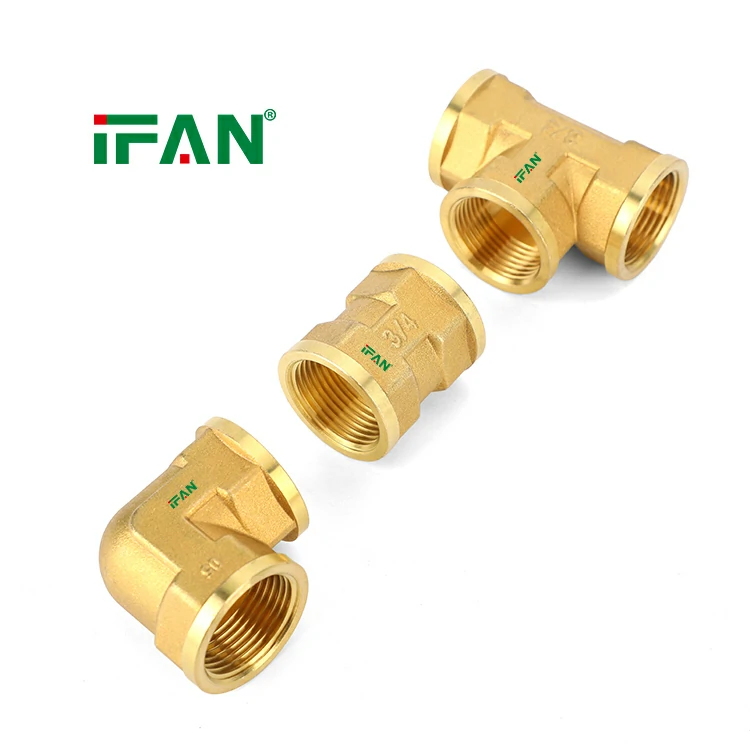
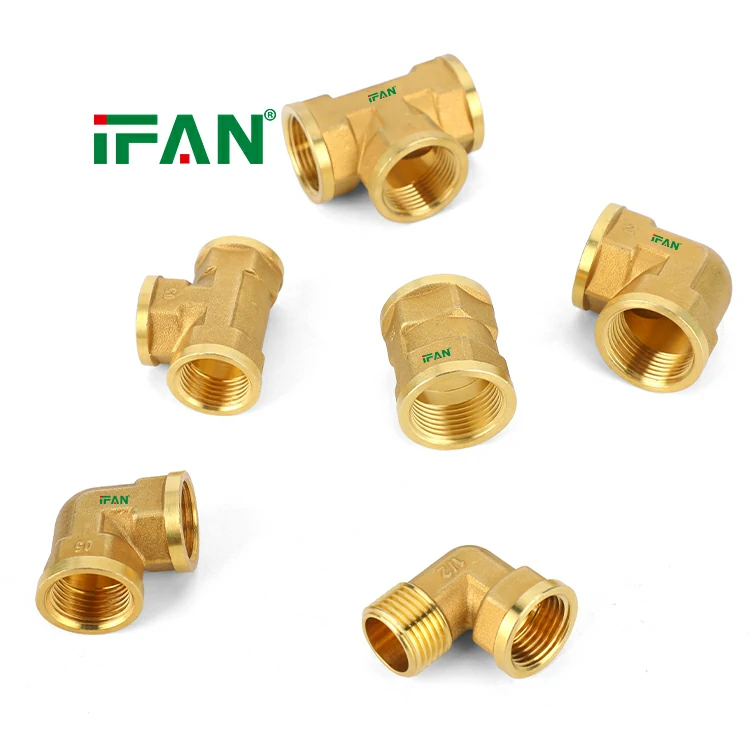
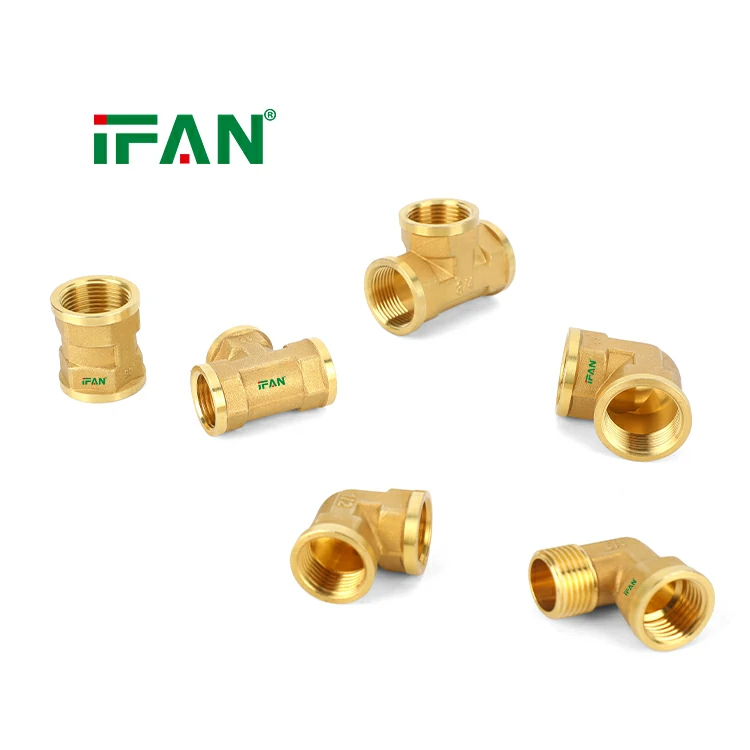
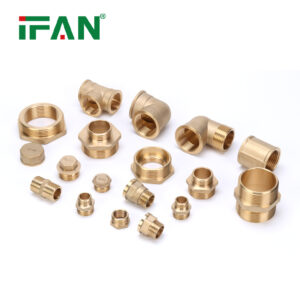
IFAN Water Supply Brass Pipe Fittings
Category : Click Download
Whatsapp : +86 19884503412
Wechat : 19884503412
Description
Dezincification: The Silent Copper Sponge
This is the most common cause of fitting failure. Brass is an alloy of copper and zinc. In aggressive water, the zinc leaches out. What remains is a weak, porous copper structure. A forensic report described a fitting where zinc was “completely leached… leaving a porous matrix through the entire wall thickness”. This “copper sponge” cannot hold pressure.
The “Plug Type” Corrosion Effect
Dezincification often creates localized deep “plugs” of damaged material. This penetrates the wall faster than general corrosion. The fitting may fail suddenly at that spot. Hot water accelerates this process dramatically. Higher temperatures and stagnant flow worsen the attack. Brass pipe fittings in hot water lines are especially vulnerable.
Water Chemistry as a Primary Driver
Chlorine in municipal water greatly facilitates dezincification. pH levels and chloride content also play major roles. A detailed analysis of a home’s plumbing found the attack was due to “water pH, water chloride content, and stagnant or low flow conditions”. Treat your water if it is aggressive.
The Zinc Content Threshold
Not all brass is equally vulnerable. Alloys with zinc content above 15% are at risk. The risk becomes severe at 35% or more. Case studies of cracked fittings often reveal a zinc content of 38% or higher. Brass pipe fittings made from high-zinc “yellow brass” are the most susceptible to dezincification.
Stress Corrosion Cracking (SCC)
SCC is a different failure mechanism. It requires three factors: tension, a corrosive agent, and a susceptible material. The crack travels along the metal’s grain boundaries. One investigation found a leaking fitting resulted from “stress corrosion cracking” caused by the “cumulative action of a number of damage mechanisms”.
Installation Stress (Overtightening)
Threaded fittings are particularly prone to SCC. When a plumber overtightens a fitting, it creates sustained tensile stress in the metal. Brass pipe fittings are softer than steel. Applying too much torque with a wrench stretches the brass grain structure. This “residual stress” is a primary driver for future cracking.
Manufacturing Defects and Impurities
Not every failure is due to the environment. Microscopic defects in the metal can act as starting points. An analysis of a failed fitting revealed “significant SiO2-inclusions” in the brass itself. These tiny non-metallic particles act as stress risers. Low-quality manufacturing increases the chance of pre-existing cracks forming.
Thermal Expansion and Fatigue
Brass expands when heated and contracts when cooled. In a long hot water pipe run, this movement stresses the anchored fittings. Repeated cycles cause “fatigue” of the crystalline structure. Over years, microscopic fatigue cracks become full breaks. This is common on long, straight hot water runs without expansion loops.
Poor Brazing or Welding on Assemblies
Some brass assemblies are brazed, not cast as one piece. A hydraulic fitting analysis found failures caused by “poor quality” brazing that was “inconsistent with properly manufactured connections”. If the brazing was cold, it creates a weak joint. This is a manufacturing quality control issue for complex Brass pipe fittings.
Hard Water Scale Buildup
Internal scale acts as a physical stressor and a chemical trap. Heavy deposits corrode the protective oxide layer. Mineral scale also traps moisture and chlorides against the brass surface. This creates ideal conditions for localized corrosion cells. Scale buildup accelerates the damage significantly.
Ammonia in the Environment
A tiny amount of ammonia in the air or water can crack stressed brass. Forensic engineers note that “some amount of ammonia is almost always present in public water supplies”. This is a common corrodent for SCC. Even industrial cleaning fluids near a system can be dangerous. Brass pipe fittings in pump rooms need ventilation.
Preventing Future Failures
You cannot stop time, but you can mitigate risk. For repairs, always ask for DZR (Dezincification Resistant) Brass Fittings. Lower your water heater temperature to slow the chemical reaction. If you test your water and it is acidic or high in chlorine, install a whole-house treatment system. Professional installation using proper torque prevents the “stress” part of stress corrosion cracking.
Brass pipe fittings leak due to three main enemies: aggressive water (dezincification), physical stress (overtightening), and the combination of both (SCC). By choosing DZR brass, testing your water chemistry, and ensuring professional installation, you can extend the life of your fittings from a few years to several decades.
相关产品
 01 Series
Brass End Cap
- 01 Series
Brass Socket
- 01 Series
Brass Fittings Elbow
- 03 Series
Brass Plumbing Fittings



HAVE ANY QUERIES? SEND TO CONTACTOANTSMACHINE.COM
ONTACT US