
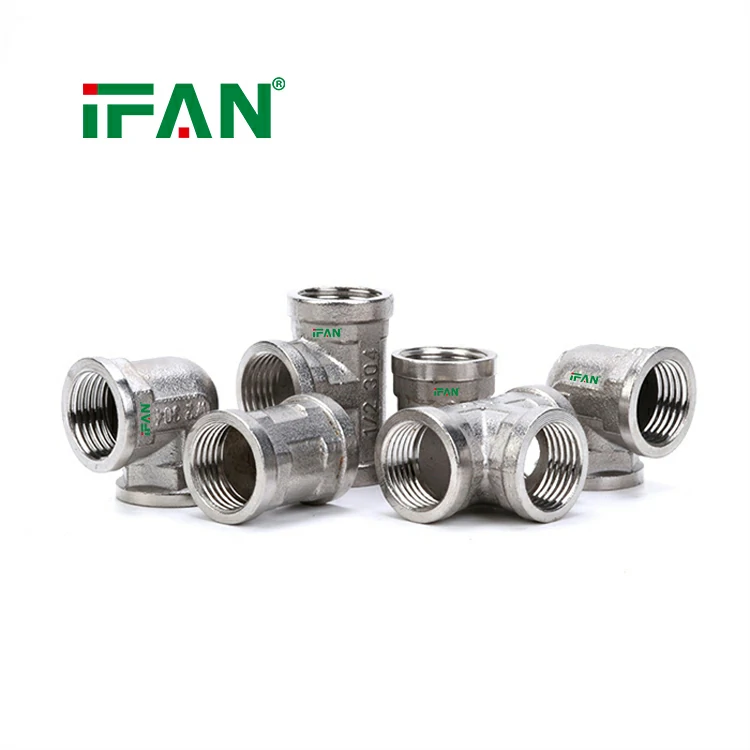
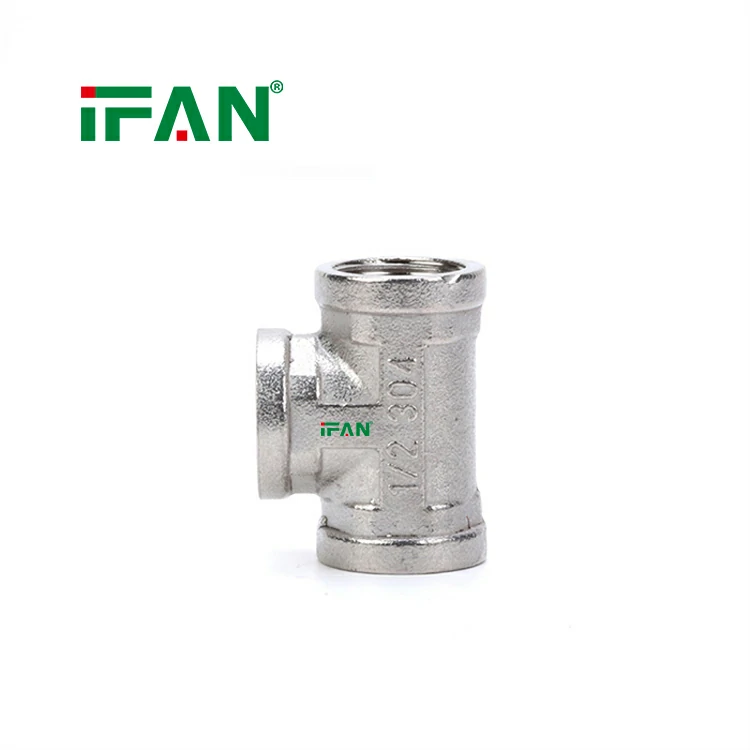
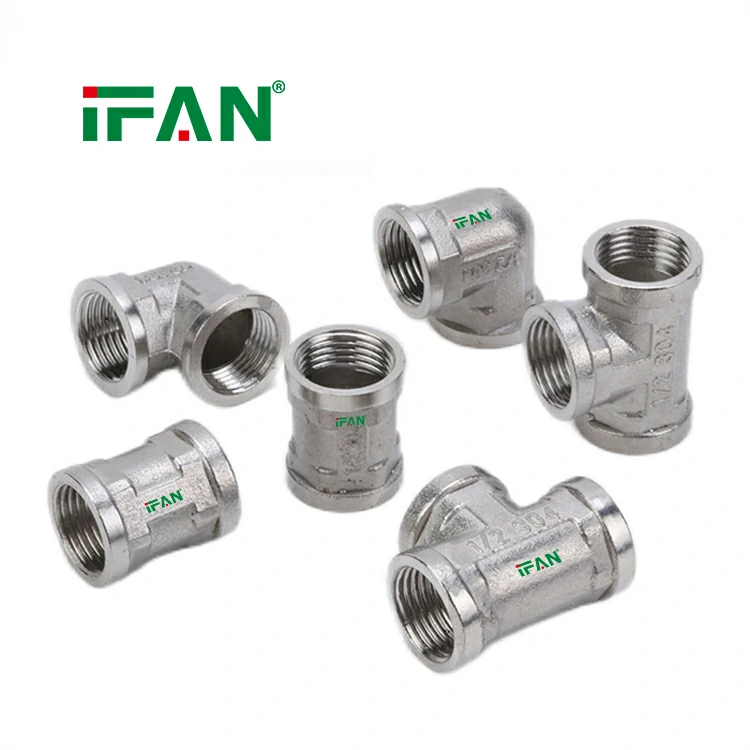
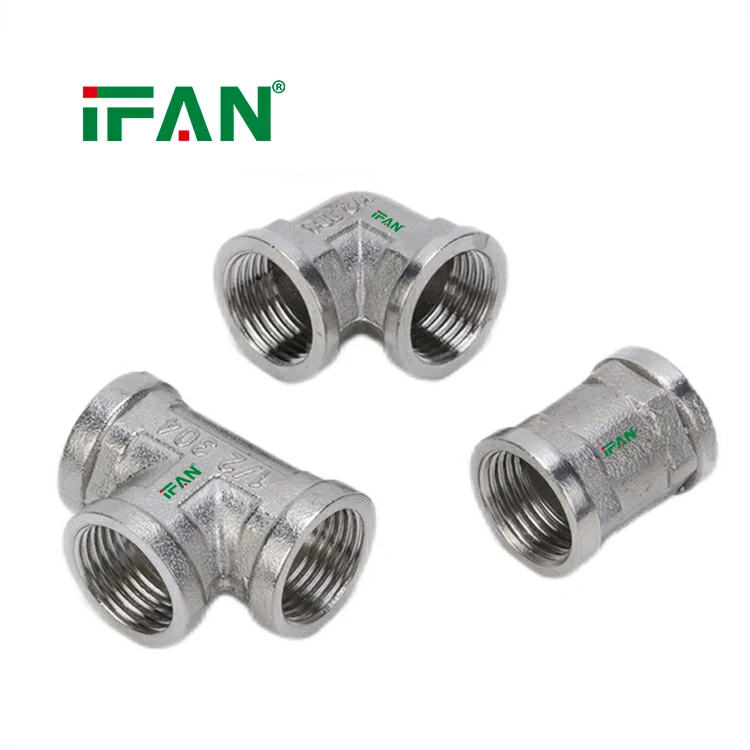
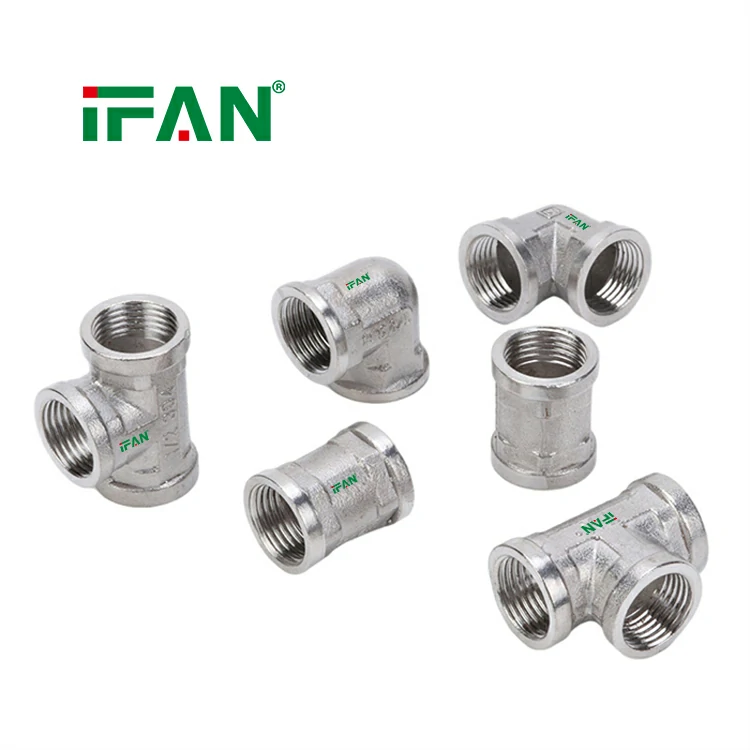
IFAN Wholesale Price Stainless Steel Fittings
Name: IFAN Stainless Steel Fittings
Brand: IFAN
Category : Click Download
Whatsapp : +86 19884503412</p>
Category : Click Download
Whatsapp : +86 19884503412
Wechat : 19884503412
Description
The Source of Stainless Steel’s Resistance
The key element in stainless steel is chromium. It makes up at least 10.5% of the alloy. Chromium reacts with oxygen to form a film. This film is chromium oxide. It is only a few atoms thick. Yet it protects the steel completely.
The Self-Repairing Passive Layer
This chromium oxide layer is called the passive layer. If it is scratched, it heals instantly. The chromium in the steel reacts with air again. This self-repairing property is unique. Stainless steel fittings rely on this for durability. It works continuously throughout the life of the part.
Stainless Steel Does Not “Rust”
Rust is specific to iron and its alloys. It is a red, flaky iron oxide. Stainless steel fittings do not produce this. They are iron-based but protected by chromium. The passive layer prevents the iron from oxidizing. Therefore, they do not “rust” in the common sense.
Staining vs. Corrosion
Corrosion is the gradual destruction of metal. While stainless steel resists this, it is not stain-proof. Under specific conditions, it can “stain” or discolor. This is called tea-staining in marine environments. The material may look brown but remains structurally sound.
The Risk of Crevice Corrosion
Crevice corrosion is a specific threat to stainless steel fittings. It occurs in tight, shielded spaces. Areas under gaskets or washers are vulnerable. Oxygen cannot reach the passive layer there. The film breaks down, and the metal corrodes locally. Good design minimizes these tight spaces.
Pitting Corrosion from Chlorides
Chlorides are a major enemy of stainless steel. Saltwater and de-icing salts are common sources. They can penetrate and break the passive film. This creates small, deep holes called pits. Grade 316 is much more resistant to pitting than grade 304 .
The Critical Difference: 304 vs. 316
Not all stainless steel fittings are equal. Grade 304 is the standard for indoor use. Grade 316 contains 2-3% molybdenum. This addition dramatically improves chloride resistance. For coastal or pool environments, 316 is mandatory. For standard tap water, 304 is perfectly sufficient.
General vs. Localized Corrosion
Stainless steel excels against general even corrosion. It does not thin out uniformly like carbon steel. Its weakness is localized attack. This includes pitting, crevice, and stress corrosion cracking. These are harder to detect but potentially catastrophic.
Stress Corrosion Cracking (SCC)
SCC is another specific risk. It requires three conditions: a susceptible material, tensile stress, and a specific corrodent. Hot chlorides are a classic cause. Austenitic stainless steel fittings (300 series) can fail from SCC. Proper material selection for the environment is critical.
Maintaining the Passive Layer
The surface finish matters greatly for corrosion resistance. A smooth, clean surface protects best. Mill scale or iron contamination from tools is dangerous. It can cause “rouge” or surface rust staining. Passivation treatments restore the protective oxide layer after fabrication.
Temperature Effects on Corrosion Resistance
High temperatures challenge the passive layer. Above 60°C, the risk of chloride attack increases. The structure of the metal can also change. Sensitization can occur in the heat-affected zone of welds. This makes the area susceptible to intergranular corrosion.
Conclusion on Suitability for Plumbing
Stainless steel fittings are highly resistant to corrosion. They do not produce red rust like carbon steel. Regular maintenance is not required for corrosion prevention. However, they are vulnerable to chlorides and crevices. For potable water and indoor use, grade 304 is excellent . For seawater or pools, select grade 316 . When selected for the correct environment, stainless steel fittings provide a lifetime of maintenance-free service.
相关产品
 Stainless Steel Series
IFAN Factory Produces Stainless Steel Fittings
- Stainless Steel Series
IFAN on Sale Stainless Steel Plumbing Fittings
- 01 Series
Brass Fitting Reduce Socket
- 03 Series
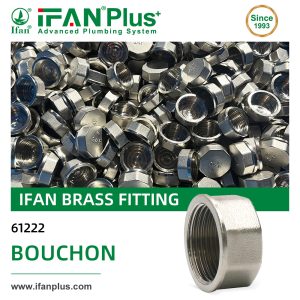
Sliver brass fittings end caps



HAVE ANY QUERIES? SEND TO CONTACTOANTSMACHINE.COM
ONTACT US