
Understanding Pressure Rating Systems
Pressure ratings indicate safe operating limits. These are measured in pounds per square inch (psi). Standards like ANSI/ASME define these ratings. The rating depends on material and design. Bronze fittings have specific pressure classes. These classes ensure safety.
Common WOG and Pressure Class Ratings
Many bronze fittings are marked “WOG”. This means Water, Oil, Gas. A 150 WOG rating is very common. This indicates 150 psi at room temperature. Higher ratings like 300 WOG also exist. The rating applies to non-shock service.
The Importance of Temperature Derating
Pressure capacity decreases with heat. A fitting rated for 150 psi at 70°F holds less at 200°F. Manufacturer charts show this derating. Always consult these for hot water systems. Do not use the cold water rating for hot lines. This is a critical safety rule.
ANSI Pressure Class System (e.g., Class 150)
This is a formal classification system. Class 150 is a standard rating. It corresponds to a certain pressure-temperature envelope. At room temperature, Class 150 may be ~250 psi. At higher temperatures, the allowed pressure drops. This system is used for engineered systems.
Factors Affecting Individual Fitting Ratings
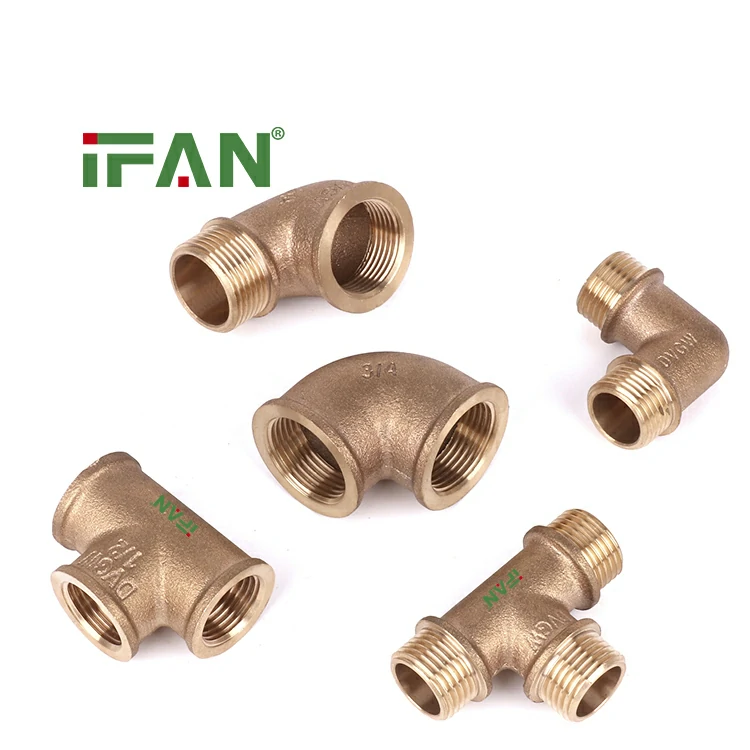
Not all fittings share the same rating. A tee fitting may be weaker than a coupling. Thread design influences strength. Wall thickness is the primary factor. Heavier schedule fittings have higher ratings. Always check the rating stamped on the fitting itself.
Comparison to Other Metallic Fittings
Bronze typically has lower ratings than steel. Steel fittings can handle much higher pressures. Bronze surpasses most plastic fittings easily. It offers a good balance of strength and corrosion resistance. It is ideal for moderate pressure systems.
Standards and Testing for Certification
Fittings are hydrostatically tested. They are pressurized to 2-3 times their rating. This proves their safety margin. Reputable manufacturers test every production lot. Look for marks like “UL” or “CSA”. These indicate independent certification.
Pressure Ratings for Different Fitting Types
Straight couplings often have the highest rating. Elbows and tees have slightly lower ratings. This is due to stress concentrations. Valve bodies have their own specific ratings. Reducers are rated for the smaller size’s pressure. Always use the weakest component’s rating.
Impact of Thread Type and Sealant
Threaded bronze fittings rely on proper engagement. NPT (National Pipe Taper) threads create a seal. Incorrect threading reduces pressure capability. Proper thread sealant is also vital. It prevents leaks that could erode the fitting. Never force threads together.
Application-Specific Rating Examples
For residential water, 150 WOG is usually sufficient. Home pressure is often 40-80 psi. For commercial boilers, Class 150 is standard. For industrial compressed air, 300 WOG may be needed. Always match the fitting to the system’s maximum pressure.
Consequences of Exceeding Pressure Ratings
Exceeding ratings is extremely dangerous. It can cause sudden, violent failure. This leads to flooding or equipment damage. It also risks severe personal injury. Always include a safety margin. Never operate near the absolute maximum rating.
Selecting the Correct Rated Fitting
First, know your system’s maximum pressure. Include potential water hammer surges. Choose a fitting with a higher rated pressure. Factor in the operating temperature. Verify the rating on the fitting body. When in doubt, select a higher class. This ensures decades of safe, reliable service.