
Introduction to PPR Pipe Cutting Tools
PPR (Polypropylene Random Copolymer) pipes are widely used in plumbing and HVAC systems.
These pipes are known for their durability, heat resistance, and ease of installation.
Cutting PPR pipe accurately is essential to ensure strong joints and leak-free connections.
Two commonly used tools are the hacksaw and the PPR pipe cutter.
Both tools can perform the job, but their results vary significantly.
Choosing the right tool affects not only speed but also joint quality and safety.
Let’s compare their features, applications, and effectiveness to decide which one is better.
Overview of a Hacksaw for PPR Pipes
A hacksaw is a basic manual tool with a fine-toothed blade.
It is widely available and used for cutting metal and plastic.
While it can cut PPR pipe, it requires steady hands and effort.
Hacksaws often leave rough, uneven edges with plastic burrs.
This roughness can weaken welded joints or cause sealing issues.
It’s also slower and produces plastic shavings that require cleanup.
Although inexpensive and universal, hacksaws are not optimized for PPR installations.
They are often used only when a proper cutter is unavailable.
Features of a Dedicated PPR Cutter
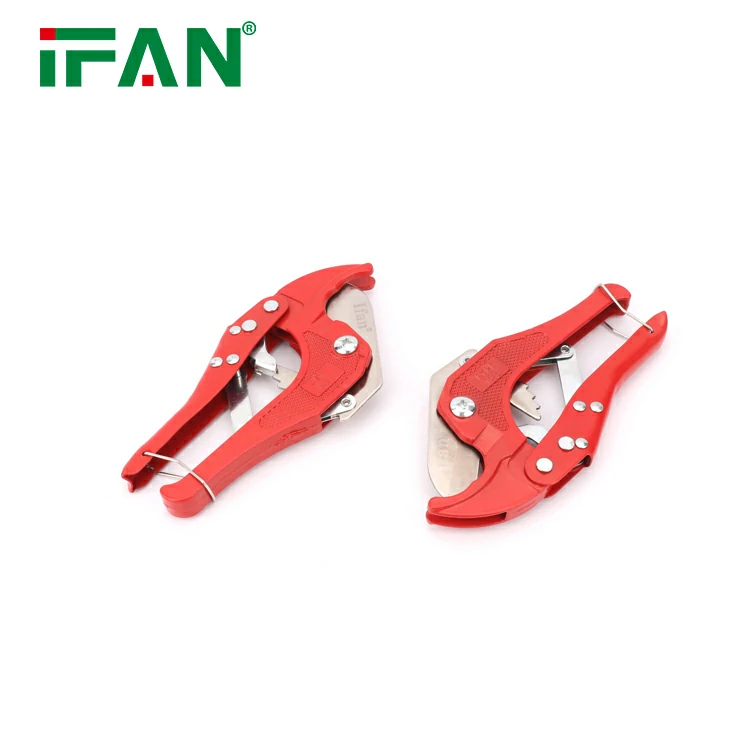
A cutter designed for PPR pipe provides a clean, square edge with minimal effort.
Most cutters are handheld, with a sharp, curved stainless-steel blade.
They slice through the pipe cleanly without deforming or crushing it.
The smooth cut promotes strong heat-fusion or socket welding joints.
Some cutters use a ratcheting mechanism for larger diameter pipes.
Cutter designs prioritize safety, efficiency, and precision in piping tasks.
They are specifically made for plastic piping materials like PPR and PE.
Using a cutter helps achieve professional-level installations and consistent results.
Cutting Speed and Efficiency
Cutting speed matters on construction sites or during large-scale installations.
A cutter can usually slice through a pipe in seconds.
It requires fewer strokes and less hand fatigue than a hacksaw.
Hacksaws may take longer and require more physical effort.
Repeated cuts with a hacksaw may lead to inconsistent pipe lengths.
With a cutter, measurement and execution are quicker and more accurate.
In terms of time saved, a cutter is the superior choice.
This makes it especially beneficial for commercial or high-volume residential projects.
Cut Quality and Weld Compatibility
PPR piping relies on heat-fusion welding or mechanical joints for connection.
A straight, smooth cut ensures full contact between pipe and fitting.
Cutter tools leave a flush surface without rough burrs or particles.
Hacksaw cuts are jagged and may create gaps or misalignment.
Poor welds lead to system failures, leaks, or long-term maintenance issues.
For this reason, using a cutter improves both connection quality and pipe lifespan.
Clean edges also reduce the need for additional trimming or sanding.
High cut quality is essential for reliable plumbing and heating systems.
Portability and Practical Use
Both the cutter and hacksaw are compact and portable.
However, the cutter is generally lighter and easier to carry on-site.
It can fit into tool belts or small kits without hassle.
Some cutter models fold for added safety and portability.
A hacksaw may require extra space due to its frame size.
Additionally, cutter blades are easier to replace or maintain.
For technicians frequently working in tight spaces, the cutter offers more convenience.
Its design also minimizes user fatigue during repetitive tasks.
Cost and Tool Lifespan
Cost is often a deciding factor when selecting tools.
Hacksaws are cheaper and versatile, usable for many materials.
Cutters are more specialized, with slightly higher upfront costs.
However, a quality cutter can last for years with proper care.
Most cutters require minimal maintenance and have replaceable blades.
The long-term value they offer in performance outweighs the initial investment.
In contrast, hacksaw blades wear faster and may need frequent replacement.
Over time, the cutters become the more economical and efficient option.
Conclusion: Choosing the Right Tool
When comparing a hacksaw and a cutter, the cutter is clearly better for PPR pipe.
It ensures clean, fast, and accurate cuts with minimal risk of pipe damage.
Using a cutter results in better joint quality and system performance.
While a hacksaw is cheaper, its disadvantages in precision and speed are significant.
Professionals and DIY users alike benefit from using the correct cutting tool.
In any PPR installation, a proper cutter is worth the investment.
It reduces time, improves results, and ensures long-term reliability.
Therefore, always use cutters for PPR pipe whenever possible.