
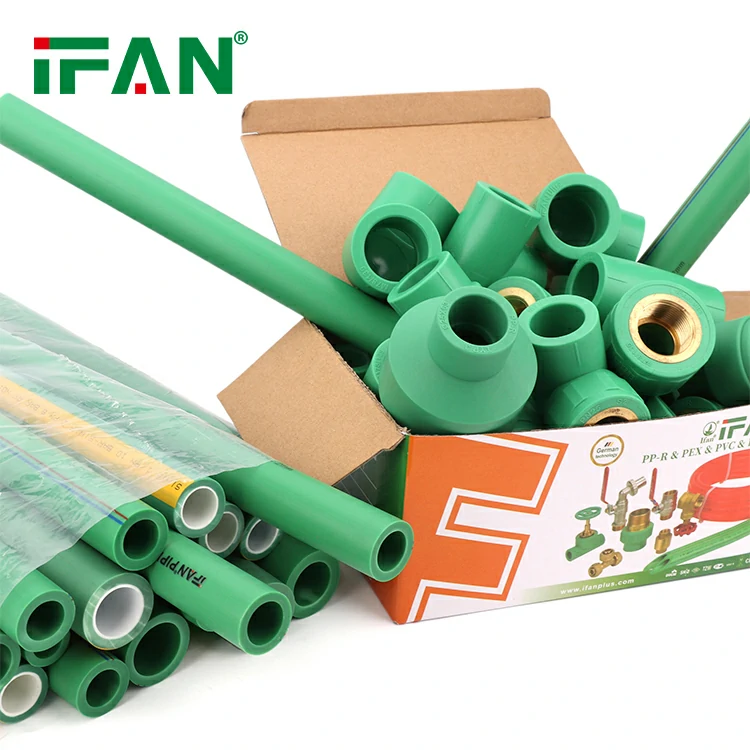
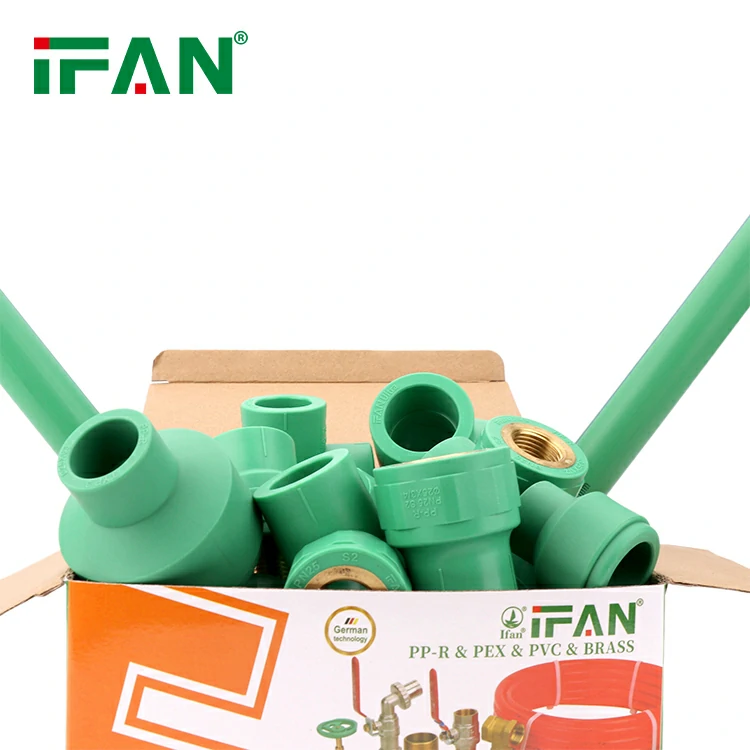
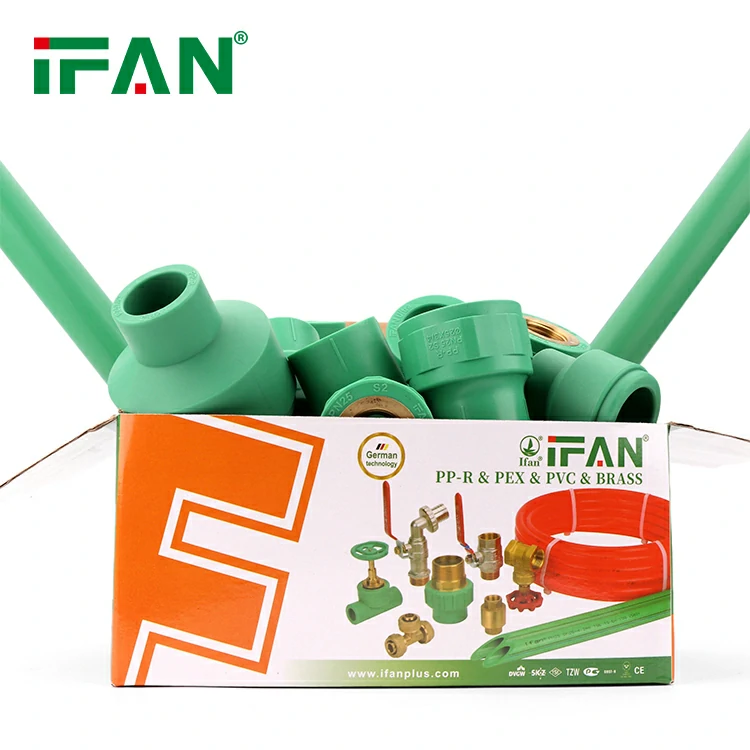
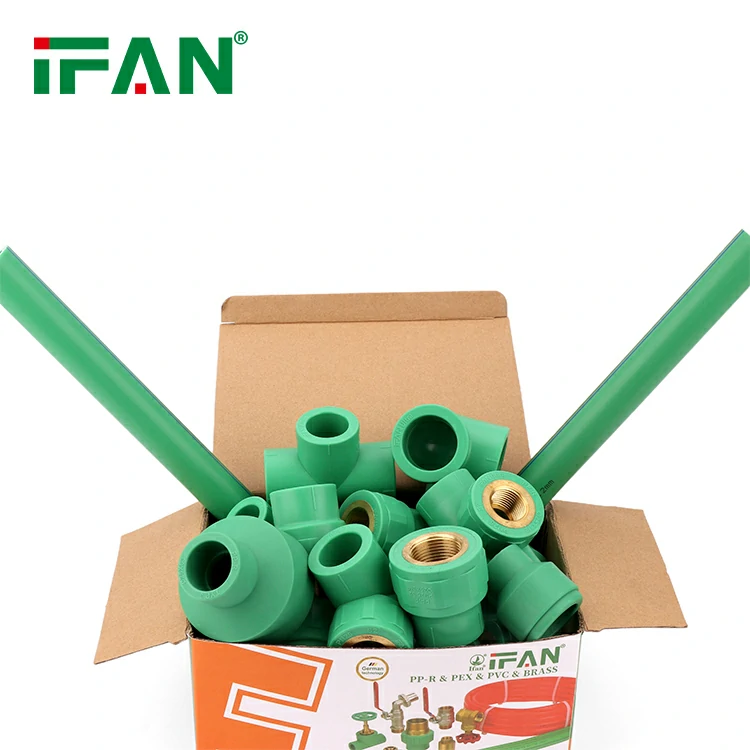
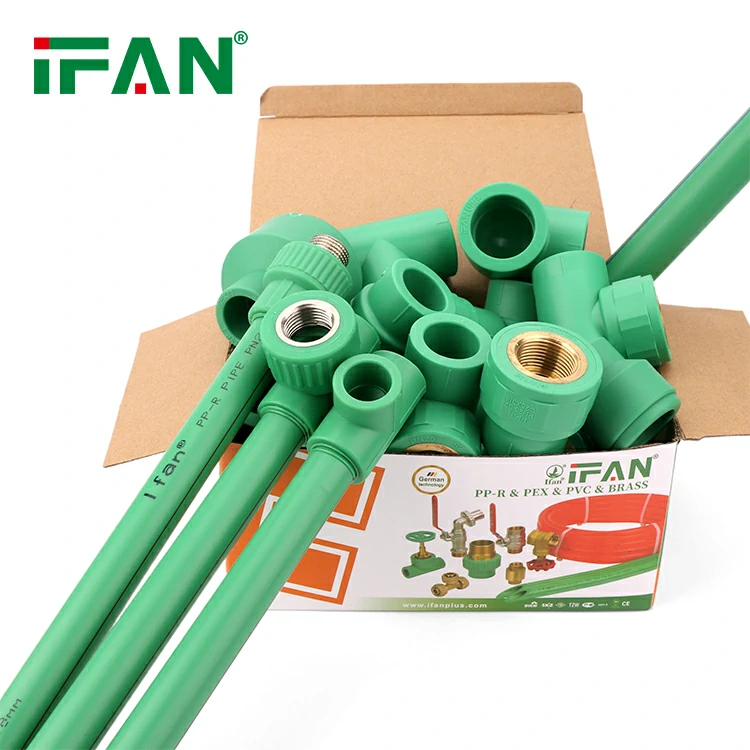
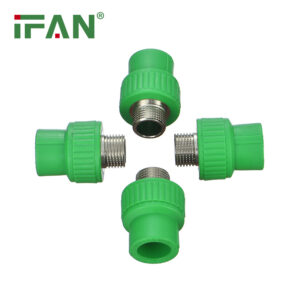
IFAN Customized Sizes PPR Pipe Fitting
Category : Click Download
Whatsapp : +86 19884503412
Wechat : 19884503412
Description
Introduction to PPR Pipe Systems
PPR pipe systems are widely used in plumbing for hot and cold water transport.
They are valued for durability, corrosion resistance, and a long service life.
A PPR pipe fitting connects pipes to form a leak-free water transport network.
These fittings include elbows, couplings, tees, and adapters for complex layouts.
Unlike PVC, which often uses solvent cement, PPR does not rely on glue.
Many users wonder whether gluing is a feasible option for PPR pipe fitting.
This article explains why gluing is unsuitable and explores better alternatives.
Material Properties of PPR
PPR stands for Polypropylene Random Copolymer, a thermoplastic with high heat resistance.
It has excellent chemical and pressure resistance, ideal for both domestic and industrial systems.
A PPR pipe fitting made from this material needs heat to join securely.
Its molecular structure does not bond well with chemical adhesives or glues.
PPR does not dissolve like PVC when exposed to solvent cement.
This makes gluing an unreliable and weak option for structural connections.
Understanding PPR’s properties helps explain why glue cannot ensure a strong seal.
Why Gluing Does Not Work
Glue relies on dissolving surface layers for bonding.
PPR is resistant to solvents and does not react to most adhesives.
Attempting to glue a PPR pipe fitting results in superficial contact without strength.
Over time, such joints can leak or completely fail under pressure.
Water hammer effects or thermal expansion worsen the problem.
Even strong epoxy adhesives can’t match the strength of fused joints.
Thus, professional installers never glue PPR pipe fitting connections.
Heat Fusion: The Right Method
The proper method to join PPR is through heat fusion welding.
This involves heating both the pipe and PPR pipe fitting using a fusion tool.
Once heated, the parts are pressed together and allowed to cool.
This forms a seamless, leak-proof joint with no need for glue.
Fusion welding creates a single continuous material across the joint.
It matches the pressure and temperature ratings of the pipe system.
This method ensures reliable, permanent installation in all water systems.
Socket Fusion vs. Butt Fusion
There are two common fusion methods: socket fusion and butt fusion.
Socket fusion uses a tool to melt the outside of the pipe and inside of the fitting.
It is ideal for smaller diameters in home plumbing systems.
Butt fusion heats both ends of larger pipes before joining them together.
This method is used in industrial applications with larger PPR diameters.
Both techniques eliminate the need for gluing a PPR pipe fitting.
Trained technicians typically carry out these fusion processes on-site.
Tools Needed for Proper Jointing
Joining PPR pipe fitting components requires specialized tools.
A fusion welding machine with interchangeable heating heads is essential.
The installer needs a pipe cutter to ensure clean, square ends.
Deburring tools and alcohol wipes help prepare the pipe surface.
Once the tool reaches the desired temperature (around 260°C), fusion begins.
Marking the insertion depth on the pipe helps align components.
Following time and temperature guidelines ensures joint integrity and performance.
Common Misconceptions and Mistakes
Some DIY installers believe PPR is similar to PVC.
They may try gluing a PPR pipe fitting using solvent cement.
This mistake leads to system failure, leaks, and possible contamination.
Others may use sealants or tapes to reinforce poorly joined PPR.
Such fixes are temporary and not pressure-rated.
Always use approved fusion techniques and avoid shortcuts.
Incorrect methods can void warranties and lead to costly repairs.
Conclusion: Stick to Fusion, Not Glue
In summary, gluing a PPR pipe fitting is not recommended or effective.
PPR material is resistant to adhesive bonding due to its chemical nature.
The correct joining method is heat fusion, ensuring strong and durable connections.
This technique meets the mechanical and thermal demands of plumbing systems.
Avoid confusing PPR with glue-bonded materials like PVC.
Using proper tools and fusion practices guarantees system longevity and safety.
For long-term reliability, trust fusion—not glue—for your PPR pipe fitting needs.
相关产品
 Green PPR Pipe Fittings
PPR Socket Fitting
- Green PPR Pipe Fittings
PPR Tee Fitting
- Green PPR Pipe Fittings
PPR Union Fittings
- Green PPR Pipe Fittings
PPR Male Socket



HAVE ANY QUERIES? SEND TO CONTACTOANTSMACHINE.COM
ONTACT US