
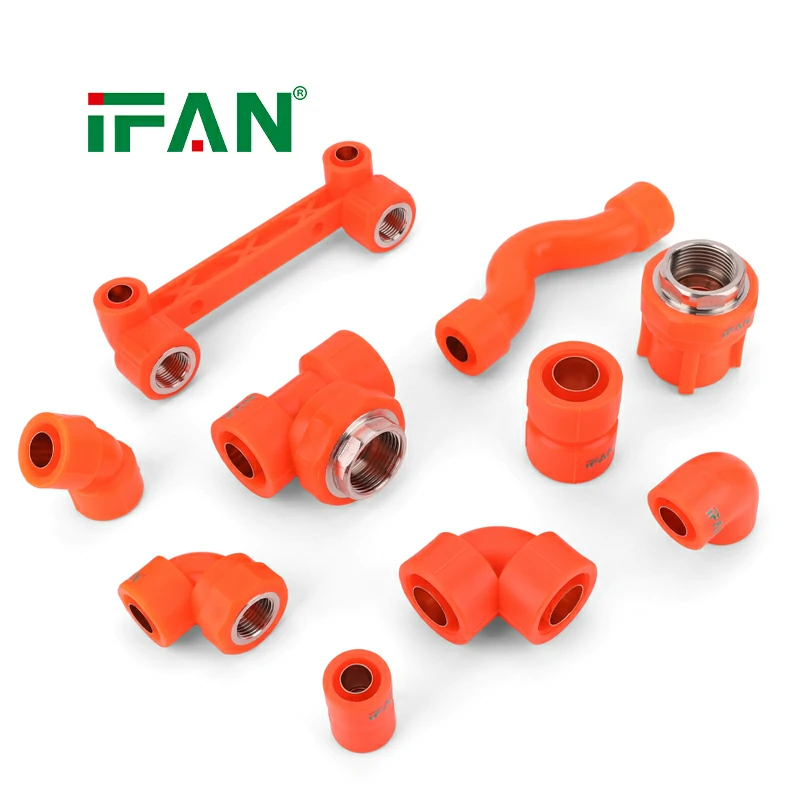
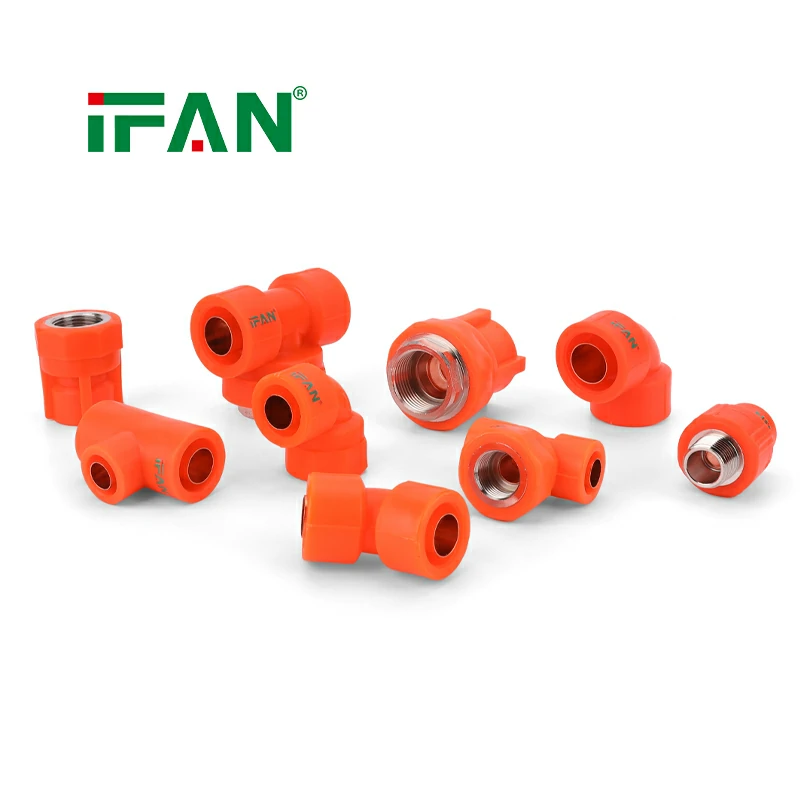
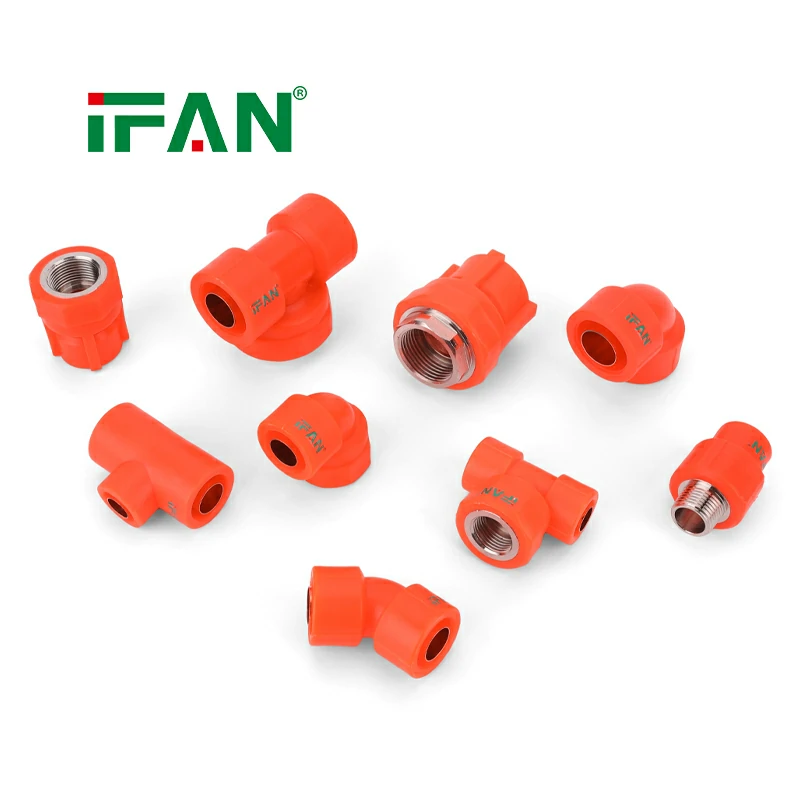
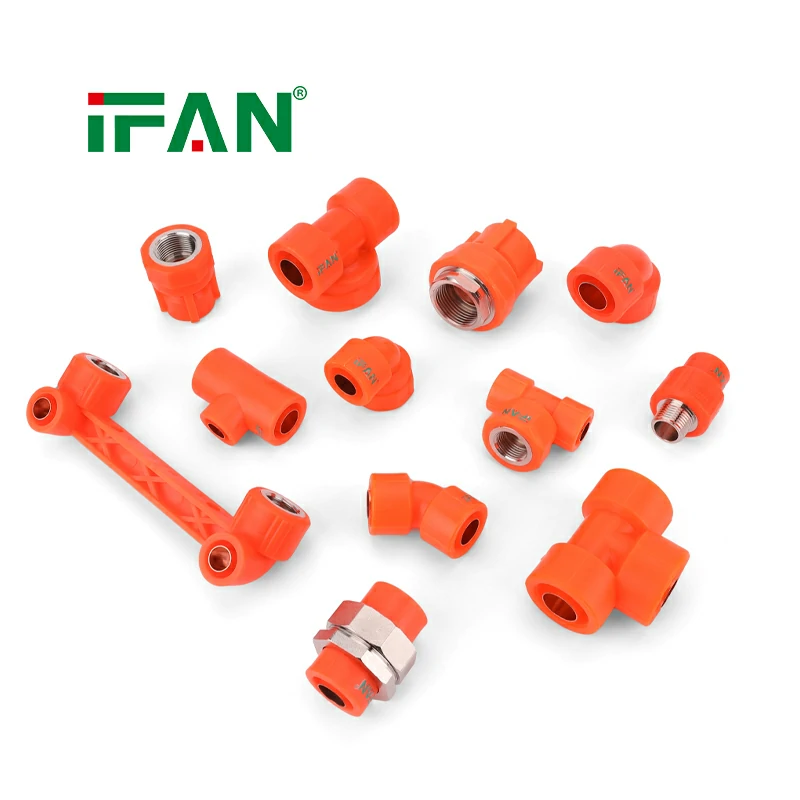
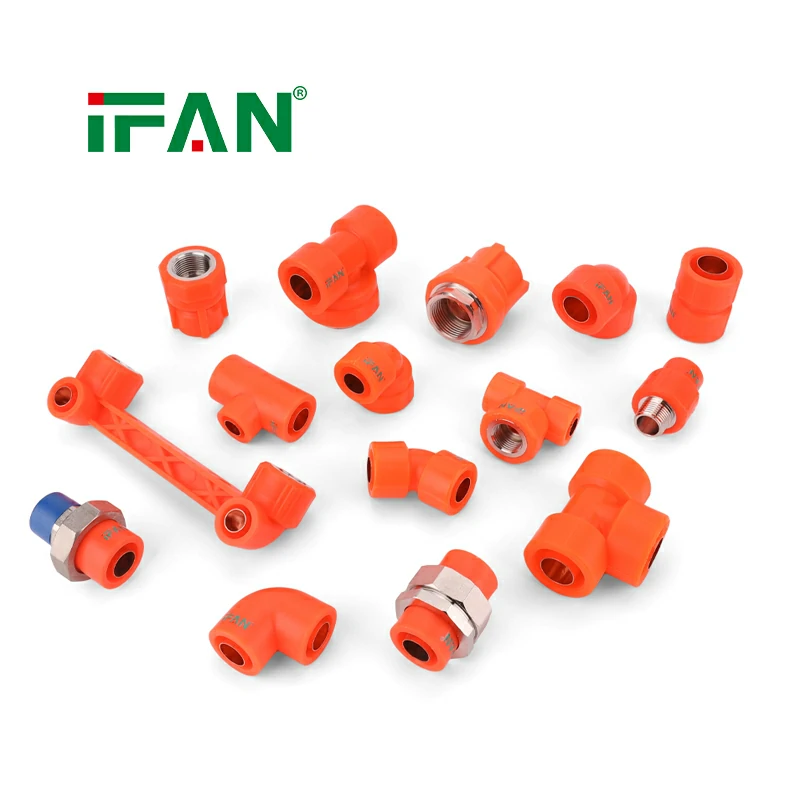
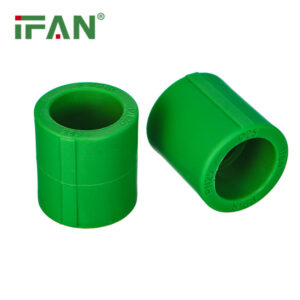
IFAN New Arrival PPR Copper Fittings
Name: IFAN PPR Copper Fittings
Brand: IFAN
Category : Click Download
Whatsapp : +86 19884503412</p>
Category : Click Download
Whatsapp : +86 19884503412
Wechat : 19884503412
Description
Two separate installation processes
PPR copper fittings require two different techniques. The PPR side needs heat fusion welding. The copper side needs soldering with a torch. These are completely separate procedures.
Step 1: Cut the PPR pipe
Use a specialized PPR pipe cutter for a square cut. The cut must be perfectly straight and clean. Remove all burrs from the cut edge. PPR copper fittings need a smooth pipe end for fusion.
Step 2: Weld the PPR side
Heat the PPR pipe and fitting simultaneously. Use a heat fusion tool at 260°C (500°F). Insert both into the tool’s sockets. PPR copper fittings require correct heating times based on size.
Step 3: Join the PPR connection
Remove both parts from the heating tool quickly. Push the PPR pipe into the fitting socket firmly. Hold the joint steady for 30 seconds. PPR copper fittings form a permanent weld during cooling.
Step 4: Prepare the copper pipe
Cut the copper pipe with a tubing cutter. Clean the end to bright, shiny metal. Apply a thin layer of soldering flux. PPR copper fittings need clean copper for proper solder flow.
Step 5: Solder the copper side
Insert the copper pipe into the fitting’s copper socket. Heat the joint with a propane torch. Apply lead-free solder to the gap. PPR copper fittings draw solder into the joint by capillary action.
Cooling and testing
Allow all joints to cool naturally. Do not use water to cool them quickly. Pressure test the system for leaks. Polypropylene-Random copper fittings need a slow cooldown for reliability.
Example: installing a water heater
A plumber connects a water heater to PPR pipes. The heater has copper connections. Polypropylene-Random copper fittings transition between the two materials. The plumber welds the PPR side first. Then he solders the copper side.
Example: repairing a burst pipe
A copper pipe bursts in the basement. The plumber cuts out the damaged section. He installs a PPR patch between copper ends. Polypropylene-Random copper fittings connect the patch to existing copper. The repair takes about one hour.
Tools required
Heat fusion tool for PPR (260°C) and PPR cutter. Propane torch, flux, and solder for copper. Emery cloth for cleaning copper pipes. Polypropylene-Random copper fittings need both tool sets for installation.
Safety precautions
Work in a well-ventilated area for soldering. Wear safety glasses and heat-resistant gloves. Keep a fire extinguisher nearby when using a torch. PPR copper fittings installation involves open flames.
Common installation mistakes
Forgetting the heat fusion cooling time. Overheating the copper side near the plastic. Not cleaning the copper pipe sufficiently. Polypropylene-Random copper fittings fail when these steps are skipped.
Final installation summary
PPR copper fittings install in two distinct stages. First, weld the PPR side using heat fusion at 260°C. Let it cool completely. Second, solder the copper side using a torch and flux. Use lead-free solder for potable water. Always cool joints naturally. Test the system for leaks after installation. With proper technique, Polypropylene-Random copper fittings provide a permanent, leak-free transition between PPR and copper pipes. Example: professional plumbers use this method every day.
相关产品
 PPR Fitting
White PPR Elbow With Seat
- PPR Fitting
White PPR Tee Fittings
- Green PPR Pipe Fittings
PPR End Cap
- Green PPR Pipe Fittings
PPR Socket Fittings


HAVE ANY QUERIES? SEND TO CONTACTOANTSMACHINE.COM
ONTACT US