
Superior High-Temperature Performance
The primary advantage is heat resistance. CPVC handles hot water excellently. Its maximum service temperature is 200°F (93°C). Standard PVC fails at lower temperatures. This allows CPVC for hot water lines. It is ideal for water heater connections.
Excellent Corrosion and Chemical Resistance
CPVC resists chemical attack. It is unaffected by acidic or alkaline water. It does not rust or corrode like metal pipes. Chlorine in municipal water does not harm it. CPVC pipe fittings are perfect for aggressive water conditions. They ensure long-term system integrity.
Low Thermal Conductivity for Energy Efficiency
The material is a poor heat conductor. Hot water loses less heat traveling through CPVC. This improves energy efficiency. It also prevents condensation on cold water lines. This protects surrounding structures from moisture damage. It saves energy and prevents mold.
Smooth Interior Bore for Optimal Flow
The inner surface is extremely smooth. This minimizes friction loss in the system. It prevents scale and mineral buildup over time. Water pressure remains consistent. It also reduces pumping energy requirements. The hydraulic performance is excellent.
Lightweight and Easy Installation
CPVC is very lightweight. A single worker can handle long pipe sections. Installation is faster than with metal systems. No heavy threading or soldering tools are needed. This significantly reduces labor costs. The process is cleaner and simpler.
Cost-Effectiveness and Material Savings
Material costs are lower than copper or stainless steel. Installation costs are also reduced. The total installed cost is highly competitive. There is no need for insulation in many cases. CPVC pipe fittings offer great economic value for projects.
Resistance to Microbiological Growth
The smooth, inert surface inhibits biofilm formation. Bacteria like Legionella find it hard to adhere. This contributes to better water quality. It is a hygienic material for potable systems. It meets strict health and safety standards globally.
Long Service Life and Durability
Properly installed systems last decades. CPVC does not degrade with age. It is not affected by UV light if installed indoors. It maintains its mechanical strength over time. Its lifespan often matches the building’s life.
Flame Resistance and Safety Properties
CPVC is inherently flame resistant. It has a high ignition temperature. It will not continue burning without an external flame. This adds a safety margin in building fires. Special formulations are used in fire sprinkler systems.
Quiet Operation Compared to Metal Pipes
Water flow is virtually silent. There is no “water hammer” noise from expansion. Metal pipes can clank and resonate. CPVC dampens sound transmission effectively. This is appreciated in quiet residential environments.
Simple and Reliable Joining Method
Solvent cement welding is the standard technique. It creates a permanent, monolithic joint. The joint is often stronger than the pipe itself. The process is quick and requires minimal skill. It eliminates the risk of threaded joint leaks.
Versatility Across Multiple Applications
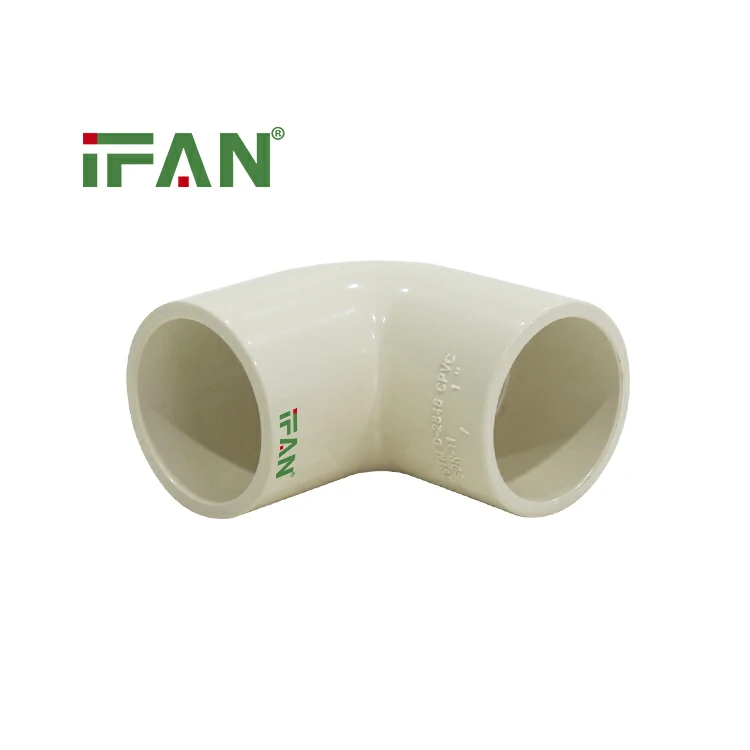
CPVC pipe fittings are used in many settings. They are standard in residential and commercial plumbing. They serve industrial chemical lines. They are approved for fire sprinkler systems. This versatility makes them a single-solution for many engineers. Their balanced properties explain their widespread adoption.